Plug-in solar panels, which are becoming popular across Europe, live in a regulatory gray area in the United States.


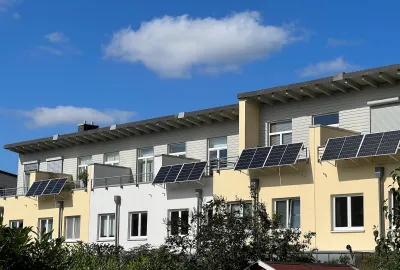
Multiple states are considering legislation that would clarify standards for ‘balcony solar,’ low-cost DIY installations that allow even apartment dwellers to produce their own power.
As Alison F. Takemura explains in Canary Media, Utah is the only U.S. state to explicitly allow the devices, but others are looking into it. “While the systems aren’t illegal, utilities often require users to sign an interconnection agreement before plugging in solar — just as they would for a large rooftop array. And those agreements can require fees and take weeks to months to get.” Utah eliminated the interconnection requirement as long as customers use a solar device that is certified safe.
Now, bills in New Hampshire, Vermont, New Jersey, and Illinois are on track to pass, and a California proposal is in committee. Proposed bills in Missouri, Washington state, and Wyoming have stalled over concerns about safety risks with permissionless systems.
Read the full story: Balcony solar is taking state legislatures by storm

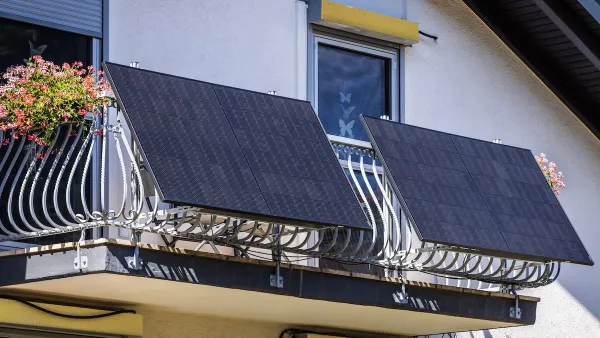
Bay Area Embraces ‘Balcony Solar’
Popular in Germany, wall- or balcony-mounted solar panels come at a lower cost and face fewer regulatory hurdles than rooftop solar, but their legal status in California is murky.
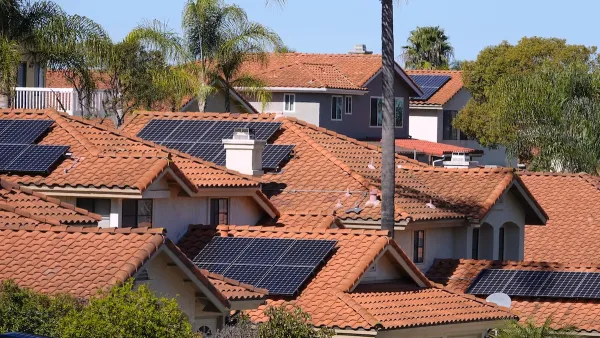
California Leads in Solar Rooftops
A combination of state and local incentives and building code mandates has helped California far outpace other states in residential rooftop solar permits.

Rooftop Solar on Mexico City Market to Power 300 Transit Buses
A solar project atop a massive food market will provide electricity to Mexico City's public transit buses.

Planetizen Federal Action Tracker
A weekly monitor of how Trump’s orders and actions are impacting planners and planning in America.

California plans to bury El Niño’s downpour
If the state plays its cards right, it may be able to store a billion acre-feet of El Niño’s water in aquifers.

Chicago breaks ground on $3 billion megadevelopment
The new neighborhood, titled Foundry Park, will one day host 3,700 residences.

California High-Speed Rail Authority CEO resigns after $600,000 scandal
Under Ian Choudri, the authority used taxpayer dollars to fund first class flights and trips to nightclubs.

Want to study the Missouri River? Soon, you may need unanimous approval from 10 states
Legislation would require 10 governors’ permission to study or build projects moving water outside the basin.

Desperate measures: Advocates weigh draining Lake Powell to fill Colorado River
Draining the reservoir could reduce evaporation losses by a couple hundred thousand acre-feet.

FREE Course: Walkable City 1: Why Walkability?
After describing his path towards focusing on walkability as the essence of good planning, Jeff Speck marches through his five principal reasons for making more walkable places.
Reinventing Malls: Planning Alchemy—Turning Gray Fields Into Gold
The course focuses on the opportunities and imperatives that shape reinvention of mall sites.

City of Rosemead
Rutgers University, Edward J. Bloustein School of Planning and Public Policy
One Hundred Miles
Hunter College, City University of New York (CUNY)
The Architects Foundation
University of Cincinnati Online
City of Cambridge
Montrose County
The Pocatello Development Authority