The term has often become diluted, getting attached to projects that don’t live up to its lofty aspirations.


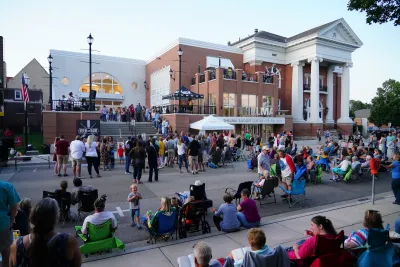
In an opinion piece in Strong Towns, Max Musicant and Shina Shayesteh argue that ‘placemaking’ has become a victim of its own success, with the term becoming diluted and monetized.
Per the authors:
Like so many other concepts that become buzzwords (often due in part to some real success and value), and then get used ad nauseum, “placemaking” has lost most of its functional meaning. When a once-specific concept starts to require qualifiers like “standard placemaking, “strategic placemaking, “creative placemaking,” “tactical placemaking,” or “placekeeping” to know what someone’s even talking about anymore, you know we’ve lost our way.
The authors point out three major problems with this loss: the vagueness of the term has led to a loss of meaning; its success has led to it becoming a “fundable priority” sometimes attached to projects that don’t truly improve a community; and ‘placemaking’ as a noun has turned an approach into a thing, expanding the term to include a variety of projects that don’t have lasting impact. “When everyone is imagining their own version of what this word means, collaboration becomes impossible.”
If placemaking is dead, what can be done to revive it? The authors offer three recommendations: eliminate the jargon; reclaim placemaking as a verb requiring context; and use more specific terms like “public art,” “play equipment,” or “seating” to describe projects that add to placemaking efforts, but don’t define them.
FULL STORY: Placemaking Is Dead, Long Live Placemaking!

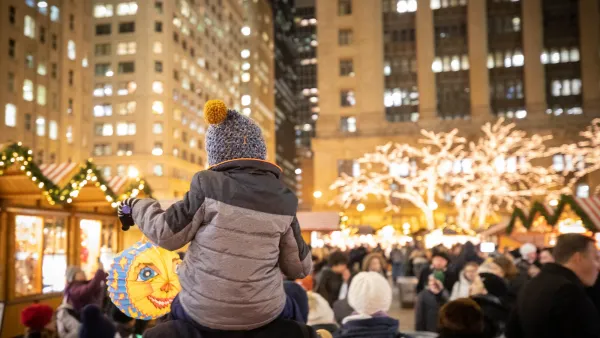
String Lights are Secular! The Holiday Case for Year-round Placemaking
The holidays make streets and spaces warm, cozy, and welcoming. Why don’t we do that year round?
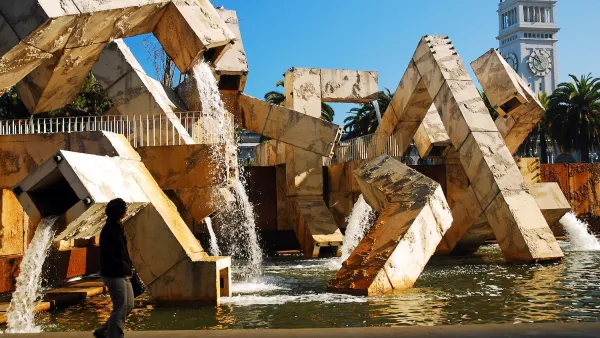
San Francisco to Dismantle its Polarizing Brutalist Fountain
The Vaillancourt Fountain stands as a symbol of the tension between the city’s past and future.
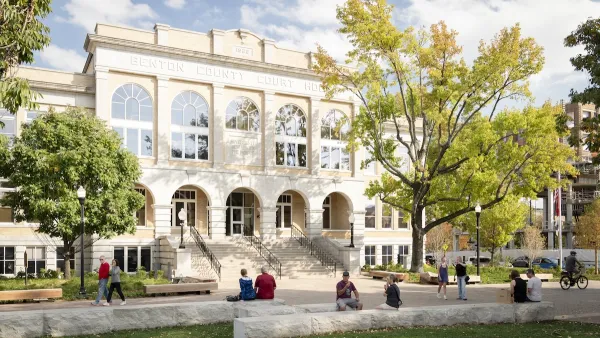
Placekeeping: Setting a New Precedent for City Planners
How a preservation-based approach to redevelopment and urban design can prevent displacement and honor legacy communities.

Planetizen Federal Action Tracker
A weekly monitor of how Trump’s orders and actions are impacting planners and planning in America.

The state-sanctioned urbicide of Austin
People don’t kill cities. Freeways do.

US to reduce Colorado River water deliveries to Mexico
A new Colorado Treaty amendment reduces Mexico’s Colorado River water allocation by 250,000 acre feet.

5 New England states march closer to 800 megawatt wind energy project
Securing federal approval for the project may be complicated under the Trump administration, which has historically been hostile towards domestic wind power.

Baltimore to break ground on $50 million Transit Priority Project
The project will bring faster bus trips, safer streets and better bike connections to Baltimore.

Airbnb launches $250 million 'last-dollar financing' housing accelerator, makes first investment in Austin
The company will put $6.4 million towards affordable housing development in Texas’ capital.

FREE Course: Walkable City 1: Why Walkability?
After describing his path towards focusing on walkability as the essence of good planning, Jeff Speck marches through his five principal reasons for making more walkable places.
Reinventing Malls: Planning Alchemy—Turning Gray Fields Into Gold
The course focuses on the opportunities and imperatives that shape reinvention of mall sites.

Eagle County Government
Harvard University Graduate School of Design
Nashville Planning Department
The Architects Foundation
University of Cincinnati Online
The Pocatello Development Authority
The Urban Renewal Agency of the City of Pocatello
Journal of the American Planning Association