The city’s Alternative Enforcement Program prioritizes buildings with the most unaddressed code violations, allowing the city to make repairs where needed.


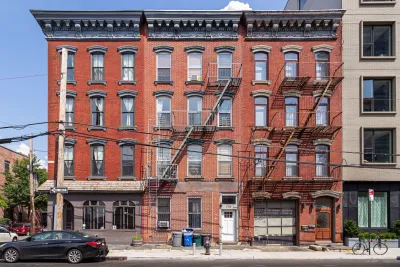
New York City announced a list of the city’s 250 most distressed housing buildings, which puts them under heightened oversight through the city’s Alternative Enforcement Program (AEP).
According to a press release from the city, the program allows it to closely monitor buildings with repeat code violations, issue Orders to Correct, and step in directly to make repairs when owners fail to do so. “The 250 buildings selected this year account for nearly 55,000 open violations and owe the city nearly $4.5 million for emergency repairs already performed.”
The press release adds, “The 250 buildings selected for this year’s AEP list include 7,038 homes and account for 54,909 open housing code violations, reflecting widespread and persistent disrepair.”
The AEP identifies buildings with the most serious, unresolved violations and allows the city to complete emergency repairs if needed.
Read the full story: Mamdani Administration Announces Stricter Enforcement for City’s 250 Most Distressed Apartment Buildings


NYC Council Passes ‘Proactive’ Building Safety Bill
In the wake of multiple building collapses in recent years, the bill seeks to identify dangerous building conditions before they escalate.

Chicago Looks to Boulder Landlord Registry as a Model for Tenant Protections
Unlike the Colorado city, where code violations in rental housing are quickly identified and fixed, Chicago lacks a robust system of inspection and enforcement.
Landlords Owe NYC $1.5 Billion for Building Code Violations
Violations of the building code go unenforced in New York City.

Planetizen Federal Action Tracker
A weekly monitor of how Trump’s orders and actions are impacting planners and planning in America.

California plans to bury El Niño’s downpour
If the state plays its cards right, it may be able to store a billion acre-feet of El Niño’s water in aquifers.

Chicago breaks ground on $3 billion megadevelopment
The new neighborhood, titled Foundry Park, will one day host 3,700 residences.

Satanic Place Names
From streams and lakes to valleys and canyons, I mapped more than 1,000 places named after the Devil.

California High-Speed Rail Authority CEO resigns after $600,000 scandal
Under Ian Choudri, the authority used taxpayer dollars to fund first class flights and trips to nightclubs.

Want to study the Missouri River? Soon, you may need unanimous approval from 10 states
Legislation would require 10 governors’ permission to study or build projects moving water outside the basin.

FREE Course: Walkable City 1: Why Walkability?
After describing his path towards focusing on walkability as the essence of good planning, Jeff Speck marches through his five principal reasons for making more walkable places.
Reinventing Malls: Planning Alchemy—Turning Gray Fields Into Gold
The course focuses on the opportunities and imperatives that shape reinvention of mall sites.

City of Rosemead
Rutgers University, Edward J. Bloustein School of Planning and Public Policy
One Hundred Miles
Hunter College, City University of New York (CUNY)
The Architects Foundation
University of Cincinnati Online
City of Cambridge
Montrose County
The Pocatello Development Authority