The count, the nation’s most comprehensive survey of homeless residents, excludes some populations, including people incarcerated at the time or living in housing-insecure conditions.


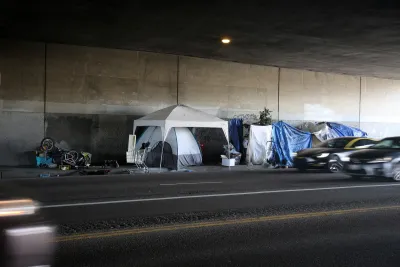
Homelessness advocacy workers are warning that new guidelines put in place by the Department of Housing and Urban Development for this year’s point-in-time count “assure an undercount” of people living unsheltered, reports Michael Lyle in Nevada Current.
According to Lyle, while the organizations conducting the survey are instructed to count street-level homelessness and people staying in temporary shelters and transitional housing, “Other often overlooked unhoused populations that won’t be reflected in the final numbers include those experiencing homelessness who were incarcerated at the time of the count and unhoused people in emergency rooms and hospitals.”
The count also excludes people living in precarious or “less-than-optimal” situations that face extreme housing insecurity. “Because HUD has specific reporting guidelines, counties usually limit data collection during the PIT count to what is specifically required or mandated.” However, some counties are making a concerted effort to gather additional information, such as gender identity, to better understand the needs of their unhoused community.
FULL STORY: As counties prepare to count unhoused population, HUD guidelines assure an undercount


Oakland Mayor, City Council Offer ‘Radically Different’ Plans for Reducing Homelessness
Mayor Barbara Lee wants to reduce encampment sweeps and focus on improving sanitation while city council members want to increase enforcement, particularly against illegally parked RVs.

Michigan Capital's $640K ‘Pod’ Homes for Homeless Residents not Approved for Winter Use
Lansing officials approved a plan to purchase 50 modular micro-housing units as emergency shelter for the city’s unhoused residents.
Local Governments Sue HUD Over Funding Cuts
A new lawsuit alleges that the Trump administration’s revised guidelines for housing and homelessness assistance funds will decimate key programs.

Planetizen Federal Action Tracker
A weekly monitor of how Trump’s orders and actions are impacting planners and planning in America.

The state-sanctioned urbicide of Austin
People don’t kill cities. Freeways do.

US to reduce Colorado River water deliveries to Mexico
A new Colorado Treaty amendment reduces Mexico’s Colorado River water allocation by 250,000 acre feet.

5 New England states march closer to 800 megawatt wind energy project
Securing federal approval for the project may be complicated under the Trump administration, which has historically been hostile towards domestic wind power.

Baltimore to break ground on $50 million Transit Priority Project
The project will bring faster bus trips, safer streets and better bike connections to Baltimore.

Airbnb launches $250 million 'last-dollar financing' housing accelerator, makes first investment in Austin
The company will put $6.4 million towards affordable housing development in Texas’ capital.

FREE Course: Walkable City 1: Why Walkability?
After describing his path towards focusing on walkability as the essence of good planning, Jeff Speck marches through his five principal reasons for making more walkable places.
Reinventing Malls: Planning Alchemy—Turning Gray Fields Into Gold
The course focuses on the opportunities and imperatives that shape reinvention of mall sites.

Eagle County Government
Harvard University Graduate School of Design
Nashville Planning Department
The Architects Foundation
University of Cincinnati Online
The Pocatello Development Authority
The Urban Renewal Agency of the City of Pocatello
Journal of the American Planning Association