Legislators are proposing changes to a bill that froze all local land use and building code changes, including those designed to reduce risks from flooding and hurricanes.


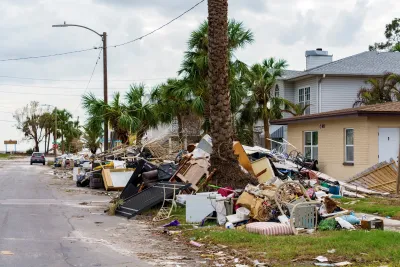
Three proposed Florida bills would alter 2024’s controversial SB 180, a law designed to help communities rebuild and recover after disasters that critics say prevent local jurisdictions from enacting new development standards and building codes needed to protect communities from flooding and hurricane damage.
As Amy Green explains in Inside Climate News, the law sparked two lawsuits that say it prevents cities from making needed adjustments to land use regulations in a state where unpredictable extreme weather is a constant concern. “The law prohibits local governments from enacting any land development policies that could be considered to be ‘more restrictive or burdensome’” — including building codes aimed at reducing flood risk and strengthening stormwater management.
The proposed bills would narrow the law’s scope to make it apply only to communities most threatened by hurricanes and make other tweaks to revise the most controversial aspects of the law.
FULL STORY: In Hurricane-Prone Florida, Legislators Reconsider New Growth and Development Law

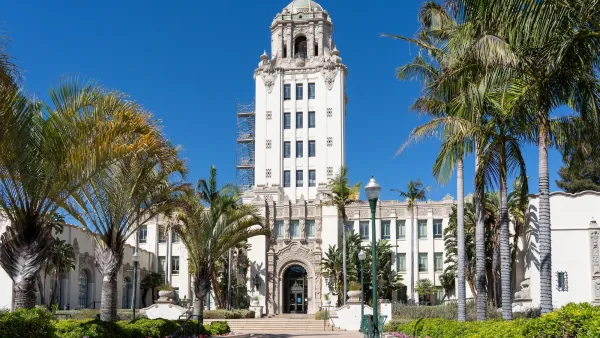
Beverly Hills 'reluctantly' approves 8-story Builder's Remedy project
The 55-unit tower was approved under a state law that allows by-right permitting in cities without an approved housing element.

New York State pauses all new data center projects
An executive order from Gov. Hochul prohibits new data center permits until the state finalizes an environmental review of their impacts.
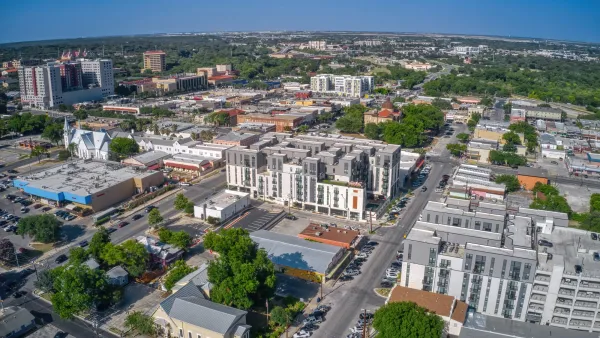
Texas town's data center ban challenged by state senator
In June, San Marcos became the first city in Texas to prohibit data centers.

The state-sanctioned urbicide of Austin
People don’t kill cities. Freeways do.

US to reduce Colorado River water deliveries to Mexico
A new Colorado Treaty amendment reduces Mexico’s Colorado River water allocation by 250,000 acre feet.

New Jersey’s second-largest city bans standalone data centers
Jersey City will continue to allow co-location facilities, such as those meant for research institutions that store their own data.

Amtrak not solely to blame for New Jersey commuter rail's unreliability, report finds
A new study from the Garden State Initiative found that NJ Transit’s budget grew 20% across a 4 year period, but reliability declined significantly over the same period.

EPA erases limits on planet-warming pollution from power plants
Under Monday’s plan, power plants would still have some limits on how much mercury, arsenic and other contaminants they can emit.

Phoenix announces new on-demand transit service, more frequent RAPID buses
Both new services will launch in October, and are part of Phoenix's Project Effective Access Solutions for Easing Congestion.

FREE Course: Walkable City 1: Why Walkability?
After describing his path towards focusing on walkability as the essence of good planning, Jeff Speck marches through his five principal reasons for making more walkable places.
Reinventing Malls: Planning Alchemy—Turning Gray Fields Into Gold
The course focuses on the opportunities and imperatives that shape reinvention of mall sites.

Eagle County Government
Harvard University Graduate School of Design
Nashville Planning Department
The Architects Foundation
University of Cincinnati Online
The Pocatello Development Authority
The Urban Renewal Agency of the City of Pocatello
Journal of the American Planning Association