Cities in the West are seeing sharp drops in their under-5 populations.



The proportion of young children in western U.S. metros is falling faster than in other parts of the country, reports Jordan King in Newsweek. “Metros in Utah, Colorado and Nevada are among those facing the starkest drops in their under-5 shares of the total population, according to new analysis from the housing market data site Realtor.com published on New Year’s Day.”
Along with longer lifespans, this signals a major shift in demographics that puts new pressures on the labor market, health care, and social security systems. “Lower birth rates can sometimes ease immediate pressure on housing and schools, but also lead to challenges in supporting economic growth and elder care, as the ratio of working adults to retirees declines.”
The decline in the under-5 population is shaped by a multitude of factors. In Utah, where roughly half the state identifies as Latter-Day Saints, the birth rate has historically been higher than most of the country, but, according to Utah Women and Leadership Project (UWLP) founder Susan R. Madsen, “the longstanding gap between Utah’s births and the rest of the country’s has narrowed since 2010, showing ‘Utahns are not immune’ to the changes affecting birth rates everywhere.”
FULL STORY: Map Reveals Where Baby Populations Falling Fastest


The Pandemic Baby Bust
The economic uncertainty of the pandemic has added to already declining birth rates in a troubling sign for the future of the American economy.
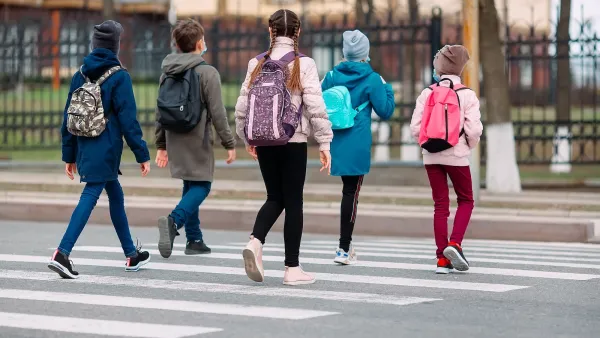
The number of kids walking to school dropped from over 50% to 11% since the 1960s
Unsafe pedestrian infrastructure makes walking to school dangerous or impossible for a growing number of American students.

Children in 55 countries are redesigning their cities in Minecraft
A U.N.-backed program lets students and community members reimagine sites in their neighborhoods in the game — and translate them into real-life buildings.

The state-sanctioned urbicide of Austin
People don’t kill cities. Freeways do.

US to reduce Colorado River water deliveries to Mexico
A new Colorado Treaty amendment reduces Mexico’s Colorado River water allocation by 250,000 acre feet.

New Jersey’s second-largest city bans standalone data centers
Jersey City will continue to allow co-location facilities, such as those meant for research institutions that store their own data.

Amtrak not solely to blame for New Jersey commuter rail's unreliability, report finds
A new study from the Garden State Initiative found that NJ Transit’s budget grew 20% across a 4 year period, but reliability declined significantly over the same period.

EPA erases limits on planet-warming pollution from power plants
Under Monday’s plan, power plants would still have some limits on how much mercury, arsenic and other contaminants they can emit.

Phoenix announces new on-demand transit service, more frequent RAPID buses
Both new services will launch in October, and are part of Phoenix's Project Effective Access Solutions for Easing Congestion.

FREE Course: Walkable City 1: Why Walkability?
After describing his path towards focusing on walkability as the essence of good planning, Jeff Speck marches through his five principal reasons for making more walkable places.
Reinventing Malls: Planning Alchemy—Turning Gray Fields Into Gold
The course focuses on the opportunities and imperatives that shape reinvention of mall sites.

Eagle County Government
Harvard University Graduate School of Design
Nashville Planning Department
The Architects Foundation
University of Cincinnati Online
The Pocatello Development Authority
The Urban Renewal Agency of the City of Pocatello
Journal of the American Planning Association