A Florida study found homes near recently built sound walls saw a rise in value.


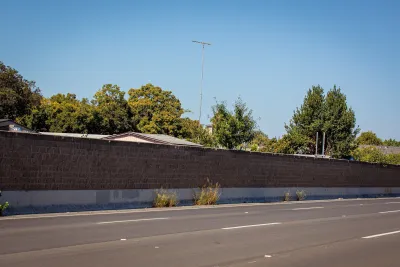
A study out of Florida reveals that homes near new sound barriers that block out freeway noise saw a 6.8 percent price increase after the walls were built, reports Lisa Ward in the Wall Street Journal.
Researchers found that “The barrier’s effect on property values declined with distance, the researchers found. They observed price increases of about 3.9% for homes located 100 to 200 meters from a newly constructed sound barrier, 3.1% for homes located 200 to 300 meters from a barrier and 2.8% for homes 300 to 400 meters from a barrier.”
The study shows that buyers are willing to pay more for homes in quieter areas, adding to a growing body of research on the measurable health and economic impacts of urban noise.
The authors of the study estimate that traffic noise reduces property values by about $110 billion nationally. “Lower-income homeowners often bear the brunt of this, the researchers say, because their neighborhoods tend to be most affected by things like pollution, crime and traffic noise.”
Read the full story: Quieter Streets Linked to Increase in Home Prices
Noise as a Public Health Hazard
New ways of measuring the effects of sound on human health are helping communities fight back against noise pollution.
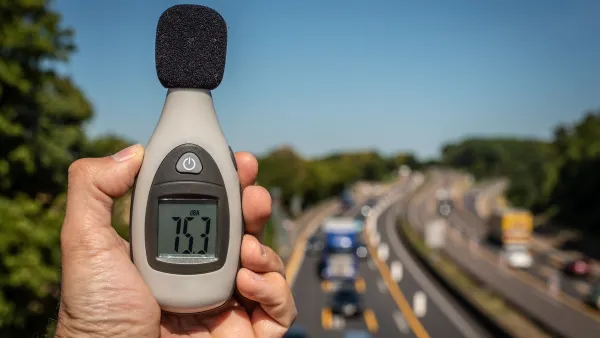
The Case Against Noise Pollution
A detailed description of how noise impacts health and wellbeing.
Using Tech to Control Noise Pollution
Several cities are piloting programs that use machine learning to identify and understand urban noise patterns and enforce noise ordinances.

Planetizen Federal Action Tracker
A weekly monitor of how Trump’s orders and actions are impacting planners and planning in America.

California plans to bury El Niño’s downpour
If the state plays its cards right, it may be able to store a billion acre-feet of El Niño’s water in aquifers.

Desperate measures: Advocates weigh draining Lake Powell to fill Colorado River
Draining the reservoir could reduce evaporation losses by a couple hundred thousand acre-feet.

Los Angeles just elected an urban planner as its mayor
Transportation analysts are optimistic that Raman will be more aggressive in addressing transit issues than Bass.

Mamdani’s pied-à-terre tax survives legal challenge
A panel of judges found that the plaintiffs failed to demonstrate injury as a result of New York City's implementation of the tax.

Eastern Nebraska is running out of electricity
Data centers and electrification are straining eastern Nebraska’s grid, throttling economic development.

FREE Course: Walkable City 1: Why Walkability?
After describing his path towards focusing on walkability as the essence of good planning, Jeff Speck marches through his five principal reasons for making more walkable places.
Reinventing Malls: Planning Alchemy—Turning Gray Fields Into Gold
The course focuses on the opportunities and imperatives that shape reinvention of mall sites.

City of Rosemead
Rutgers University, Edward J. Bloustein School of Planning and Public Policy
One Hundred Miles
University of Michigan School for Environment and Sustainability (SEAS)
Hunter College, City University of New York (CUNY)
The Architects Foundation
City of Cambridge
Montrose County
The Pocatello Development Authority