Permits in the Palisades are being issued at nearly three times the typical rate as before the wildfires.


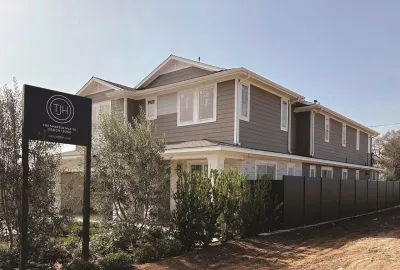
Almost a year after fires ravaged Pacific Palisades, the city of Los Angeles has issued the first Certificate of Occupancy for a rebuilt home.
An article in LA Downtown News traces the timeline of the rebuilding process, which began less than a week after the fire, when Mayor Karen Bass issued an emergency order that reduced barriers to expedite the rebuilding permitting process. California Governor Gavin Newsom also suspended certain regulations to streamline coastal rebuilding, a move that drew criticism from environmental groups.
According to the city, permits in Pacific Palisades are being issued at close to three times the typical rate for single-family projects before the wildfires, and 70 percent of single-family permit clearances are no longer required.
An executive order issued by Mayor Bass last month focused on non-residential properties, issuing “a set of emergency measures designed to streamline the rebuilding process for commercial properties located within the Palisades Commercial Village and Neighborhoods Specific Plan area, including properties in the Coastal Zone.”
FULL STORY: Palisades Rebuild: First Certificate of Occupancy issued as recovery accelerates

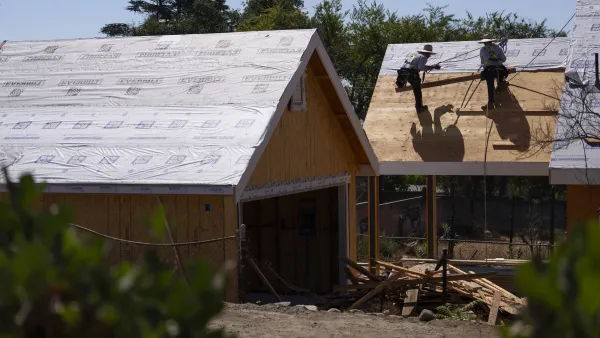
One Year After the LA Fires, Just 13% of Damaged Homes Have a Rebuilding Permit
After a slow start, permitting is starting to pick up.

UCLA Experts Offer Critical Support for LA Wildfire Response and Recovery
The UCLA Luskin Center for Innovation offers expert guidance on LA wildfire response and recovery, addressing critical issues like water safety, air quality, equitable rebuilding, and climate adaptation to promote resilience and sustainability.
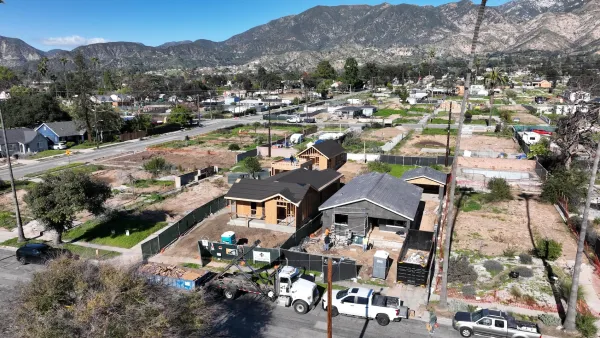
Almost 40% of LA fire survivors face a housing crisis
Many Angelenos who lost their homes in the Altadena and Pacific Palisades fires have already run out of temporary housing funds.

The state-sanctioned urbicide of Austin
People don’t kill cities. Freeways do.

US to reduce Colorado River water deliveries to Mexico
A new Colorado Treaty amendment reduces Mexico’s Colorado River water allocation by 250,000 acre feet.

New Jersey’s second-largest city bans standalone data centers
Jersey City will continue to allow co-location facilities, such as those meant for research institutions that store their own data.

Amtrak not solely to blame for New Jersey commuter rail's unreliability, report finds
A new study from the Garden State Initiative found that NJ Transit’s budget grew 20% across a 4 year period, but reliability declined significantly over the same period.

EPA erases limits on planet-warming pollution from power plants
Under Monday’s plan, power plants would still have some limits on how much mercury, arsenic and other contaminants they can emit.

Phoenix announces new on-demand transit service, more frequent RAPID buses
Both new services will launch in October, and are part of Phoenix's Project Effective Access Solutions for Easing Congestion.

FREE Course: Walkable City 1: Why Walkability?
After describing his path towards focusing on walkability as the essence of good planning, Jeff Speck marches through his five principal reasons for making more walkable places.
Reinventing Malls: Planning Alchemy—Turning Gray Fields Into Gold
The course focuses on the opportunities and imperatives that shape reinvention of mall sites.

Eagle County Government
Harvard University Graduate School of Design
Nashville Planning Department
The Architects Foundation
University of Cincinnati Online
The Pocatello Development Authority
The Urban Renewal Agency of the City of Pocatello
Journal of the American Planning Association