The demise of our last mass stock of affordable market housing left us no place to go when we’re short on our dough. How will we rebuild last resort housing?


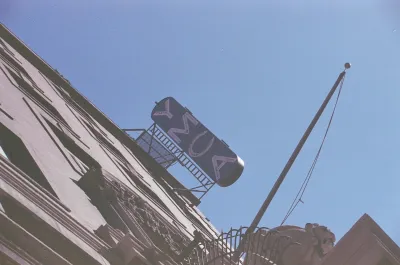
The McBurney YMCA was a happening place in the 1970s. This single room occupancy hotel, or SRO, served as a safe haven, a single’s lounge, and a gym for gay men in New York City. Some denizens of this Chelsea hotel included members of the Village People, a disco sextet that would catapult to global renown with their 1978 ode to the Y. The McBurney Y features prominently in the “YMCA” music video, which also shows the group decked out in cop and cowboy outfits on the crumbling Chelsea piers, another famous gay cruising spot.
The AIDs crisis and the gentrification of Chelsea would eventually spell the end of the swinging times at the Y and the piers. But “YMCA” will forever preserve a distinctive moment in gay culture, and a different mode of living in American cities. Yes, the Y is a place “where you can hang out with all the boys.” But it’s also, crucially, “a place you can go… when you’re short on your dough.”
Single room occupancy hotels played a central role in America’s affordable housing ecosystem for decades, providing cheap, flexible accommodations without government subsidy. They are effectively large-scale boarding houses, offering small private rooms or dorm-style quarters with shared bathrooms and minimal kitchen facilities.
The YMCA was the nation’s largest SRO provider, with more than 100,000 units nationwide at its peak. The Y served an incredibly diverse clientele, not only gay men fleeing oppression and seeking community, but frequent travelers like Martin Luther King, Jr. and journalist Dan Rather.
Other SROs housed seasonal workers, people struggling with addiction, and others with very low-incomes. Shady management, unsanitary conditions, overcrowding, and conflict among residents in close quarters were all too common features of SRO life. But as with public housing, critics missed the forest for the trees.
“YMCA” would become the swan song of SRO living. Its demise was decades in the making. As early as 1930s, many cities passed zoning and parking rules that made new SROs illegal to construct.
Then, starting in the 1950s, huge numbers of SROs were leveled in the name of urban renewal. (Exact figures don’t exist, because the federal government did not treat hotels as housing, and did not count the people displaced from them.) Over 1 million SRO units nationwide were lost in the 1970s alone. New York City lost 87 percent of its SRO units between 1970 and 1983, as the city offered landlords incentives to convert their buildings to other uses.
Mainstream housing advocates, for the most part, supported this campaign: Like tenements and public housing before them, SROs were considered substandard housing that was beyond redemption. Housers wouldn’t realize their mistake until it was too late.
In the early 1980s, cities across the country woke up to a troubling new phenomenon. Seemingly overnight, legions of people had begun sleeping outside, in doorways and on park benches. The ranks of the homeless were suddenly much larger, and much more diverse in age, gender, and race than the largely white, male and middle-aged “tramps” and “winos” of previous years. This moment marked the beginning of what’s now known as “modern homelessness.”
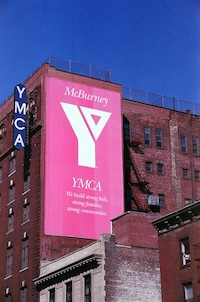 In hindsight, housing researchers point to the mass demolition of SROs as a major factor behind its emergence. This housing of last resort was taken away just as other alternatives, like public housing and state mental hospitals, were withering under the Reagan Administration. Meanwhile, the “downzonings” many cities had initiated in the previous years severely limited the development of all types of housing.
SROs were far from ideal, but without this form of housing or any other low-cost option, homelessness was the inevitable result. It was just as Edith Elmer Wood feared back in 1919: Housing reform had created a housing famine.
 This piece is an excerpt from The Unfinished Metropolis, Ben Schneider’s new book exploring how America’s favorite things to build — freeways, single-family homes, malls, and downtown office towers — are keeping us stuck in the past. In The Unfinished Metropolis, Schneider argues for the reclamation of the lost art of city-building in the modern day. Read more excerpts, and more of Ben’s work here.
From The Unfinished Metropolis: Igniting the City-Building Revolution Copyright © 2025 by Benjamin Schneider by permission of Island Press, Washington, D.C.

One Federal Low-Income Housing Program is Actually Being Expanded
Recent changes to the Low-Income Housing Tax Credit program could lead to over a million new housing units, but cuts to adjacent and complementary programs could limit its impact.
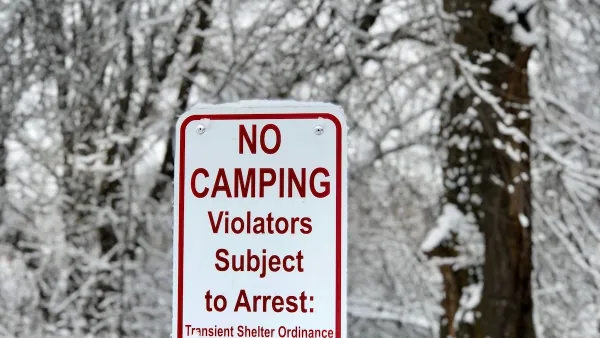
Opinion: Unhoused People Need Housing, Not Law Enforcement
The sharp increase in the unhoused population calls for urgent action, not criminalization.
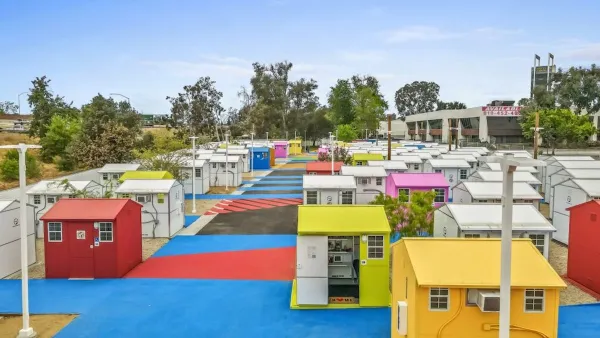
Tiny Homes are a First—but not Last—Step in Ending Homelessness
Cities are trying to stretch affordable housing funds to meet the demand for both short- and long-term housing.

Planetizen Federal Action Tracker
A weekly monitor of how Trump’s orders and actions are impacting planners and planning in America.

The state-sanctioned urbicide of Austin
People don’t kill cities. Freeways do.

US to reduce Colorado River water deliveries to Mexico
A new Colorado Treaty amendment reduces Mexico’s Colorado River water allocation by 250,000 acre feet.

Mamdani overhauls NYC's Vision Zero plan with 100 new policy goals
The overhaul aims to reduce traffic deaths and make streets safer for pedestrians, cyclists and drivers through lower speed limits, new safety infrastructure and more.

Amtrak not solely to blame for New Jersey commuter rail's unreliability, report finds
A new study from the Garden State Initiative found that NJ Transit’s budget grew 20% across a 4 year period, but reliability declined significantly over the same period.

EPA erases limits on planet-warming pollution from power plants
Under Monday’s plan, power plants would still have some limits on how much mercury, arsenic and other contaminants they can emit.

FREE Course: Walkable City 1: Why Walkability?
After describing his path towards focusing on walkability as the essence of good planning, Jeff Speck marches through his five principal reasons for making more walkable places.
Reinventing Malls: Planning Alchemy—Turning Gray Fields Into Gold
The course focuses on the opportunities and imperatives that shape reinvention of mall sites.

Eagle County Government
Harvard University Graduate School of Design
Nashville Planning Department
The Architects Foundation
University of Cincinnati Online
The Pocatello Development Authority
The Urban Renewal Agency of the City of Pocatello
Journal of the American Planning Association

