Recent changes to the Low-Income Housing Tax Credit program could lead to over a million new housing units, but cuts to adjacent and complementary programs could limit its impact.



While the “One Big Beautiful Bill” gutted many federal housing assistance programs, it expands the Low-Income Housing Tax Credit (LIHTC) program, which could lead to the construction of over one million new housing units in the next decade. According to an article by Jared Brey in Governing, “Since its inception, the program has helped finance more than 54,000 projects, including 3.7 million housing units.”
The program makes it easier to finance affordable housing construction. New rules established in the OBBB could yield 1.22 million additional homes. However, Brey notes that “That estimate assumes all states will devote certain types of bonds exclusively to affordable housing construction” and that enough financing will be available.
According to Brey, many LIHTC projects are paired with other federal funding such as Section 8 housing vouchers (which many tenants in LIHTC housing use to pay rent) and HOME grants. The cuts to those programs could impact the effectiveness of LIHTC.
Brey details the changes to the program, one of which expands the number of 9 percent tax credits each state gets annually, and another which lowers the threshold for bond financing. According to Yonah Freemark of the Urban Institute, the program has been successful in large part because of its involvement of private entities. “The fact that it involves bankers, lawyers, syndicators and investors means that all those people have skin in the game. In that sense it’s kind of brilliant in the American context.”
FULL STORY: One Housing Assistance Program Congress Is Actually Expanding


Mismanagement Leads to Loss of up to $35M for DC Affordable Housing
The District’s housing agency forfeited what would amount to $35 million in federal housing funds over the next decade.

Federal cuts to voucher program put 9,000 New Yorkers at risk of homelessness
The Emergency Housing Voucher program is ending years ahead of schedule, forcing housing agencies to find new ways to support roughly 70,000 households nationwide.
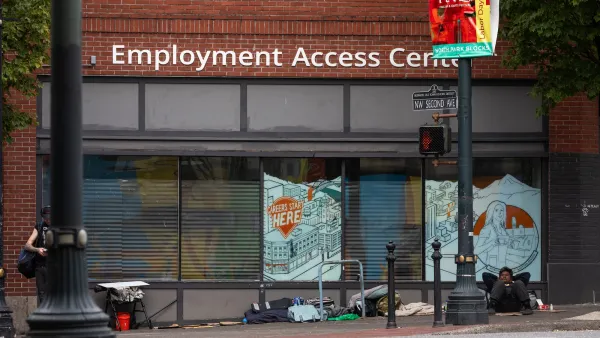
Judge: HUD acted illegally in changing homelessness grant rules
A Rhode Island judge struck down 'partisan' Trump restrictions on Continuum of Care Build grants.

The state-sanctioned urbicide of Austin
People don’t kill cities. Freeways do.

US to reduce Colorado River water deliveries to Mexico
A new Colorado Treaty amendment reduces Mexico’s Colorado River water allocation by 250,000 acre feet.

New Jersey’s second-largest city bans standalone data centers
Jersey City will continue to allow co-location facilities, such as those meant for research institutions that store their own data.

Amtrak not solely to blame for New Jersey commuter rail's unreliability, report finds
A new study from the Garden State Initiative found that NJ Transit’s budget grew 20% across a 4 year period, but reliability declined significantly over the same period.

EPA erases limits on planet-warming pollution from power plants
Under Monday’s plan, power plants would still have some limits on how much mercury, arsenic and other contaminants they can emit.

Phoenix announces new on-demand transit service, more frequent RAPID buses
Both new services will launch in October, and are part of Phoenix's Project Effective Access Solutions for Easing Congestion.

FREE Course: Walkable City 1: Why Walkability?
After describing his path towards focusing on walkability as the essence of good planning, Jeff Speck marches through his five principal reasons for making more walkable places.
Reinventing Malls: Planning Alchemy—Turning Gray Fields Into Gold
The course focuses on the opportunities and imperatives that shape reinvention of mall sites.

Eagle County Government
Harvard University Graduate School of Design
Nashville Planning Department
The Architects Foundation
University of Cincinnati Online
The Pocatello Development Authority
The Urban Renewal Agency of the City of Pocatello
Journal of the American Planning Association