Kensington Corridor Trust manages dozens of properties, including affordable rental and commercial spaces, as part of its goal to revitalize the commercial corridor — but the group says who makes the decisions is more important than what decisions are made.



Philadelphia’s Kensington Corridor Trust (KCT) is applying a neighborhood-trust model — paired with a perpetual purpose trust—to transfer decision-making power over a high-vacancy commercial corridor to residents and local entrepreneurs.
Since launching in 2019, KCT has acquired 31 properties, is developing 11 commercial spaces and 25 residences across nine sites, stewards a multi-parcel community garden, and reports no commercial vacancies.
Affordability is codified (residential targeted at 25–50% AMI; commercial rents ~25% below market), with governance bodies selected via open neighborhood calls and members paid for their time.
KCT’s blended capital stack includes more than $3 million in grants and over $13 million in loans at or below 2 percent interest. A forthcoming community stewardship trust will let neighbors invest small amounts monthly and share in returns — grounding revitalization in community control and long-term affordability.
FULL STORY: Who Holds the Power? How One Corridor Flipped the Script on Development

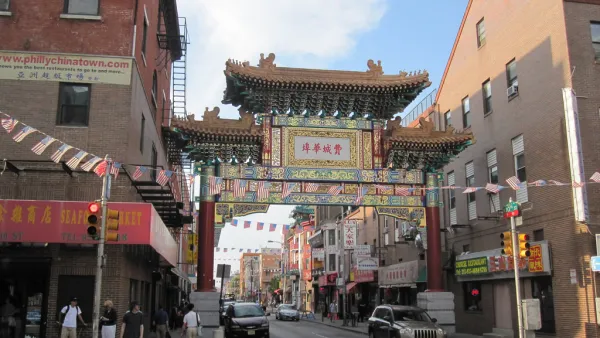
Equitable Development Plan Aims To Protect Philly's Chinatown
As the historic neighborhood experiences increased redevelopment around the new Rail Park, community activists are working to ensure older residents and businesses aren't displaced in the process.

Philadelphia lawmakers fight to save 'Chinatown Stitch' from Trump cuts
The freeway cap project, approved and funded under the Biden administration, is now in jeopardy after the federal government rescinded all but $8 million in funding.
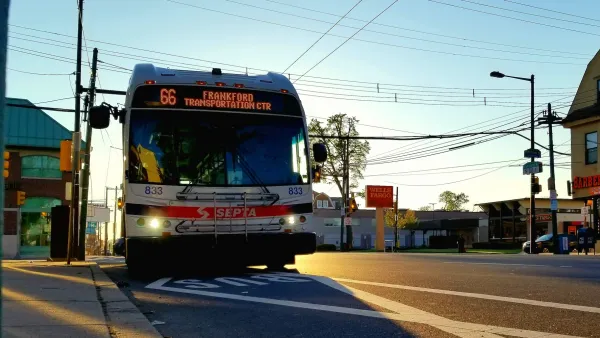
SEPTA's bus-mounted lane enforcement cameras cut travel times by up to 6%
The AI-assisted cameras have issued nearly 200,000 citations to drivers blocking bus lanes.

Planetizen Federal Action Tracker
A weekly monitor of how Trump’s orders and actions are impacting planners and planning in America.

The state-sanctioned urbicide of Austin
People don’t kill cities. Freeways do.

US to reduce Colorado River water deliveries to Mexico
A new Colorado Treaty amendment reduces Mexico’s Colorado River water allocation by 250,000 acre feet.

5 New England states march closer to 800 megawatt wind energy project
Securing federal approval for the project may be complicated under the Trump administration, which has historically been hostile towards domestic wind power.

Baltimore to break ground on $50 million Transit Priority Project
The project will bring faster bus trips, safer streets and better bike connections to Baltimore.

Airbnb launches $250 million 'last-dollar financing' housing accelerator, makes first investment in Austin
The company will put $6.4 million towards affordable housing development in Texas’ capital.

FREE Course: Walkable City 1: Why Walkability?
After describing his path towards focusing on walkability as the essence of good planning, Jeff Speck marches through his five principal reasons for making more walkable places.
Reinventing Malls: Planning Alchemy—Turning Gray Fields Into Gold
The course focuses on the opportunities and imperatives that shape reinvention of mall sites.

Eagle County Government
Harvard University Graduate School of Design
Nashville Planning Department
The Architects Foundation
University of Cincinnati Online
The Pocatello Development Authority
The Urban Renewal Agency of the City of Pocatello
Journal of the American Planning Association