The city has agreed to buy and redevelop a property that will provide shelter and services for over 200 unhoused residents.


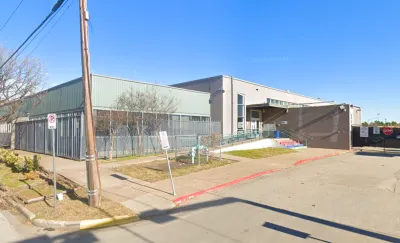
The city of Houston plans to build a “super hub” with emergency shelter and services that could house from 150 to 225 people at a time and provide health care and mental health resources.
As Abby Church reports in the Houston Chronicle, the city solidified plans to buy a property that operated as a center for homeless services until 2017. “Since 2018, the facility has been leased by a nonprofit Southwest Key to house migrant children, according to meeting agenda documents. The nonprofit lost federal funding as its shelter population got low and it faced layoffs. Its lease ended at the end of August.”
The facility will be open to anyone who comes in, including people with pets, and “will also connect those who visit with other services like permanent housing, diversion services through The Way Home, referrals to Harris Center facilities and transition to other area shelters.”
The city plans to buy the two lots for $16 million and hope to open the facility in early 2026 as part of a $168 million plan to bring more people out of homelessness over the next three years.
FULL STORY: Houston to open ‘super hub’ for unhoused off Emancipation under Whitmire’s plan to end homelessness

Judge halts 'hasty' HUD changes to homelessness grants
Service providers said the sudden changes would have imperiled thousands of Americans and forced more people into homelessness.
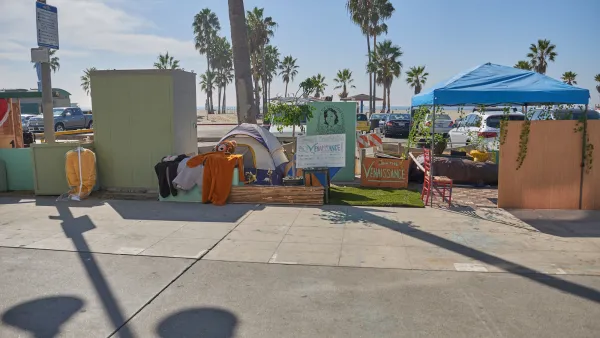
LA Proposal Would Forcibly Remove Unhoused People Near Olympic Venues
Los Angeles County sent city officials a report outlining strategies for clearing homeless encampments, but advocates point out that the report itself notes there are not enough shelte resources to accommodate all unhoused residents.
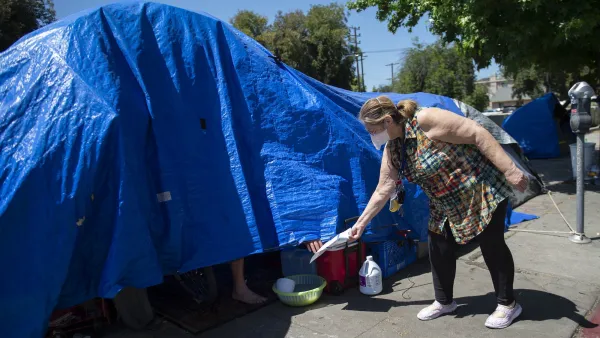
California Law Bars Cities From Punishing Homelessness Outreach Workers
A state law seeks to protect workers who provide services to unhoused residents, regardless of where they live.

Planetizen Federal Action Tracker
A weekly monitor of how Trump’s orders and actions are impacting planners and planning in America.

The state-sanctioned urbicide of Austin
People don’t kill cities. Freeways do.

US to reduce Colorado River water deliveries to Mexico
A new Colorado Treaty amendment reduces Mexico’s Colorado River water allocation by 250,000 acre feet.

5 New England states march closer to 800 megawatt wind energy project
Securing federal approval for the project may be complicated under the Trump administration, which has historically been hostile towards domestic wind power.

Baltimore to break ground on $50 million Transit Priority Project
The project will bring faster bus trips, safer streets and better bike connections to Baltimore.

Airbnb launches $250 million 'last-dollar financing' housing accelerator, makes first investment in Austin
The company will put $6.4 million towards affordable housing development in Texas’ capital.

FREE Course: Walkable City 1: Why Walkability?
After describing his path towards focusing on walkability as the essence of good planning, Jeff Speck marches through his five principal reasons for making more walkable places.
Reinventing Malls: Planning Alchemy—Turning Gray Fields Into Gold
The course focuses on the opportunities and imperatives that shape reinvention of mall sites.

Eagle County Government
Harvard University Graduate School of Design
Nashville Planning Department
The Architects Foundation
University of Cincinnati Online
The Pocatello Development Authority
The Urban Renewal Agency of the City of Pocatello
Journal of the American Planning Association