After years of debate, the city approved an ordinance that legalizes ADUs in some neighborhoods, but gives alderpeople the power to restrict them in single-family zones.



A unanimously approved Chicago city ordinance legalized accessory dwelling units in residential areas zoned for small apartment buildings and business districts, but gives alderpeople discretion to restrict them in single-family neighborhoods, the most common zoning designation in the city.
In an article for the Illinois Answers Project, Alex Nitkin notes that building new ADUs, or ‘coach houses,’ has been illegal in Chicago for almost 70 years. “While some housing advocates hailed the passage of the measure, they also noted it will create a regulatory patchwork across the city, with some neighborhoods allowing ADUs but others severely restricting them or outright banning them, depending on the local alderperson.”
The move will more than double the area where ADUs can be built, which currently only covers five pilot zones created by the city in 2020. “The ordinance allows ADU construction ‘by right’ in the original pilot zones and opens the door for the council to legalize ADUs in more neighborhoods that are zoned for single-family homes.” However, it could lead to a patchwork of regulations in adjacent neighborhoods or even blocks.
The ordinance also requires builders to commit to using union apprentice labor, a requirement not imposed on any other type of housing construction and that will drive up construction costs.
FULL STORY: ‘Granny Flats’ Poised For Expansion — But Only in Neighborhoods Where Alderpeople Allow Them

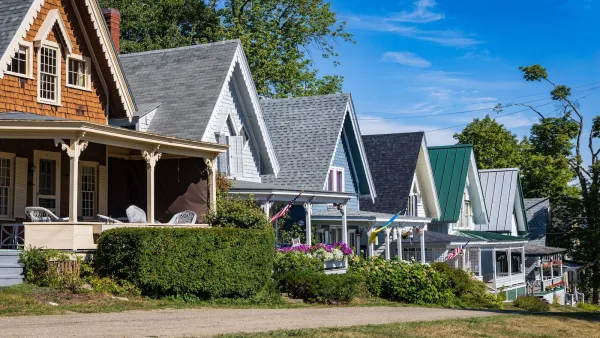
ADUs accounted for 9% of new Maine building permits in 2025
Maine officials approved roughly 500 ADU permits last year.
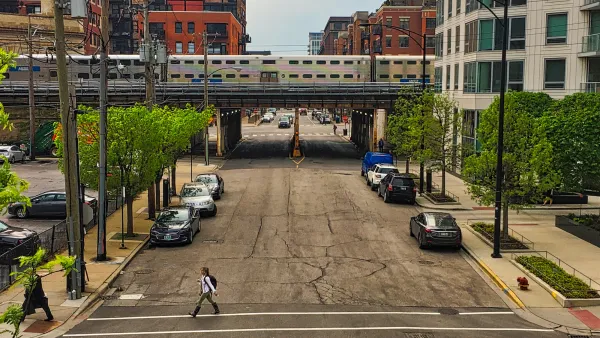
Chicago eliminates parking requirements near transit
In 2025, Illinois barred cities from mandating parking near train and bus stations.

What do the Gilmore Girls, Happy Days, and Full House have in common? ADUs.
American sitcoms are full of garage apartments, attic rooms, and pool houses. Why aren't our cities?

Planetizen Federal Action Tracker
A weekly monitor of how Trump’s orders and actions are impacting planners and planning in America.

The state-sanctioned urbicide of Austin
People don’t kill cities. Freeways do.

US to reduce Colorado River water deliveries to Mexico
A new Colorado Treaty amendment reduces Mexico’s Colorado River water allocation by 250,000 acre feet.

5 New England states march closer to 800 megawatt wind energy project
Securing federal approval for the project may be complicated under the Trump administration, which has historically been hostile towards domestic wind power.

Baltimore to break ground on $50 million Transit Priority Project
The project will bring faster bus trips, safer streets and better bike connections to Baltimore.

Airbnb launches $250 million 'last-dollar financing' housing accelerator, makes first investment in Austin
The company will put $6.4 million towards affordable housing development in Texas’ capital.

FREE Course: Walkable City 1: Why Walkability?
After describing his path towards focusing on walkability as the essence of good planning, Jeff Speck marches through his five principal reasons for making more walkable places.
Reinventing Malls: Planning Alchemy—Turning Gray Fields Into Gold
The course focuses on the opportunities and imperatives that shape reinvention of mall sites.


Eagle County Government
Harvard University Graduate School of Design
Nashville Planning Department
The Architects Foundation
University of Cincinnati Online
The Pocatello Development Authority
The Urban Renewal Agency of the City of Pocatello
Journal of the American Planning Association