Area 2 Farms envisions a world where 90% of the U.S. population lives within 10 miles of an indoor farm.


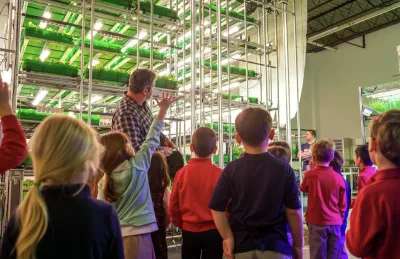
An Arlington-based company wants to take a new approach to the office conversion trend with a plan to turn unused office buildings into vertical farms.
As Nate Berg explains in Fast Company, Area 2 Farms currently operates one farm in an Arlington building and has plans to expand with a new infusion of capital. “Backed by $9 million in new funding from Seven Seven Six, Slow Ventures, 468 Capital, and Animo, Area 2 Farms is planning to build 10 new farms across the U.S. in 2026.”
Founder Oren Falkowitz says he wants to build indoor farms within 10 miles of 90 percent of the U.S. population, bringing fresh food closer to people and cutting down on food transportation emissions. “We move the farm, not the food,” Falkowitz says. Today, their first farm produces 200 acres-worth of produce in 3,000 square feet, and customers from a roughly two-mile radius visit weekly to pick up farm share boxes.
The model would use existing underutilized structures, cutting down on the costs usually require to build a new greenhouse in a city. “Area 2 Farms is one alternative, and perhaps a second chance for buildings that might have otherwise gone obsolete.”
FULL STORY: This company is turning empty offices across America into farms

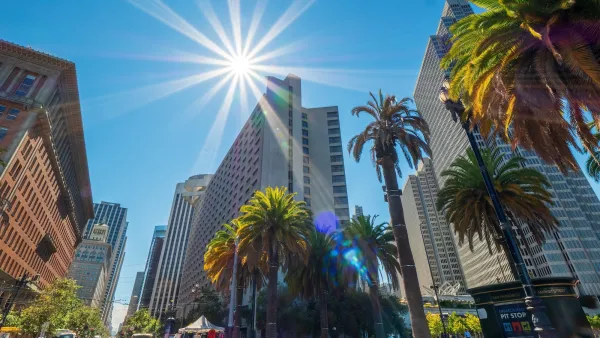
Office conversion is picking up steam in San Francisco
The city spent five years streamlining approval processes and reducing fees to encourage more adaptive reuse of vacant office buildings.

With Zero Office Conversions in Four Years, San Francisco Pins Hopes on New Special Financing District
City leaders hope the new incentive will spur the redevelopment of some of the city’s 30,000 square feet of vacant office space into housing.
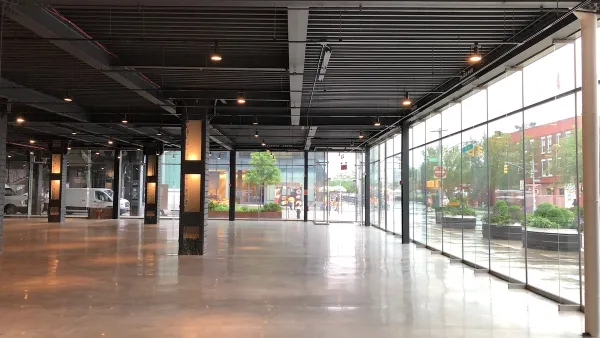
Manhattan Office-to-Apartment Conversions Doubled in 2024
Thanks in part to recent zoning changes, a record number of office space is being converted to housing in the city’s former business districts.

Planetizen Federal Action Tracker
A weekly monitor of how Trump’s orders and actions are impacting planners and planning in America.

The state-sanctioned urbicide of Austin
People don’t kill cities. Freeways do.

US to reduce Colorado River water deliveries to Mexico
A new Colorado Treaty amendment reduces Mexico’s Colorado River water allocation by 250,000 acre feet.

5 New England states march closer to 800 megawatt wind energy project
Securing federal approval for the project may be complicated under the Trump administration, which has historically been hostile towards domestic wind power.

Baltimore to break ground on $50 million Transit Priority Project
The project will bring faster bus trips, safer streets and better bike connections to Baltimore.

Airbnb launches $250 million 'last-dollar financing' housing accelerator, makes first investment in Austin
The company will put $6.4 million towards affordable housing development in Texas’ capital.

FREE Course: Walkable City 1: Why Walkability?
After describing his path towards focusing on walkability as the essence of good planning, Jeff Speck marches through his five principal reasons for making more walkable places.
Reinventing Malls: Planning Alchemy—Turning Gray Fields Into Gold
The course focuses on the opportunities and imperatives that shape reinvention of mall sites.

Eagle County Government
Harvard University Graduate School of Design
Nashville Planning Department
The Architects Foundation
University of Cincinnati Online
The Pocatello Development Authority
The Urban Renewal Agency of the City of Pocatello
Journal of the American Planning Association