The Texas refinery town is grappling with an impending water shortage after a seven-year drought, but a dramatic increase in the projected cost of a desalination plant prompted the city to look for other ways to bring in additional water.


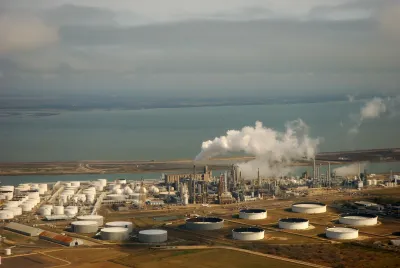
The Corpus Christi, Texas city council canceled the contract for a proposed seawater desalination plant, putting the city’s water supply in jeopardy, reports Dylan Baddour in The Texas Tribune.
“The plant was first proposed to meet the water demands of industrial facilities that wanted to build around Corpus Christi, a refinery hub on the South Texas coast. But its cost ballooned from initial estimates of $160 million in 2019 to $1.2 billion last month.” Councilmembers said the city must find other ways to get water to the local oil refineries. However, oil companies had already begun using municipal water supplies, which are dangerously low after a seven-year drought.
“Without additional water supply, Corpus Christi could face an emergency situation by December 2026, city officials said, forcing a 25% reduction of water use by the large industrial users.” But speakers at a contentious, marathon council meeting railed against the project, citing concerns about the cost and its potential impacts on local ecology.
One of the main concerns from city council members was the dramatic rise in the cost estimate of the project, which went from $222 million to $1.2 billion. “A representative from Freese and Nichols, the engineering contractor managing the project for Corpus Christi, said industry building costs nearly doubled between 2020 and 2024, while the capacity of the city’s plant design also grew.”
The city will now explore other ways to increase their water supply such as groundwater importing and wastewater recycling.
Read the full story: Corpus Christi’s water supply is uncertain after City Council ends water treatment plans

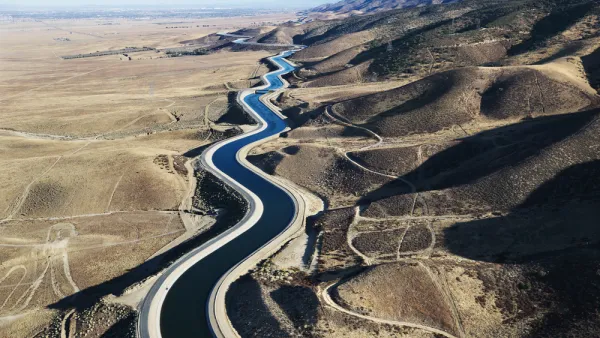
California Governor Outlines Plan for a ‘Hotter, Drier Future’
With California’s water supply expected to drop by 10 percent in the next two decades, Governor Newsom’s strategy calls for conservation and increased investment in water collection, storage, and desalination infrastructure.
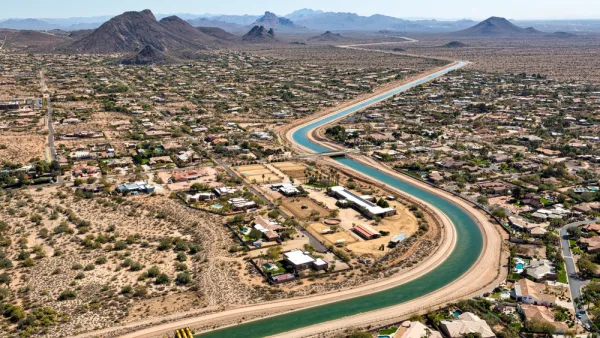
Arizona Governor Pledges $1 Billion to Water Infrastructure
The billion-dollar investment in the state's water supplies sounds good on paper, but lawmakers must also distribute funding effectively to mitigate the state's urgent water shortage.
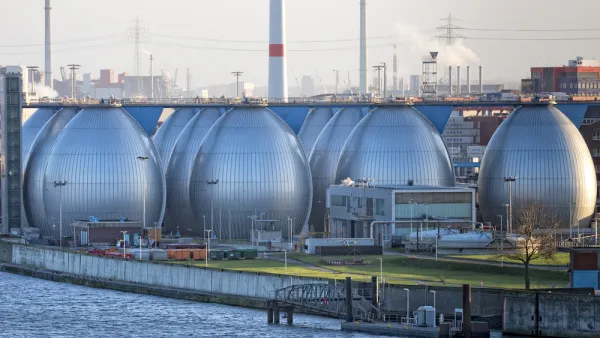
California Ballot Measure Could Streamline Permitting for Water Projects
A coalition of farmers and desalination supporters is collecting signatures for a California ballot measure that would fast-track construction processes for water storage projects.

Planetizen Federal Action Tracker
A weekly monitor of how Trump’s orders and actions are impacting planners and planning in America.

California plans to bury El Niño’s downpour
If the state plays its cards right, it may be able to store a billion acre-feet of El Niño’s water in aquifers.

Chicago breaks ground on $3 billion megadevelopment
The new neighborhood, titled Foundry Park, will one day host 3,700 residences.

Satanic Place Names
From streams and lakes to valleys and canyons, I mapped more than 1,000 places named after the Devil.

California High-Speed Rail Authority CEO resigns after $600,000 scandal
Under Ian Choudri, the authority used taxpayer dollars to fund first class flights and trips to nightclubs.

Want to study the Missouri River? Soon, you may need unanimous approval from 10 states
Legislation would require 10 governors’ permission to study or build projects moving water outside the basin.

FREE Course: Walkable City 1: Why Walkability?
After describing his path towards focusing on walkability as the essence of good planning, Jeff Speck marches through his five principal reasons for making more walkable places.
Reinventing Malls: Planning Alchemy—Turning Gray Fields Into Gold
The course focuses on the opportunities and imperatives that shape reinvention of mall sites.

City of Rosemead
Rutgers University, Edward J. Bloustein School of Planning and Public Policy
One Hundred Miles
Hunter College, City University of New York (CUNY)
The Architects Foundation
University of Cincinnati Online
City of Cambridge
Montrose County
The Pocatello Development Authority