One common argument against new housing is that a successful city is an historic city. The data says otherwise.



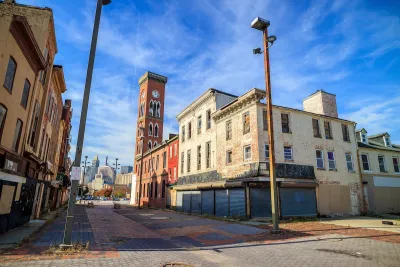
I suspect if you asked most people what they think of when they think of New York City, that many people would respond “busy city with tall buildings.” But some people — especially people who tend to be more interested in historic preservation than in new housing — have a very different vision of New York City.
Anti-development activist Lynn Ellsworth describes our city as one of numerous “successful historic cities” that have suffered from “the destruction of historic architecture.” To me, this statement implies that what makes New York City “successful” is that it is “historic” — not that millions of people move here for jobs.
I don’t think this attitude is unusual among defenders of NIMBYism and zoning. Every so often, I read something on social media that says something like this: “What makes New York City desirable is that it is full of beautiful old buildings. Therefore we can only keep it desirable by not building new stuff, or at least not building new stuff that is taller than the old stuff.” In other words, what makes a large city desirable is its age, and thus new and different buildings are harmful.*
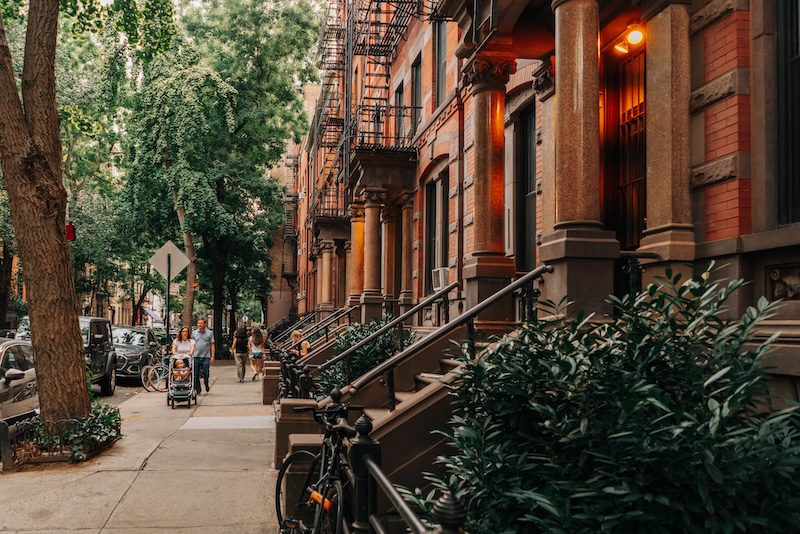
This claim does have a small grain of truth: the best-preserved historic neighborhoods tend to be very desirable places, especially if they are in rich parts of town such as Greenwich Village. So what’s wrong with this point of view?
First, it overlooks the fact that plenty of equally historic cities have not been as successful as New York. Yes, 39 percent of New York’s homes were built before 1940 — far more than most American cities. But numerous cities have even older housing stock. For example, 58 percent of St. Louis homes, 52 percent of Cleveland homes, and 42 percent of Baltimore homes were built before 1940. I do not think that these population-losing cities are as successful as New York, unless by “successful” you mean “cheap because there is so little demand for their housing.” So it seems hard to believe that the historic-ness of New York is what makes people want to move there or stay there. (It certainly wasn’t a factor for me — I moved here because I wanted to live without a car and have access to a large Jewish dating pool.)
If you want to live in a low-rise place dominated by old housing, New York has a lot of competition: there are plenty of cute, walkable, low-rise small towns and commuter suburbs in every part of the United States. If you like that sort of thing and hate tall buildings, you should live in one of them!
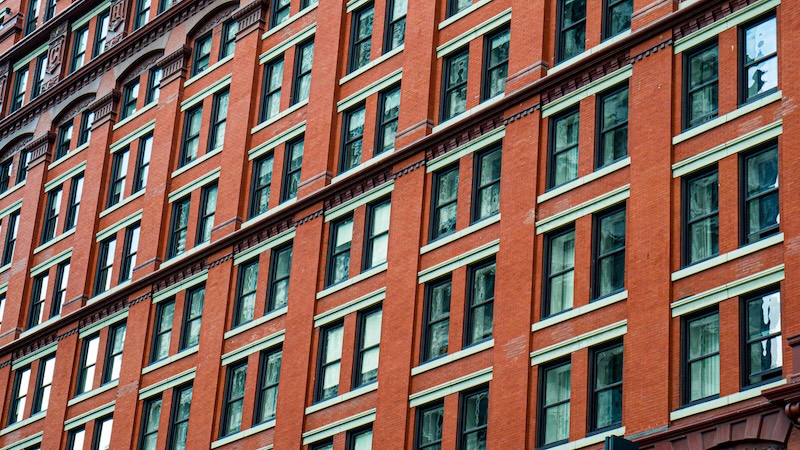

Second, New York City was once far less historic than it is today — and yet when the city was less historic, it grew rapidly.
One reason New York’s housing stock is so old is that, thanks to restrictive zoning, far less housing has been built in recent decades than was built in the first half of the 20th century. Over 700,000 housing units were built in the 1920s alone — more than three times the number built in the 2000s. It logically follows that in 1930, there were probably fewer 70-year-old buildings in the city than there are today. But these new buildings did not prevent New York from growing in the first half of the 20th century: the city’s population grew by over 30 percent between 1920 and 1950.
By contrast, the city's population increased by only by 2 percent between 1950 and 2000, and by only 10 percent between 2000 and 2020.** To put it another way, in the 1920s the city had ample land for new housing within its borders, and was an economic powerhouse — two things that, based on the historical evidence, seem to be more important for more people than historic preservation.
Third, if movers valued historic preservation more than they valued new housing, the oldest cities would be the fastest-growing. But, as noted above, the correlation between old housing and population growth is pretty wobbly: New York has grown in recent decades, but many old-housing cities have not. Of the seven large cities with older housing than New York (Cleveland, Chicago, Baltimore, Boston, Philadelphia, San Francisco, Minneapolis), only San Francisco is as populous as it was in 1950.
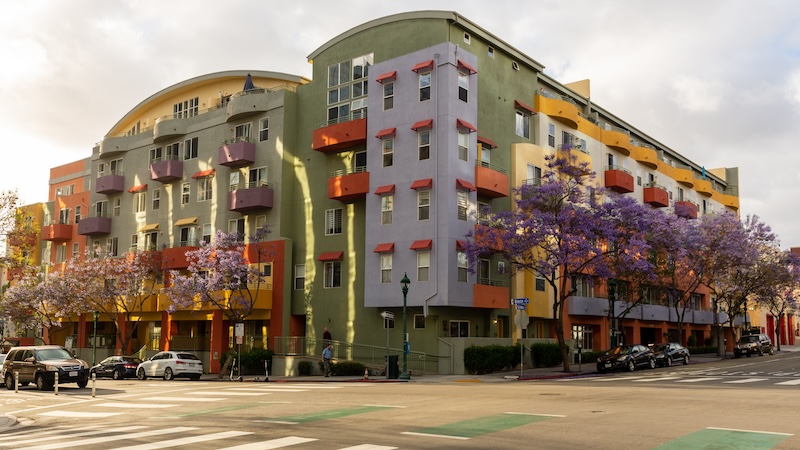
By contrast, cities that have accommodated population growth with new housing have often grown rapidly. Many Sun Belt cities that were small in 1950 have grown explosively: of the ten most populous American cities, five (Phoenix, San Antonio, San Diego, Dallas and San Jose) had under 500,000 people in 1950, and a sixth (Houston) had just under 600,000 — less than one-third its current population.
These cities have generally allowed more post-1950 housing than New York, even though some of them have succumbed to NIMBYism in recent decades. For example, about 266,000 housing units were built in San Diego between 1970 and 2000 — about one for every five current residents. New York City has more than six times as many people as San Jose, but only about 600,000 housing units (a little over two times as many) were built in New York during this period.
In other words, places with more and newer housing tend to grow faster. If Americans did not value new housing, these cities would not have grown. In sum, new housing isn’t the only factor relevant to a city’s desirability — but it doesn’t seem to hurt.***
*I note that Ellsworth herself is not that inflexible- although she does seem generally more hostile to tall buildings than I am.
*Of course, many other factors affected city population growth — I'm just saying that the city's building boom didn't hurt!
**I realize that many Americans simply don't want their city to grow or to be particularly desirable to most Americans — but I think that subject is complicated enough to be best addressed in another post someday.

New Book Studies 20 Examples of Adaptive Reuse
A new book on adaptive reuse of industrial buildings is reviewed by Carol Berens.
Op-Ed: Reintroduce California's Historic Restoration Tax Credit
Despite a veto by Governor Jerry Brown, California’s Assembly Speaker Toni Atkins should keep trying to pass legislation to encourage preservation, says Bay area preservation architect Jerri Holan.
Cleveland announces new Midline industrial investment district
The plan calls for at least 1.5 million square feet of new industrial and commercial space alongside housing.

Planetizen Federal Action Tracker
A weekly monitor of how Trump’s orders and actions are impacting planners and planning in America.

Amtrak, CN end decades-long dispute with eight-year agreement
The new operating agreement establishes an updated framework for the companies to work together, including processes to resolve disputes.

Judges permit Denver to divert 77,000 acre feet from the Colorado River for reservoir expansion
Overuse and climate change have caused the Colorado River’s water levels to plummet.

NYC DOT wants faster, more permanent street upgrades
The city is examining ways to build more concrete infrastructure without getting entangled in 'decades-long' projects.

'Something we’ve never seen before:' rising utility rates could strain city finances nationwide
Data centers, climate change and other factors have caused utility rates in the United States to increase by 38% since 2020.

Trump to overrule local leaders, lease millions of acres of America’s Pacific Island territories’ seafloors to mining companies
International law says that the Indigenous people of America’s territories have a right to prior and informed consent regarding projects that impact their countries.

FREE Course: Walkable City 1: Why Walkability?
After describing his path towards focusing on walkability as the essence of good planning, Jeff Speck marches through his five principal reasons for making more walkable places.
Reinventing Malls: Planning Alchemy—Turning Gray Fields Into Gold
The course focuses on the opportunities and imperatives that shape reinvention of mall sites.

Harvard University Graduate School of Design
KFH Group Inc.
Greater Baltimore Committee
The Architects Foundation
University of Cincinnati Online
The Pocatello Development Authority
The Urban Renewal Agency of the City of Pocatello

