Over 10,000 Cincinnati Public Schools students already use public buses for school transportation each year.


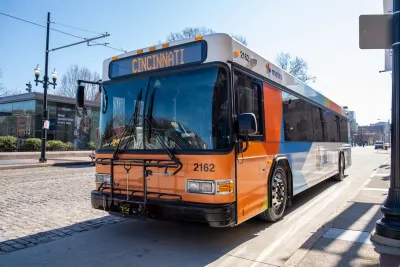
Cincinnati school officials will start relying on the city’s public transit system in lieu of school buses for roughly 1,200 middle schoolers, reports Bebe Hodges in the Cincinnati Enquirer.
As Hodges explains, “The cost-cutting measure comes as the district works this month to bridge a roughly $50 million budget gap between the current fiscal year and the upcoming one before the June 30 deadline. That gap was prompted by a decrease in government funds, and not, according to the district, due to overspending.”
The district, where roughly 10,500 students rode Metro buses to school last school year, is working with Metro to ensure the safety of students. “If students have any issues while riding, Jones said, they are encouraged to notify the bus operator, who will address the concern or call for assistance.”
Read the full story: Cincinnati Public Schools to cut some yellow buses, place more middle schoolers on Metro

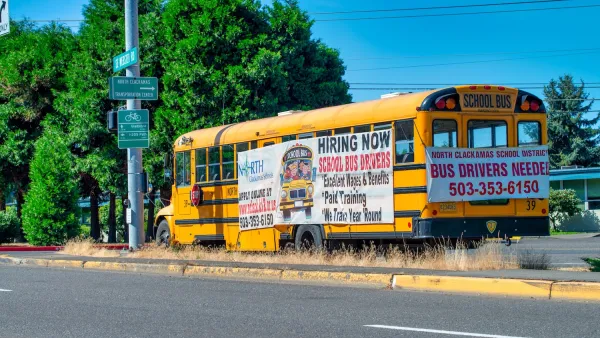
Bus Driver Shortage is Creating a Crisis for Schools and Families
With not enough bus drivers to maintain a reliable schedule, school districts risk rising rates of absenteeism.

Parents Turn to Ride-Hailing as Schools Pull Bus Transportation
Some districts are cutting back on school buses, leaving some children without reliable transportation to and from school.

School Drop-Off Traffic Is Causing a Congestion — and Social — Crisis
School drop-off lines are becoming longer and more isolating than ever.

Planetizen Federal Action Tracker
A weekly monitor of how Trump’s orders and actions are impacting planners and planning in America.

California plans to bury El Niño’s downpour
If the state plays its cards right, it may be able to store a billion acre-feet of El Niño’s water in aquifers.

Desperate measures: Advocates weigh draining Lake Powell to fill Colorado River
Draining the reservoir could reduce evaporation losses by a couple hundred thousand acre-feet.

California High-Speed Rail Authority picks trainset manufacturer
The California High-Speed Rail Authority aims to start servicing passengers by 2033.

LA may place emergency ban on karaoke room permits
If Councilwoman Heather Hutt’s proposal passes, the moratorium would last between 45 days and one year.

City officials are dumping billions of gallons of sewage into the Chicago River
This year, the Racine Avenue sewage pumping station has poured over 10 billion gallons of sewage into the Chicago River.

FREE Course: Walkable City 1: Why Walkability?
After describing his path towards focusing on walkability as the essence of good planning, Jeff Speck marches through his five principal reasons for making more walkable places.
Reinventing Malls: Planning Alchemy—Turning Gray Fields Into Gold
The course focuses on the opportunities and imperatives that shape reinvention of mall sites.

City of Rosemead
Rutgers University, Edward J. Bloustein School of Planning and Public Policy
One Hundred Miles
Hunter College, City University of New York (CUNY)
The Architects Foundation
University of Cincinnati Online
City of Cambridge
Montrose County
The Pocatello Development Authority