With not enough bus drivers to maintain a reliable schedule, school districts risk rising rates of absenteeism.


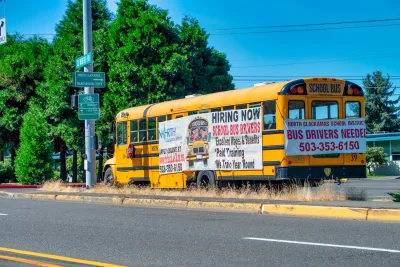
A nationwide shortage of school bus drivers is making it difficult for school districts to provide transportation to all students who need it.
Although the number of school bus drivers has increased by 1.1 percent since last year, it is still 9.5 percent lower than in 2019, explains Robbie Sequeira in Governing. Meanwhile, “Private school bus contractors now account for 38% of the nation’s pupil transportation services, according to the National School Transportation Association.”
In some cases, families are forced to fill the gap with rideshare services and public transit, but half of K-12 students still rely on school buses, according to a report from the Economic Policy Institute. “The report warns that school district budgets are tightening as federal pandemic relief funds have expired, and notes that the Trump administration has delayed some federal K-12 funding in its bid to shrink and eventually eliminate the U.S. Department of Education.” Students with disabilities could be most severely impacted by the shortage, and that a lack of reliable school transportation can lead to absenteeism and missed school meals.
FULL STORY: National school bus driver shortage persists, despite recent gains

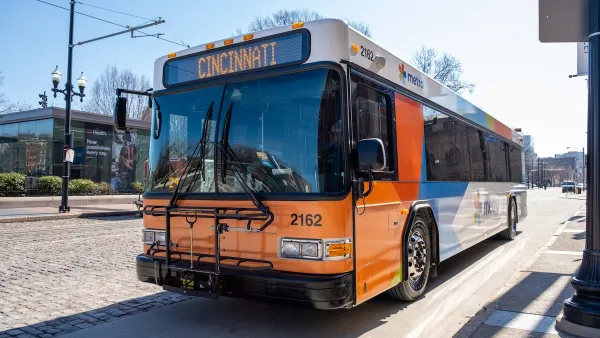
Cincinnati School District Shifts Students to Public Transit to Cut Costs
Over 10,000 Cincinnati Public Schools students already use public buses for school transportation each year.
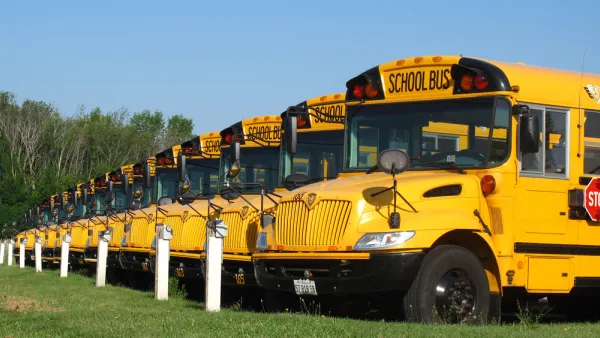
Nation's School Districts Struggling to Attract Enough Bus Drivers
As the economy has improved, fewer people are looking for employment as school bus drivers. When fewer buses are available, more students drive to school, brining unwanted environmental risks along for the ride.

Children in 55 countries are redesigning their cities in Minecraft
A U.N.-backed program lets students and community members reimagine sites in their neighborhoods in the game — and translate them into real-life buildings.

Planetizen Federal Action Tracker
A weekly monitor of how Trump’s orders and actions are impacting planners and planning in America.

The state-sanctioned urbicide of Austin
People don’t kill cities. Freeways do.

US to reduce Colorado River water deliveries to Mexico
A new Colorado Treaty amendment reduces Mexico’s Colorado River water allocation by 250,000 acre feet.

5 New England states march closer to 800 megawatt wind energy project
Securing federal approval for the project may be complicated under the Trump administration, which has historically been hostile towards domestic wind power.

Baltimore to break ground on $50 million Transit Priority Project
The project will bring faster bus trips, safer streets and better bike connections to Baltimore.

Airbnb launches $250 million 'last-dollar financing' housing accelerator, makes first investment in Austin
The company will put $6.4 million towards affordable housing development in Texas’ capital.

FREE Course: Walkable City 1: Why Walkability?
After describing his path towards focusing on walkability as the essence of good planning, Jeff Speck marches through his five principal reasons for making more walkable places.
Reinventing Malls: Planning Alchemy—Turning Gray Fields Into Gold
The course focuses on the opportunities and imperatives that shape reinvention of mall sites.

Eagle County Government
Harvard University Graduate School of Design
Nashville Planning Department
The Architects Foundation
University of Cincinnati Online
The Pocatello Development Authority
The Urban Renewal Agency of the City of Pocatello
Journal of the American Planning Association