Hundreds of volunteers across five counties participated in the first Goldspotted Oak Borer Blitz, surveying oak trees for signs of the invasive beetle and contributing valuable data to help protect Southern California’s native woodlands.



The Goldspotted Oak Borer (GSOB), an invasive beetle responsible for widespread oak tree mortality in Southern California, was the focus of the region's first-ever “GSOB Blitz.” Organized by UC Agriculture and Natural Resources with support from CALFIRE and other partners, the event mobilized about 200 volunteers across five counties to search for signs of infestation, such as D-shaped exit holes in tree bark. Participants included representatives from various public agencies, students, arborists, retirees, and amateur entomologists who gathered valuable field data using a specialized app, contributing to updated beetle range maps and guiding future management efforts.
Training and hands-on fieldwork were key elements of the blitz. Volunteers were taught how to recognize signs of infestation and practiced data collection techniques in natural areas such as San Dimas Canyon Park. While some groups confirmed infestations—providing crucial data and awareness—others, like the Los Angeles County team, found no verified GSOB evidence. Nonetheless, all participants left empowered to monitor oaks in their own neighborhoods and advocate against firewood transport, a major vector for beetle spread.
The blitz sparked enthusiasm among both organizers and community members, demonstrating strong public interest in protecting native oak woodlands. Organizers plan to hold future blitzes due to high demand and encouraging results. Volunteers like Ismael Cervantes and Nathaniel Carbajal expressed deep personal motivation—ranging from love of bugs to aspirations in urban forestry—highlighting how accessible community science can foster environmental stewardship and fill critical monitoring gaps that professionals alone cannot meet.
FULL STORY: Volunteers hunt for invasive beetles across SoCal during the first “GSOB Blitz”


Help Stop the Beetle Killing Southern California’s Oak Trees
Claifornia residents can join a volunteer “blitz” this June to help detect and map infestations of an invasive beetle that is killing thousands of oak trees across Southern California.
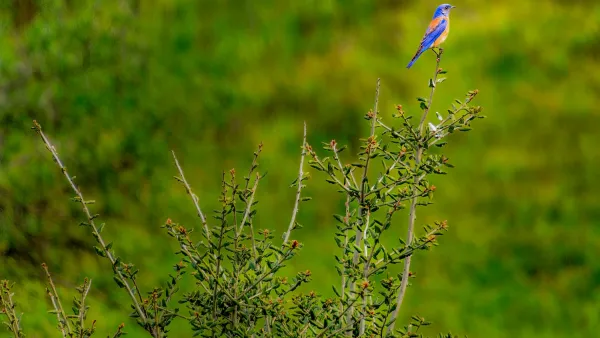
Wildlife Rebounds After the Eaton Fire
Following the devastation of the Eaton Fire, the return of wildlife and the regrowth of native plants are offering powerful signs of resilience and renewal.
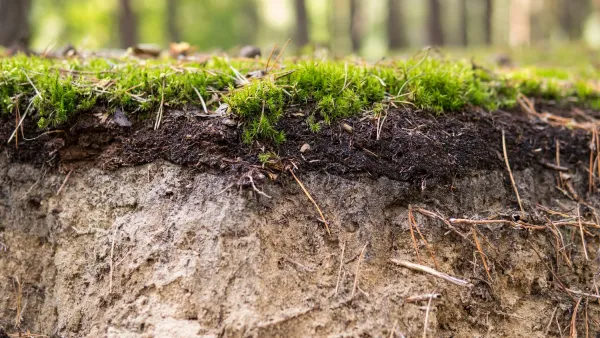
Tackling Soil Contamination With Nature-Based Solutions
Los Angeles County residents and experts are turning to nature-based methods like bioremediation to address long-standing and fire-exacerbated soil contamination without resorting to costly and disruptive removal.

Planetizen Federal Action Tracker
A weekly monitor of how Trump’s orders and actions are impacting planners and planning in America.

The state-sanctioned urbicide of Austin
People don’t kill cities. Freeways do.

US to reduce Colorado River water deliveries to Mexico
A new Colorado Treaty amendment reduces Mexico’s Colorado River water allocation by 250,000 acre feet.

Mamdani overhauls NYC's Vision Zero plan with 100 new policy goals
The overhaul aims to reduce traffic deaths and make streets safer for pedestrians, cyclists and drivers through lower speed limits, new safety infrastructure and more.

Amtrak not solely to blame for New Jersey commuter rail's unreliability, report finds
A new study from the Garden State Initiative found that NJ Transit’s budget grew 20% across a 4 year period, but reliability declined significantly over the same period.

EPA erases limits on planet-warming pollution from power plants
Under Monday’s plan, power plants would still have some limits on how much mercury, arsenic and other contaminants they can emit.

FREE Course: Walkable City 1: Why Walkability?
After describing his path towards focusing on walkability as the essence of good planning, Jeff Speck marches through his five principal reasons for making more walkable places.
Reinventing Malls: Planning Alchemy—Turning Gray Fields Into Gold
The course focuses on the opportunities and imperatives that shape reinvention of mall sites.

Eagle County Government
Harvard University Graduate School of Design
Nashville Planning Department
The Architects Foundation
University of Cincinnati Online
The Pocatello Development Authority
The Urban Renewal Agency of the City of Pocatello
Journal of the American Planning Association