Eliminating the requirement for two staircases in multi-story residential buildings lets developers use smaller lots and more flexible designs to create denser housing.



Months after Austin legalized single-staircase buildings up to five stories tall, the city’s first three-story, single-stair building acquired its permits.
According to an announcement by McKinney York Architects, who designed the project, in Building Design + Construction, “The simple concept of this six-unit apartment complex celebrates an open central stair that forms an inviting entry and divides the building into two discrete volumes. Limited to a 4,400-sf lot, the project prioritizes sustainability and efficiency by taking advantage of existing infrastructure already serving the central city.”
Single-staircase construction for residential buildings has been outlawed in some U.S. cities due to safety concerns, many of which are rendered obsolete by modern building materials and fire prevention mechanisms. Now, some cities and states are rolling back restrictions on single-stair buildings to make room for more flexible and dense housing developments.
FULL STORY: First three-story, single-stair project permitted in Austin, Texas

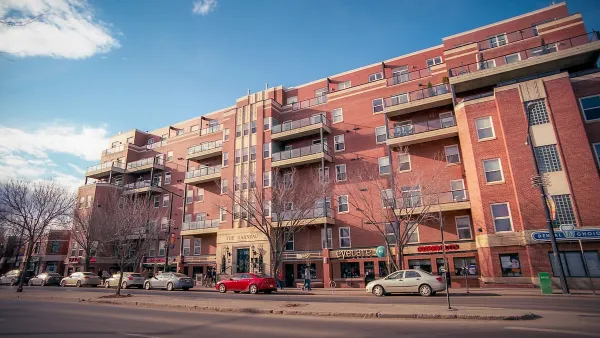
Even Edmonton Wants Single Staircase Buildings
Canada's second most affordable major city joins those angling to nix the requirement for two staircases in multi-family buildings.

Study: Single-Staircase Buildings Pose No Additional Risks
Zoning codes have long prohibited single-stair residential buildings due to safety concerns, but changing that could lower the cost of construction and allow for more flexible housing designs.
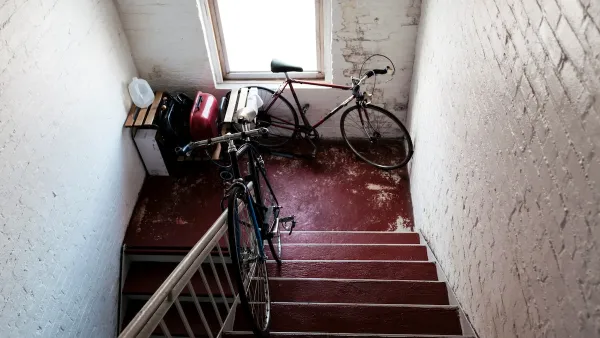
Single-Stair Reform Gains Strength
The movement to legalize single-stair multi-story buildings is gathering momentum, with the typology offering a more efficient, flexible, and healthy way to build housing.

Planetizen Federal Action Tracker
A weekly monitor of how Trump’s orders and actions are impacting planners and planning in America.

The state-sanctioned urbicide of Austin
People don’t kill cities. Freeways do.

US to reduce Colorado River water deliveries to Mexico
A new Colorado Treaty amendment reduces Mexico’s Colorado River water allocation by 250,000 acre feet.

5 New England states march closer to 800 megawatt wind energy project
Securing federal approval for the project may be complicated under the Trump administration, which has historically been hostile towards domestic wind power.

Baltimore to break ground on $50 million Transit Priority Project
The project will bring faster bus trips, safer streets and better bike connections to Baltimore.

Airbnb launches $250 million 'last-dollar financing' housing accelerator, makes first investment in Austin
The company will put $6.4 million towards affordable housing development in Texas’ capital.

FREE Course: Walkable City 1: Why Walkability?
After describing his path towards focusing on walkability as the essence of good planning, Jeff Speck marches through his five principal reasons for making more walkable places.
Reinventing Malls: Planning Alchemy—Turning Gray Fields Into Gold
The course focuses on the opportunities and imperatives that shape reinvention of mall sites.

Eagle County Government
Harvard University Graduate School of Design
Nashville Planning Department
The Architects Foundation
University of Cincinnati Online
The Pocatello Development Authority
The Urban Renewal Agency of the City of Pocatello
Journal of the American Planning Association