DART would have seen a 30% service cut, $230M annual losses had the bills survived.


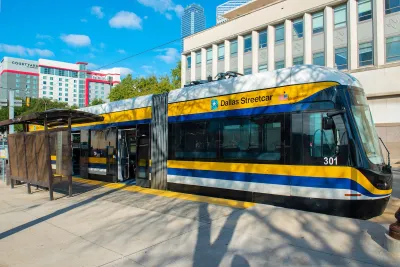
Funding for Dallas Area Rapid Transit (DART) is safe — for now. As Mike Albanese explains in the Plano Star Courier, two Texas state bills aimed at removing funding for the transit agency failed, preventing the loss of 5,800 jobs and a 30 percent reduction in service.
One proposed bill, HB 3187, would have returned 25 percent of a sales tax to area cities. That tax now funds 75 percent of DART revenue, so the loss would have been a significant blow to the agency. According to DART Director of Public Relations Jasmyn Carter, the agency is committed to addressing the concerns of member cities who say the agency does not effectively serve their needs. “Moving forward, Carter said the agency will be going through a system modernization program — DART Transform — to address its aging infrastructure, bring in new buses and light rail and many other system improvements.”
Read the full story: Legislation aimed to defund DART fails at the state level

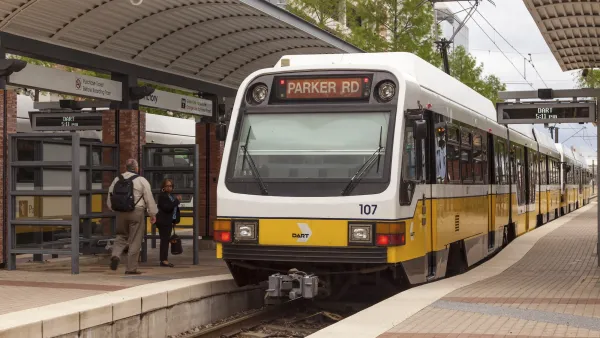
Dallas Sacrifices DART Majority Control in Bid to Keep Suburbs in Transit System
The city would give up majority control of the regional transit system for the first time in its 40-year history.

Texas State Bills Could Kill Transit Funding in Dallas, Austin
State lawmakers could pull funding from the state’s largest transit agency and the ambitious Project Connect, a voter-approved transit project in Austin.
Dallas Transit Officials to Meet With City Leaders in Mediation
Some cities in the Dallas area want to reduce their contributions to the regional transit system.

Planetizen Federal Action Tracker
A weekly monitor of how Trump’s orders and actions are impacting planners and planning in America.

California plans to bury El Niño’s downpour
If the state plays its cards right, it may be able to store a billion acre-feet of El Niño’s water in aquifers.

Desperate measures: Advocates weigh draining Lake Powell to fill Colorado River
Draining the reservoir could reduce evaporation losses by a couple hundred thousand acre-feet.

40 years after approval, Chicago breaks ground on new park
The park honors Jean Baptiste Point du Sable, the city’s first permanent non-native settler.

‘Hoodwinked:’ New Mexico bill aimed at microgrids paves way for data center development
In an interview with High Country News, Padilla said the legislation “ignited” New Mexico's economy.

California’s ‘unrecognizable’ water plan may go down the drain
After four years of regulatory processes, water agencies say the plan to overhaul how cities and farms take water from the Sacramento-San Joaquin Delta has changed dramatically.

FREE Course: Walkable City 1: Why Walkability?
After describing his path towards focusing on walkability as the essence of good planning, Jeff Speck marches through his five principal reasons for making more walkable places.
Reinventing Malls: Planning Alchemy—Turning Gray Fields Into Gold
The course focuses on the opportunities and imperatives that shape reinvention of mall sites.

City of Rosemead
Rutgers University, Edward J. Bloustein School of Planning and Public Policy
One Hundred Miles
Hunter College, City University of New York (CUNY)
The Architects Foundation
University of Cincinnati Online
City of Cambridge
Montrose County
The Pocatello Development Authority