A patchwork of definitions of rural versus urban areas has real consequences for communities seeking federal funding.


What does rural mean? Far from a purely philosophical or linguistic exercise, this question — and how its answer is defined by the government — has major impacts on how federal funds and grants are distributed.
As Christopher Chavis explains in Daily Yonder, there is no uniform definition of rural areas at the federal level. Consequently, federal agencies classify the same places differently. Some agencies classify rural areas at the county level, while others use Census Tracts to define urban and rural areas.
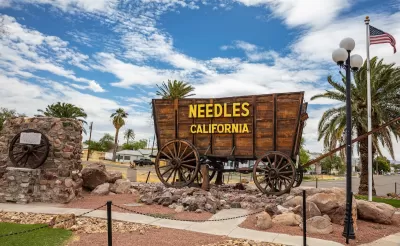
Chavis points to examples in California’s San Bernardino County, where arguably rural communities in deserts far from major cities are classified as urban by some federal agencies. “This can create a confusing landscape for local governments and non-profits. It also means that some opportunities are simply unavailable to these communities. It also distorts any count of rural people.”
Chavis calls for a nationwide definition of rural places that would eliminate confusion, make federal funding more accessible, and direct resources where they are most needed.
FULL STORY: Commentary: The Definition of Rural

Court unfreezes $20B in federal climate grants
A U.S. Court of Appeals ruled that the Trump administration potentially violated the Inflation Reduction Act by attempting to claw back grants awarded under the Greenhouse Gas Reduction Fund program.
Judge: HUD acted illegally in changing homelessness grant rules
A Rhode Island judge struck down 'partisan' Trump restrictions on Continuum of Care Build grants.
Boston loses $8.15M in federal road safety funds after failing to meet deadline
Delays in finalizing plans for several road projects have forced the city to forfeit multiple federal grants.

The state-sanctioned urbicide of Austin
People don’t kill cities. Freeways do.

US to reduce Colorado River water deliveries to Mexico
A new Colorado Treaty amendment reduces Mexico’s Colorado River water allocation by 250,000 acre feet.

New Jersey’s second-largest city bans standalone data centers
Jersey City will continue to allow co-location facilities, such as those meant for research institutions that store their own data.

Amtrak not solely to blame for New Jersey commuter rail's unreliability, report finds
A new study from the Garden State Initiative found that NJ Transit’s budget grew 20% across a 4 year period, but reliability declined significantly over the same period.

EPA erases limits on planet-warming pollution from power plants
Under Monday’s plan, power plants would still have some limits on how much mercury, arsenic and other contaminants they can emit.

Phoenix announces new on-demand transit service, more frequent RAPID buses
Both new services will launch in October, and are part of Phoenix's Project Effective Access Solutions for Easing Congestion.

FREE Course: Walkable City 1: Why Walkability?
After describing his path towards focusing on walkability as the essence of good planning, Jeff Speck marches through his five principal reasons for making more walkable places.
Reinventing Malls: Planning Alchemy—Turning Gray Fields Into Gold
The course focuses on the opportunities and imperatives that shape reinvention of mall sites.

Eagle County Government
Harvard University Graduate School of Design
Nashville Planning Department
The Architects Foundation
University of Cincinnati Online
The Pocatello Development Authority
The Urban Renewal Agency of the City of Pocatello
Journal of the American Planning Association