This innovative approach leverages the power of sound to stimulate beneficial soil microbes, offering a novel and eco-friendly tool for ecosystem restoration and biodiversity enhancement.



As the need to restore ecosystems grows, scientists are exploring innovative methods beyond traditional approaches like tree planting and pollution reduction. A surprising new tool in this effort is sound. Ecologists have discovered that recreating natural soundscapes can help revive degraded environments, as demonstrated in marine ecosystems where playing the sounds of healthy coral reefs and oyster beds has encouraged the recovery of marine life. This concept is now being tested in plant microbiology, with promising results showing that sound can stimulate the growth of beneficial soil microbes.
Recent research conducted by ecologists at Flinders University in Australia has shown that high-frequency sound can significantly increase the growth and reproduction of fungi that promote plant health. In controlled experiments, fungi exposed to white noise grew seven times faster and produced four times more spores compared to those without sound treatment. These beneficial microbes are essential for ecosystem recovery, as they support plant nutrient uptake and disease resistance. Researchers believe that sound stimulates microbial receptors, triggering growth and other positive responses.
The success of sound-based restoration in both marine and terrestrial ecosystems opens up new possibilities for large-scale ecological recovery projects. Researchers envision creating a "biodiversity jukebox" tailored to each ecosystem, using soundscapes to enhance the health and resilience of environments from forests to wetlands. This method could also play a role in regenerative agriculture by working with natural processes to improve soil health and sustainability.
As this research advances, scientists are also exploring the impact of noise pollution on ecosystems, investigating how industrial and traffic sounds may harm wildlife and plant life. With the future of restoration potentially including both sound stimulation and noise reduction, this low-impact, cost-effective approach has great potential to aid in healing the planet's degraded landscapes.
FULL STORY: The biodiversity jukebox: how sound can boost beneficial soil microbes to heal nature


Study: How Urban Parks Can Support Biodiversity
Conservation and recreation can go hand in hand in urban green spaces designed to serve both humans and local wildlife.

BLM To Rescind Public Lands Rule
The change will downgrade conservation, once again putting federal land at risk for mining and other extractive uses.
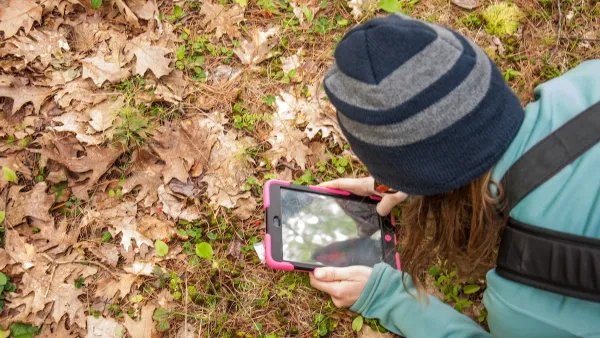
Detecting Invasive Species Early Through Citizen Science
Community science platforms like eBird and iNaturalist enhance early detection of invasive species, complementing professional surveillance and highlighting the need for stronger collaboration between the public and official authorities.

Planetizen Federal Action Tracker
A weekly monitor of how Trump’s orders and actions are impacting planners and planning in America.

The state-sanctioned urbicide of Austin
People don’t kill cities. Freeways do.

US to reduce Colorado River water deliveries to Mexico
A new Colorado Treaty amendment reduces Mexico’s Colorado River water allocation by 250,000 acre feet.

Brightline West’s future may rely on $6 billion federal loan
The company has until Nov. 2 to make a $400 million equity investment into its proposed high-speed rail line.

LA Metro’s ultimatum: no extra buses for LA28 if federal funding isn’t imminently secured
If Metro does not provide additional buses, LA28 organizers will have to find a new way to manage Olympic traffic. LA28’s budget does not include a line item for transit.

Colorado’s Largest Data Center Could Rise Next to Homes — Without a Public Hearing
The proposed campus would consume 11 times the power of Denver International Airport; as it has across the country, opposition mounts.

FREE Course: Walkable City 1: Why Walkability?
After describing his path towards focusing on walkability as the essence of good planning, Jeff Speck marches through his five principal reasons for making more walkable places.
Reinventing Malls: Planning Alchemy—Turning Gray Fields Into Gold
The course focuses on the opportunities and imperatives that shape reinvention of mall sites.

Eagle County Government
Harvard University Graduate School of Design
Nashville Planning Department
The Architects Foundation
University of Cincinnati Online
The Pocatello Development Authority
The Urban Renewal Agency of the City of Pocatello
Journal of the American Planning Association