The Green Blocks program targets neighborhoods with the highest need for additional tree canopy.


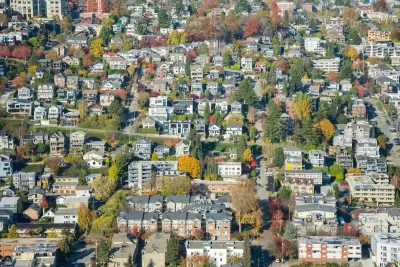
A foundation in Tacoma, Washington is boosting the city’s tree canopy with an initiative dubbed Green Blocks that distributes free trees to residents. “The program seeks to reduce barriers to tree planting and foster stewardship among Tacoma residents. Increasing Tacoma’s tree canopy coverage helps combat the urban heat island effect, which exacerbates the health impacts of heat waves and worsens livability in urban areas,” explains Kevin Le for The Urbanist.
According to Le, trees currently cover just 20 percent of Tacoma’s area, lower than surrounding cities. The city has created a Tree Planting Priority Tool to map out which areas need trees most urgently. The City Council also passed a new ordinance making it easier to plant street trees in November 2023.
The Tacoma Tree Foundation (TTF) examines local conditions in each neighborhood to assess the best sites for new trees. Once residents apply, “TTF and City staff will review applications alongside the property’s characteristics to ensure enough plantable space and minimal interference with underground and overhead utilities.”
TTF offers the trees at no cost to residents who commit to caring for them in their critical first few years of life and plans to expand its efforts to support the trees throughout their lives. “Building upon existing giveaway and planting resources, TTF eventually plans to offer watering and monitoring services to ensure the planted trees are able to reach maturity.”
Read the full story: Tacoma’s Lincoln District Gets Tree Planting Boost with Green Blocks Program
LA’s Tree Emergency Goes Beyond Vandalism
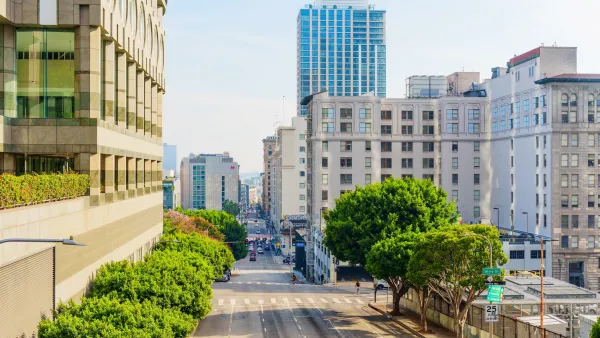
After a vandal destroyed dozens of downtown LA trees, Mayor Karen Bass vowed to replace them. Days later, she slashed the city’s tree budget.

Updating LA’s Tree Rules Could Bring More Shade to Underserved Neighborhoods
A new USC study finds that relaxing Los Angeles’ outdated tree planting guidelines could significantly expand urban tree canopy and reduce shade disparities in lower-income neighborhoods, though infrastructure investments are also needed.
‘Stockholm Tree Pit’ Saves Dying Urban Trees
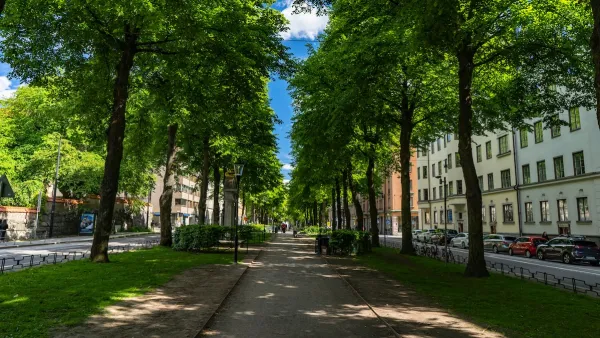
After noticing that two-thirds of its trees were dying, Stockholm developed a new planting method to protect trees surrounded by concrete.

Planetizen Federal Action Tracker
A weekly monitor of how Trump’s orders and actions are impacting planners and planning in America.

California plans to bury El Niño’s downpour
If the state plays its cards right, it may be able to store a billion acre-feet of El Niño’s water in aquifers.

Desperate measures: Advocates weigh draining Lake Powell to fill Colorado River
Draining the reservoir could reduce evaporation losses by a couple hundred thousand acre-feet.

Chicago voters approve permanent festival grounds, penalty for vacant property owners
Currently, major summer and fall festivals take over public parks for weeks at a time, drawing criticism from nearby residents

NYC votes to cut outdoor dining red tape, speed up permitting
New York City also voted to allow the Department of Transportation to begin work on urgent projects before notifying elected officials.

California appears to reject Prop. 45
The proposition would have expanded the projects that qualify for a streamlined environmental review, effectively paring down the California Environmental Quality Act.

FREE Course: Walkable City 1: Why Walkability?
After describing his path towards focusing on walkability as the essence of good planning, Jeff Speck marches through his five principal reasons for making more walkable places.
Reinventing Malls: Planning Alchemy—Turning Gray Fields Into Gold
The course focuses on the opportunities and imperatives that shape reinvention of mall sites.

City of Rosemead
Rutgers University, Edward J. Bloustein School of Planning and Public Policy
One Hundred Miles
Hunter College, City University of New York (CUNY)
The Architects Foundation
University of Cincinnati Online
City of Cambridge
Montrose County
The Pocatello Development Authority