A new study reveals earthquakes that began at shallower depths than previously thought are associated with wastewater disposal sites from fracking operations.


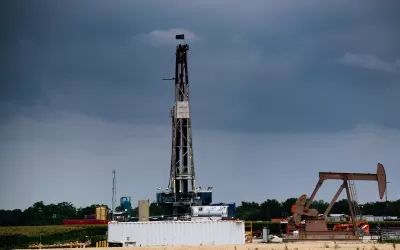
A series of earthquakes in Texas’ Permian Basin that happened before 2017 began at shallower depths than previously thought, indicating they could have been caused by wastewater disposal related to fracking operations.
According to an article by Miriam Fauzia in Governing, “Leftover wastewater may be reused for further fracking or injected underground into saltwater disposal wells. If the injection is near a fault line — a vulnerable fracture between two blocks of rock — the stress can trigger an earthquake. A 2019 study investigating quakes in North Texas found that pressure changes from disposal wells made fault lines more likely to rupture.”
A new study used a mathematical tool called “hypocentroidal decomposition” to recalculate the depth of older earthquakes, revealing that many more of them correlate with water injection sites than previously believed.
Fauzia points out that in addition to the ramifications for fracking, “the findings hold significance for environmental efforts like carbon capture and storage, a process where carbon dioxide emissions are trapped and stored underground,” which could be complicated by the presence of faults and risk of causing earthquakes.
Read the full story: Fracking in Texas Connected to Past Earthquakes, Study Finds

Trump Attacks Environmental Rules Amid Flurry of Executive Orders
Several executive orders signed on Monday seek to repeal Obama- and Biden-era environmental regulations and roll back goals to encourage the shift to electric vehicles.
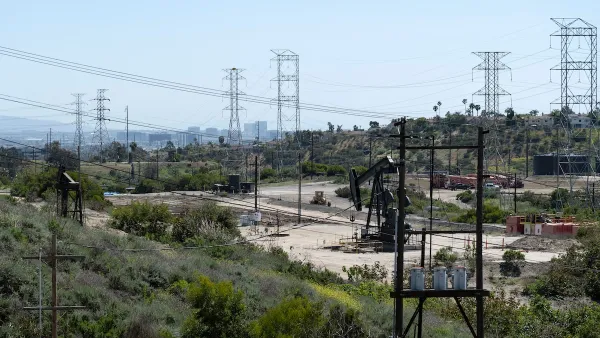
California Law Affirms Local Power Over Oil Extraction
A new law strengthens local governments’ ability to regulate and limit fossil fuel production in their jurisdictions.
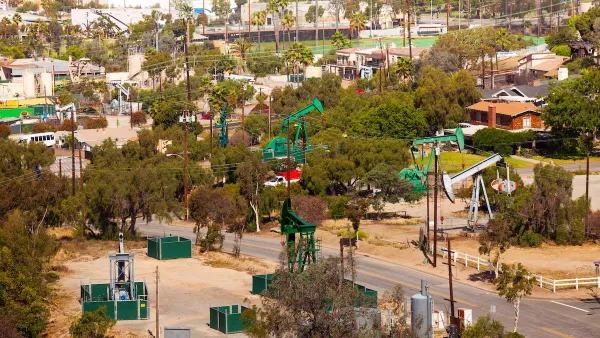
Judge Sides With Oil Companies Over LA Drilling Ban
The decision invalidates a law that would have eliminated oil drilling in the city over the next 20 years. A proposed state law could still let cities regulate extraction.

Planetizen Federal Action Tracker
A weekly monitor of how Trump’s orders and actions are impacting planners and planning in America.

Amtrak, CN end decades-long dispute with eight-year agreement
The new operating agreement establishes an updated framework for the companies to work together, including processes to resolve disputes.

Northwest rail fans eager for Sept. 30 debut of Amtrak’s Airo fleet
Get ready for that new train smell and more seats. But they won’t go faster or run more frequently on the Cascades route in Washington and Oregon.

Airo trainsets begin service on Amtrak Cascades route
The trains feature panoramic windows, complementary wifi and over 300 seats per train set.

As El Niño approaches, Newsom vetos bill aimed at protecting California levees from flooding
Gov. Gavin Newsom said the state’s allocated $170 million was enough funding; State experts estimate it will cost $3.3 billion to repair the California Delta's levees.

Boston sues Trump administration over revoked infrastructure grant
The Trump administration withdrew the infrastructure grant because less than 1% of the money would go to electric vehicle charging infrastructure.

FREE Course: Walkable City 1: Why Walkability?
After describing his path towards focusing on walkability as the essence of good planning, Jeff Speck marches through his five principal reasons for making more walkable places.
Reinventing Malls: Planning Alchemy—Turning Gray Fields Into Gold
The course focuses on the opportunities and imperatives that shape reinvention of mall sites.

City of Thousand Oaks
City of Wisconsin Rapids
Harvard University Graduate School of Design
The Architects Foundation
University of Cincinnati Online
The Pocatello Development Authority
The Urban Renewal Agency of the City of Pocatello