The state task force will examine six bills aimed at limiting local opposition to new housing development.



The Wyoming state legislature’s Regulatory Reduction Task Force is considering a package of housing bills that could limit local control over zoning and building to promote more housing production, reports Angus M. Thuermer, Jr. for WyoFile.
According to Thuermer, “Formed by the Legislature in 2023, the task force was charged with examining “rules, regulations, statutes, and processes affecting the mining, agricultural, and construction industries.” Landowners, developers and some affordable housing advocates last year urged the task force to also focus on local authority over development permits, fees and zoning regulations that are now top agenda items.”
The proposed bills would, among other things, limit or eliminate development fees for housing, prohibit natural gas in new buildings, and bar cities from charging rental property registration fees.
Additionally, “Zoning protest petition-amendments would change the percentage of neighboring property owners required to protest a change to zoning, development restrictions or boundaries. Set at 20% today, it could be changed to an unspecified number that the task force would recommend.” Another bill would promote the leasing of government-owned land for housing purposes.
Read the full story: State (Wyoming) considers limiting local authority over housing, zoning and development
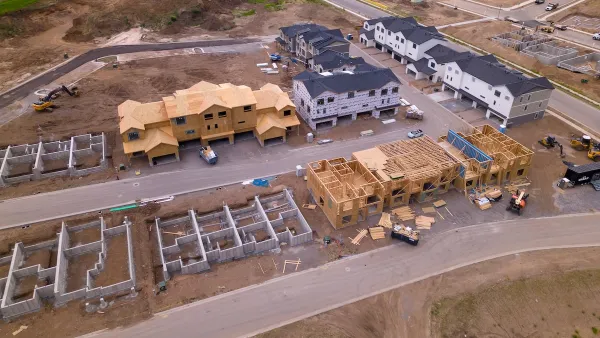
‘Montana Miracle:’ The State Actually Succeeding at Housing Reform
A series of ambitious zoning reforms is having a significant impact on the state’s housing supply.
Poll: 2/3 of Virginians Don’t Trust Local Governments to Address Housing Crisis
Three-quarters of residents say the state needs to do more to address housing supply and affordability.

Judge Rules in Favor of Massachusetts TOD Law
The court rejected an argument that the MBTA Communities law, which requires zoning for multifamily housing, is an “unfunded mandate.”

Planetizen Federal Action Tracker
A weekly monitor of how Trump’s orders and actions are impacting planners and planning in America.

California plans to bury El Niño’s downpour
If the state plays its cards right, it may be able to store a billion acre-feet of El Niño’s water in aquifers.

Desperate measures: Advocates weigh draining Lake Powell to fill Colorado River
Draining the reservoir could reduce evaporation losses by a couple hundred thousand acre-feet.

Los Angeles just elected an urban planner as its mayor
Transportation analysts are optimistic that Raman will be more aggressive in addressing transit issues than Bass.

Mamdani’s pied-à-terre tax survives legal challenge
A panel of judges found that the plaintiffs failed to demonstrate injury as a result of New York City's implementation of the tax.

Eastern Nebraska is running out of electricity
Data centers and electrification are straining eastern Nebraska’s grid, throttling economic development.

FREE Course: Walkable City 1: Why Walkability?
After describing his path towards focusing on walkability as the essence of good planning, Jeff Speck marches through his five principal reasons for making more walkable places.
Reinventing Malls: Planning Alchemy—Turning Gray Fields Into Gold
The course focuses on the opportunities and imperatives that shape reinvention of mall sites.

City of Rosemead
Rutgers University, Edward J. Bloustein School of Planning and Public Policy
One Hundred Miles
University of Michigan School for Environment and Sustainability (SEAS)
Hunter College, City University of New York (CUNY)
The Architects Foundation
City of Cambridge
Montrose County
The Pocatello Development Authority