A new policy would limit rent increases to 5 percent for landlords receiving federal tax write-offs.


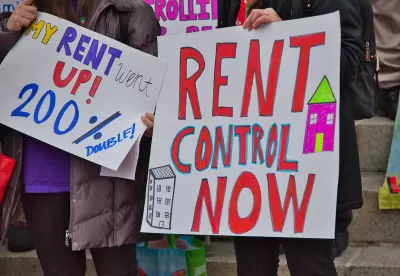
Federal legislation proposed by President Biden on Monday would incentivize rental property owners to cap rent increases at 5 percent or lose federal tax breaks, reports David Greenwald in The Davis Vanguard. “He also called for the repurposing of public land sustainably to enable as many as 15,000 additional affordable housing units to be built in Nevada; and rehabilitating distressed housing, building more affordable housing, and revitalizing neighborhoods, including in Las Vegas, Nevada.”
As Greenwald notes, “Corporate landlords, under this plan, beginning this year and for the next two years, would only be able to take advantage of faster depreciation write-offs available to owners of rental housing if they keep annual rent increases to no more than 5% each year.” The rule would apply to landlords with over 50 units. The article notes that the policy would exempt new construction and “substantial renovation or rehabilitation.”
Some housing experts say the policy could have a chilling effect on market-rate housing construction. According to a paper from University of California, Santa Barbara researchers, “recent research finds that the mass public has little conviction that more housing supply would improve affordability.”
FULL STORY: Biden Announces New Actions to Lower Housing Costs by Limiting Rent Increases and Building More Homes


Boston Mayor Fights for Rent Control
Mayor Wu says putting a rent control policy in place is just one of several ways the city plans to improve housing affordability and prevent evictions, but the proposal requires state approval.
Rents Rose Between December and January
After dropping to a three-year low, U.S. rent costs grew in many major cities.

California’s New Housing Laws: What You Need to Know
The state legislature passed dozens of new laws aimed at improving housing affordability and streamlining the development process to meet rising demand.

Planetizen Federal Action Tracker
A weekly monitor of how Trump’s orders and actions are impacting planners and planning in America.

The state-sanctioned urbicide of Austin
People don’t kill cities. Freeways do.

US to reduce Colorado River water deliveries to Mexico
A new Colorado Treaty amendment reduces Mexico’s Colorado River water allocation by 250,000 acre feet.

5 New England states march closer to 800 megawatt wind energy project
Securing federal approval for the project may be complicated under the Trump administration, which has historically been hostile towards domestic wind power.

Baltimore to break ground on $50 million Transit Priority Project
The project will bring faster bus trips, safer streets and better bike connections to Baltimore.

Airbnb launches $250 million 'last-dollar financing' housing accelerator, makes first investment in Austin
The company will put $6.4 million towards affordable housing development in Texas’ capital.

FREE Course: Walkable City 1: Why Walkability?
After describing his path towards focusing on walkability as the essence of good planning, Jeff Speck marches through his five principal reasons for making more walkable places.
Reinventing Malls: Planning Alchemy—Turning Gray Fields Into Gold
The course focuses on the opportunities and imperatives that shape reinvention of mall sites.

Eagle County Government
Harvard University Graduate School of Design
Nashville Planning Department
The Architects Foundation
University of Cincinnati Online
The Pocatello Development Authority
The Urban Renewal Agency of the City of Pocatello
Journal of the American Planning Association