More churches and municipalities are saying ‘Yes in God’s Backyard.’


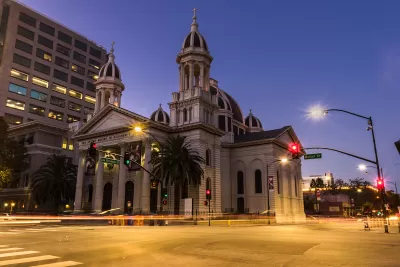
The growing ‘Yes in God’s Backyard’ movement is gaining support in faith-based communities around the country, reports Rachel M. Cohen in Vox, as more churches and faith institutions find themselves called to make an impact on the affordable housing crisis. According to Cohen, “The Terner Center for Housing Innovation at UC Berkeley estimates that, across California, there are more than 47,00 acres of land owned by faith-based organizations that could potentially be developed into affordable housing.”
“And amid a thicket of local land-use regulations that complicate the construction, some elected officials are looking for ways to nudge these efforts along.” Cities like San Diego have adjusted their zoning laws to allow places of worship to build housing on their properties, and California followed suit with the statewide Affordable Housing on Faith Lands Act.
Faith leaders are also interested in housing because congregations are declining, making church properties less useful. “Some religious institutions want to build housing as a new way to welcome strangers and care for poor people in their midst, while others are thinking more about their overall institutional legacy, especially as their membership continues to shrink.”
Read the full story: Yes in God’s backyard? This housing solution may be the answer to your prayers.

Five simple zoning changes that any city can make to increase housing affordability
Zoning for more affordable housing is not rocket science, says Donald Elliot, author of "An Even Better Way to Zone." Here’s his five-step guide to getting started.
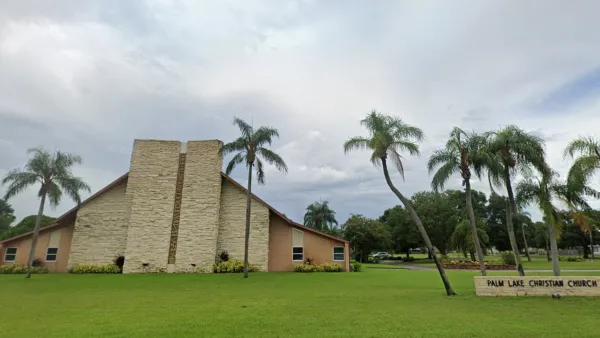
St. Pete Allows Housing on Church Land, a Florida First
Religious institutions can now build housing on their properties without rezoning.
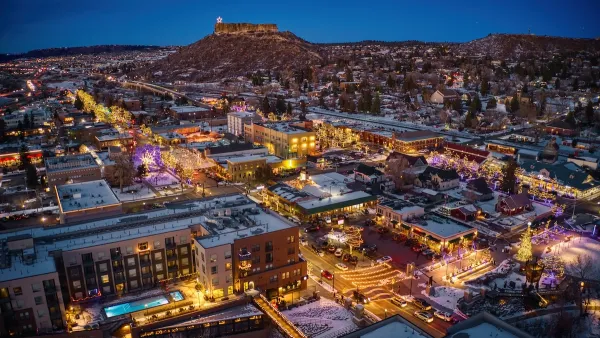
Colorado Church Fights for Right to Provide Housing
A church in Castle Rock, Colorado is suing the city, pointing out the lack of shelter options for unhoused residents in the area.

Planetizen Federal Action Tracker
A weekly monitor of how Trump’s orders and actions are impacting planners and planning in America.

Amtrak, CN end decades-long dispute with eight-year agreement
The new operating agreement establishes an updated framework for the companies to work together, including processes to resolve disputes.

Judges permit Denver to divert 77,000 acre feet from the Colorado River for reservoir expansion
Overuse and climate change have caused the Colorado River’s water levels to plummet.

Boston has spent millions making the Green Line more accessible — and there’s no end in sight
While the city has invested millions into expanding and adding platforms to the Green Line to make it more accessible, new train cars set to arrive next year will be too tall for disabled passengers to board without raising the current platforms.

Idaho may see an 18% drop in federal surface transit funding — the largest estimated cut in the US
Transit systems in rural communities are much more reliant on federal funding to provide their services.

How ‘post-disaster gentrification’ alters neighborhoods after natural calamities
After hurricanes, fires or other calamities, the original residents of a community are often replaced by younger, wealthier residents.

FREE Course: Walkable City 1: Why Walkability?
After describing his path towards focusing on walkability as the essence of good planning, Jeff Speck marches through his five principal reasons for making more walkable places.
Reinventing Malls: Planning Alchemy—Turning Gray Fields Into Gold
The course focuses on the opportunities and imperatives that shape reinvention of mall sites.

City of Wisconsin Rapids
Harvard University Graduate School of Design
KFH Group Inc.
The Architects Foundation
University of Cincinnati Online
The Pocatello Development Authority
The Urban Renewal Agency of the City of Pocatello