The city’s bike share system will cease operations at the end of June.


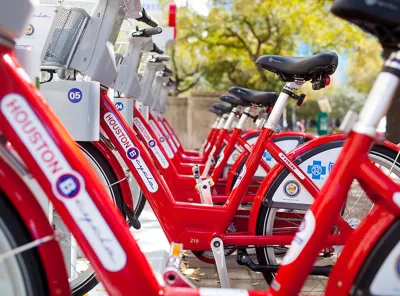
Houston’s 12-year-old public bike share system will end operations at the end of June, reports Adam Zuvanich for Houston Public Media. Despite recent hopes that the city would end up with two systems, Houston BCycle, the network’s operator, says it cannot afford to keep the system running any longer.
Now, plans for METRO, the city’s transit agency, to start its own bike share system are also in jeopardy. According to Zuvanich, “METRO's board of directors voted last September to spend $10 million on a five-year bike-sharing contract with Quebec-based PBSC Urban Solutions. But it is unclear whether the transit agency, which has since undergone leadership changes, is moving forward with that plan.” The plan could also face opposition from new mayor John Whitmire, who has halted road safety and Complete Streets projects, marking a sharp turnaround from the policies of his predecessor Sylvester Turner.
Once BCycle ends services, Houston will be the largest U.S. city with no bike share network.
Read the full story: Houston BCycle to shut down at end of June after 12-year ride

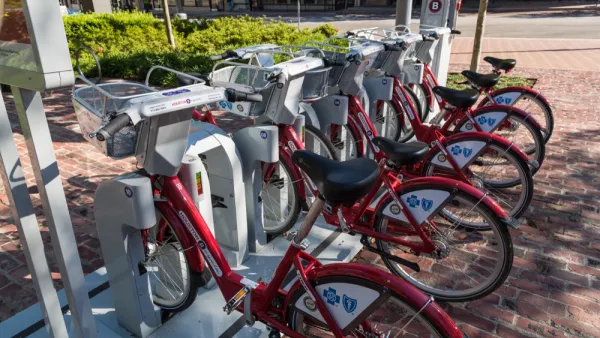
Houston Metro Abandons Bike Share in Favor of On-Demand Microtransit
The agency failed to include funding for bike share in its 2025 budget proposal.
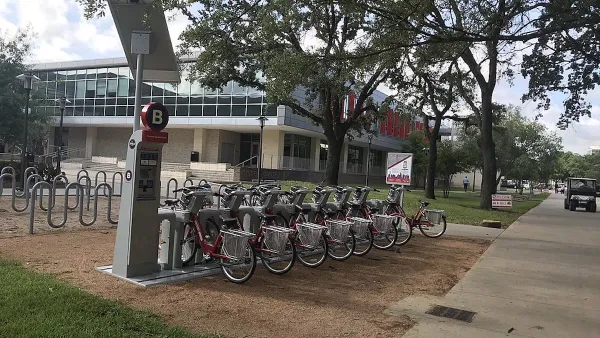
From Zero to Two: Houston’s Bike Share Saga Continues
The city is now proposing supporting BCycle as well as launching a new, complementary system.

Houston Could Launch New Bike Share
Metro is considering a contract with a new operator that would focus bike share service on major transit hubs.

Planetizen Federal Action Tracker
A weekly monitor of how Trump’s orders and actions are impacting planners and planning in America.

California plans to bury El Niño’s downpour
If the state plays its cards right, it may be able to store a billion acre-feet of El Niño’s water in aquifers.

Chicago breaks ground on $3 billion megadevelopment
The new neighborhood, titled Foundry Park, will one day host 3,700 residences.

Satanic Place Names
From streams and lakes to valleys and canyons, I mapped more than 1,000 places named after the Devil.

California High-Speed Rail Authority CEO resigns after $600,000 scandal
Under Ian Choudri, the authority used taxpayer dollars to fund first class flights and trips to nightclubs.

Want to study the Missouri River? Soon, you may need unanimous approval from 10 states
Legislation would require 10 governors’ permission to study or build projects moving water outside the basin.

FREE Course: Walkable City 1: Why Walkability?
After describing his path towards focusing on walkability as the essence of good planning, Jeff Speck marches through his five principal reasons for making more walkable places.
Reinventing Malls: Planning Alchemy—Turning Gray Fields Into Gold
The course focuses on the opportunities and imperatives that shape reinvention of mall sites.


City of Rosemead
Rutgers University, Edward J. Bloustein School of Planning and Public Policy
One Hundred Miles
Hunter College, City University of New York (CUNY)
The Architects Foundation
University of Cincinnati Online
City of Cambridge
Montrose County
The Pocatello Development Authority