The proposed law would exempt some conversion projects from local zoning regulations.


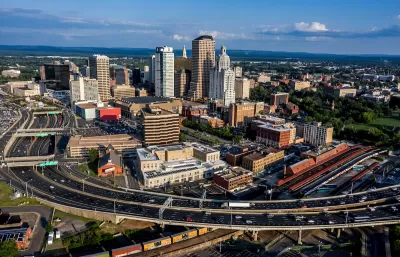
Connecticut’s state Senate just approved a new bill that supports the adaptive reuse of commercial buildings, reports Ken Dixon for CT Insider. The bill requires that projects seeking to convert retail, office, and hotel spaces to housing get approval from local officials, but exempt such projects from public hearings or special permits. According to Sen. MD Rahman, D-Manchester, “properties that are currently vacant and blighted will become more attractive for transformation and get back on the tax rolls.”
“If approved there and signed into law by the governor, who proposed similar legislation during his February State of the State address, it would let owners of retail, office and hotel space make partial or total conversions to apartments, in an attempt to address the state's housing crisis,” Dixon adds.
Opponents of the bill say it takes too much decision-making power away from local officials and community members and point out that it doesn’t differentiate between housing units at different affordability levels. “Sen. Tony Hwang, a member of the Planning and Development Committee, who also voted against the bill, railed for several minutes on a lack of affordable housing requirements in the bill, and the ability of developers to avoid public zoning hearings.”
Read the full story: Turning commercial buildings into apartments could soon be easier in Connecticut

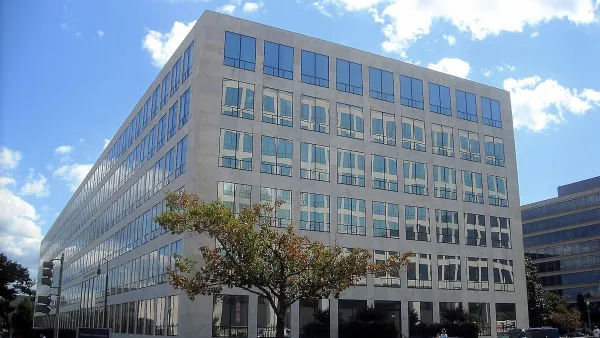
Legislation Introduced to Support Adaptive Reuse of Federal Buildings
The proposed bill would promote the conversion of vacant and underused buildings into affordable housing.

Vacant downtown LA office building will be transformed into 512 affordable homes
The World Trade Center will create hundreds of new apartments with rents starting as low as $937.
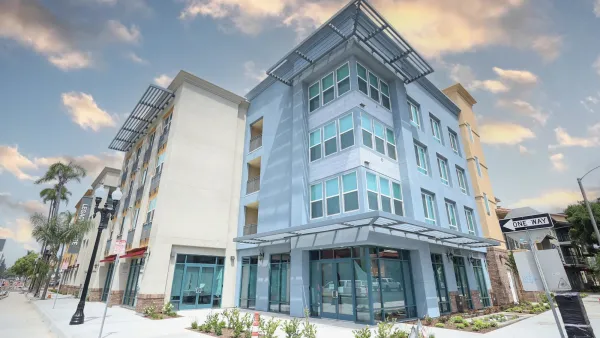
Church-to-housing trend grows in Southern California
Many faith leaders are eager to support housing construction on church land.

Planetizen Federal Action Tracker
A weekly monitor of how Trump’s orders and actions are impacting planners and planning in America.

California plans to bury El Niño’s downpour
If the state plays its cards right, it may be able to store a billion acre-feet of El Niño’s water in aquifers.

Chicago breaks ground on $3 billion megadevelopment
The new neighborhood, titled Foundry Park, will one day host 3,700 residences.

Satanic Place Names
From streams and lakes to valleys and canyons, I mapped more than 1,000 places named after the Devil.

California High-Speed Rail Authority CEO resigns after $600,000 scandal
Under Ian Choudri, the authority used taxpayer dollars to fund first class flights and trips to nightclubs.

Want to study the Missouri River? Soon, you may need unanimous approval from 10 states
Legislation would require 10 governors’ permission to study or build projects moving water outside the basin.

FREE Course: Walkable City 1: Why Walkability?
After describing his path towards focusing on walkability as the essence of good planning, Jeff Speck marches through his five principal reasons for making more walkable places.
Reinventing Malls: Planning Alchemy—Turning Gray Fields Into Gold
The course focuses on the opportunities and imperatives that shape reinvention of mall sites.

City of Rosemead
Rutgers University, Edward J. Bloustein School of Planning and Public Policy
One Hundred Miles
Hunter College, City University of New York (CUNY)
The Architects Foundation
University of Cincinnati Online
City of Cambridge
Montrose County
The Pocatello Development Authority