A new study quantifies the potential economic losses that would result from another algae bloom.


Poor water quality is endangering more than $30 billion in economic assets in Southwest Florida, according to a new study, lending increased urgency to efforts to improve the quality of coastal waters. In a story for Fox 4, Mahmoud Bennett writes,
“The analysis, which was prepared by Greene Economics LLC, indicates that for the coastal economy alone, a detrimental water event, such as the algal bloom situation in 2018, could result in $3 billion in losses for Lee County, $1.7 billion for Collier, and $466 million for Charlotte County.”
The 2018 algae bloom killed off over 4 million pounds of local fish. A similar event could jeopardize tens of thousands of jobs in the region.
Read the full story: STUDY: Poor water quality could cost Southwest Florida billions of dollars
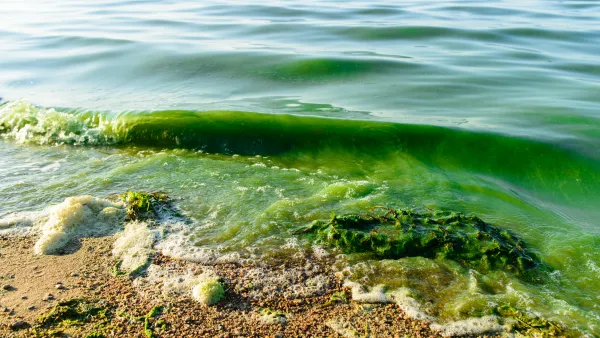
Predicting Toxic Algae Blooms with AI Modeling
Scientists hope to use AI and machine learning models to forecast water quality issues caused by toxic blue-green algae blooms.
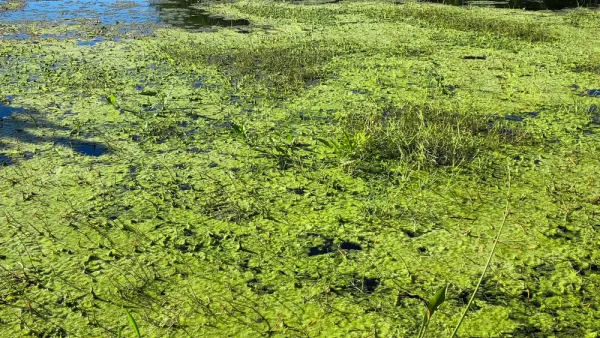
Algae Bloom Shutting Down Mississippi Beaches
The Gulf Coast is facing the environmental threat of algae blooms that cause rashes, stomach cramps, nausea, diarrhea, and vomiting.

Winter Road Salt is Making Waterways Toxic to Wildlife
Salt used to clear streets is accumulating in local creeks and rivers and seeping into groundwater, contaminating fresh water supplies.

Planetizen Federal Action Tracker
A weekly monitor of how Trump’s orders and actions are impacting planners and planning in America.

Eastern Nebraska is running out of electricity
Data centers and electrification are straining eastern Nebraska’s grid, throttling economic development.

Move over, LA: St. Louis gears up for Olympics, invests millions in downtown redevelopment
The Missouri city will host the 2028 Olympic soccer group stage and knockout matches.

Dallas releases zoning code overhaul to officials
The drafted overhaul is over 400 pages long.

NYC renovations for dangerous, ‘mercilessly crammed’ street delayed until 2027
Construction was supposed to begin this fall.

San Diego’s Midway Rising project gets greenlight from city council
The project looks to become the largest affordable housing development in California's history.

FREE Course: Walkable City 1: Why Walkability?
After describing his path towards focusing on walkability as the essence of good planning, Jeff Speck marches through his five principal reasons for making more walkable places.
Reinventing Malls: Planning Alchemy—Turning Gray Fields Into Gold
The course focuses on the opportunities and imperatives that shape reinvention of mall sites.

City of Rosemead
Rutgers University, Edward J. Bloustein School of Planning and Public Policy
One Hundred Miles
University of Michigan School for Environment and Sustainability (SEAS)
Hunter College, City University of New York (CUNY)
The Architects Foundation
City of Cambridge
The Pocatello Development Authority
The Urban Renewal Agency of the City of Pocatello