The law would ban discrimination based on housing status and ensure more access to social services for unhoused residents.


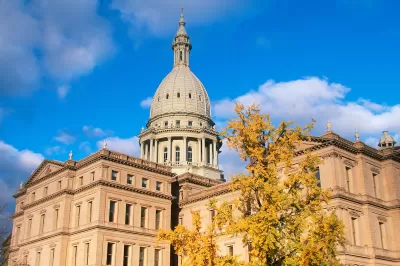
A Governing article by Ben Orner describes the effort to create a ‘bill of rights’ for unhoused people in Michigan, introduced by state Representative Emily Dievendorf.
“The goal of her bill, she told a House subcommittee Thursday, is to create a ‘bare minimum’ by ‘establishing a measure of humanity for unhoused residents.’ It ensures, regardless of someone’s housing status, equal access to public services, including rights to personal property, to emergency medical care and to move freely in public spaces.”
The bill, HB 4919, also includes right to equal treatment by government agencies, the right to schooling for homeless youth, and freedom from discrimination in employment.
According to Dievendorf, homeless people are often the target of “stereotypes and assumptions” that make conditions more unsafe for them. The article adds, “HB 4919 is a major part of Democrats’ efforts this year to tackle housing discrimination and high rents. Dievendorf told MLive in August she expected 15 to 20 bills on housing inequality this fall.”
Two other bills introduced in the state legislature would “require landlords to refund application fees for prospective tenants whose applications were denied” and “generally prevent landlords from considering a rental applicant’s criminal record.”
Read the full story: Massachusetts Considers a Homeless Bill of Rights

Berkeley promised to build supportive housing in People's Park. Where is it?
More than two years after People's Park was cordoned off, there is no word on a timeline for a promised affordable housing project.
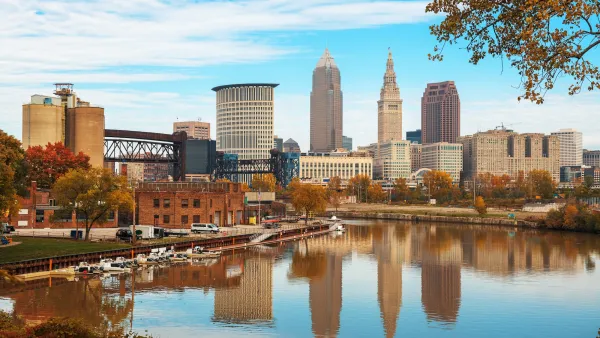
Cleveland program has housed 200 people since 2024
The A Home For Every Neighbor initiative successfully moves people into housing in under two weeks.
California Creates Housing-Focused Agency
Previously, the state’s housing and homelessness programs fell under a grabbag department that also regulates the alcohol industry, car mechanics, and horse racing.

Planetizen Federal Action Tracker
A weekly monitor of how Trump’s orders and actions are impacting planners and planning in America.

California plans to bury El Niño’s downpour
If the state plays its cards right, it may be able to store a billion acre-feet of El Niño’s water in aquifers.

Desperate measures: Advocates weigh draining Lake Powell to fill Colorado River
Draining the reservoir could reduce evaporation losses by a couple hundred thousand acre-feet.

Mamdani’s pied-à-terre tax survives legal challenge
A panel of judges found that the plaintiffs failed to demonstrate injury as a result of New York City's implementation of the tax.

Eastern Nebraska is running out of electricity
Data centers and electrification are straining eastern Nebraska’s grid, throttling economic development.

Seattle passes record-breaking transit services expansion
Proposition 1 will double the city’s transit tax to add 95,000 more bus trips and preserve 180,000 bus trips annually.

FREE Course: Walkable City 1: Why Walkability?
After describing his path towards focusing on walkability as the essence of good planning, Jeff Speck marches through his five principal reasons for making more walkable places.
Reinventing Malls: Planning Alchemy—Turning Gray Fields Into Gold
The course focuses on the opportunities and imperatives that shape reinvention of mall sites.

City of Rosemead
Rutgers University, Edward J. Bloustein School of Planning and Public Policy
One Hundred Miles
University of Michigan School for Environment and Sustainability (SEAS)
Hunter College, City University of New York (CUNY)
The Architects Foundation
City of Cambridge
Montrose County
The Pocatello Development Authority