More Americans are opting for multi-generational co-living, in large part due to rising housing costs.



“More than 59 million people live in multigenerational households or a home that includes two or more adult generations,” according to research from Rocket Mortgage, amounting to 18 percent of the U.S. population. A piece for WBUR by Claire Donnelly and Meghna Chakrabarti notes that this is twice the rate as in the 1970s, and that “nearly one third of all Americans aged 25 to 29 live in multigenerational households, now a third of them.”
According to a summary by Carla Ayers, “48.8% said home affordability and saving money were their main concern when choosing where and how to live.” In other words, the high cost of housing is pushing more families to stay or move into the same household. “While those in this living situation did find benefits, 56.5% of survey respondents said they would prefer to live alone in their own home or with their immediate family only, if given the choice.”
Read the full story: A Look Inside Living In A Multigenerational Home

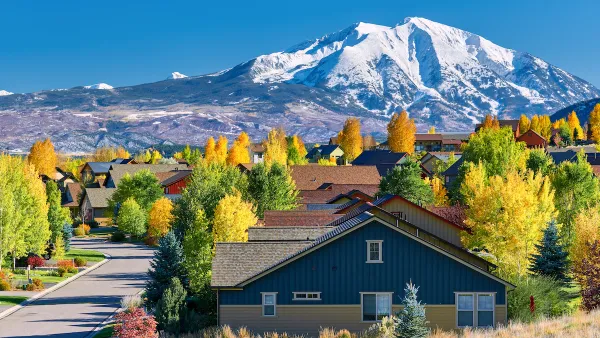
Colorado Ends Non-Family Occupancy Limits
Local jurisdictions will no longer be able to limit how many unrelated adults can live in a household, a move that supporters say will help lower housing costs and help older adults supplement their incomes and stay in their homes.

More 20-Somethings Living With Their Parents Than Any Year Since the 1940s
Is this the future that Baby Boomers envisioned?
To upzone or not to upzone? Two views on the housing crisis
Allowing more density can increase the housing supply, but does the attendant rise in land prices cancel out the benefits?

Planetizen Federal Action Tracker
A weekly monitor of how Trump’s orders and actions are impacting planners and planning in America.

California plans to bury El Niño’s downpour
If the state plays its cards right, it may be able to store a billion acre-feet of El Niño’s water in aquifers.

Desperate measures: Advocates weigh draining Lake Powell to fill Colorado River
Draining the reservoir could reduce evaporation losses by a couple hundred thousand acre-feet.

40 years after approval, Chicago breaks ground on new park
The park honors Jean Baptiste Point du Sable, the city’s first permanent non-native settler.

‘Hoodwinked:’ New Mexico bill aimed at microgrids paves way for data center development
In an interview with High Country News, Padilla said the legislation “ignited” New Mexico's economy.

California’s ‘unrecognizable’ water plan may go down the drain
After four years of regulatory processes, water agencies say the plan to overhaul how cities and farms take water from the Sacramento-San Joaquin Delta has changed dramatically.

FREE Course: Walkable City 1: Why Walkability?
After describing his path towards focusing on walkability as the essence of good planning, Jeff Speck marches through his five principal reasons for making more walkable places.
Reinventing Malls: Planning Alchemy—Turning Gray Fields Into Gold
The course focuses on the opportunities and imperatives that shape reinvention of mall sites.

City of Rosemead
Rutgers University, Edward J. Bloustein School of Planning and Public Policy
One Hundred Miles
Hunter College, City University of New York (CUNY)
The Architects Foundation
University of Cincinnati Online
City of Cambridge
Montrose County
The Pocatello Development Authority