A federal program works with rural communities to develop their assets and resources and build a sense of place.


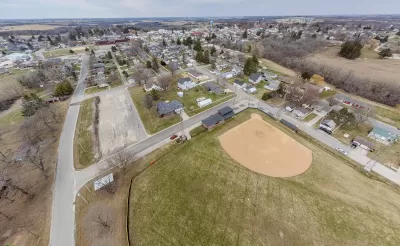
As part of a program called the Citizens’ Institute on Rural Design (CIRD) from the National Endowment for the Arts and the Housing Assistance Council, Spring Grove, Minnesota used resident input to create plans for a new community center, focusing on facilities that would help local youth and keep them anchored in the community.
As Kristi Eaton explains in The Daily Yonder, “CIRD focuses on communities with populations of 50,000 or less, and the goal is to enhance the quality of life and economic vitality of rural America through planning, design, and placemaking.”
According to Shonterria Charleston, the director of Technical Assistance and Training at the Housing Assistance Council, “It really is intended to empower local citizens to capitalize on the unique local and regional assets in order to guide the civic development as well as future design of their communities.”
These efforts, said Charleston, are “working towards preparing communities to be ready and competitive for arts and design-related state and federal funding opportunities,” explaining that “resources and partnerships are…two things that will either make or break any development initiative.”
Read the full story: Rural Renewal: Placemaking In Small Towns Through Good Design
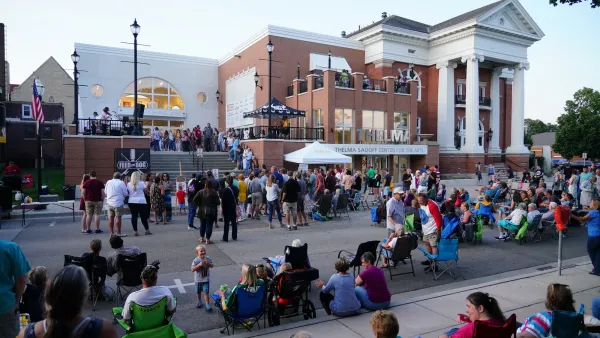
How Placemaking Lost its Way — And How it Can Get Back on Track
The term has often become diluted, getting attached to projects that don’t live up to its lofty aspirations.

String Lights are Secular! The Holiday Case for Year-round Placemaking
The holidays make streets and spaces warm, cozy, and welcoming. Why don’t we do that year round?

“Leveraging Place”: A Toolkit for Staying Loyal to the Places We Shape
Place speaks before we plan. We need to listen.

Planetizen Federal Action Tracker
A weekly monitor of how Trump’s orders and actions are impacting planners and planning in America.

California plans to bury El Niño’s downpour
If the state plays its cards right, it may be able to store a billion acre-feet of El Niño’s water in aquifers.

Desperate measures: Advocates weigh draining Lake Powell to fill Colorado River
Draining the reservoir could reduce evaporation losses by a couple hundred thousand acre-feet.

Mamdani’s pied-à-terre tax survives legal challenge
A panel of judges found that the plaintiffs failed to demonstrate injury as a result of New York City's implementation of the tax.

Eastern Nebraska is running out of electricity
Data centers and electrification are straining eastern Nebraska’s grid, throttling economic development.

Seattle passes record-breaking transit services expansion
Proposition 1 will double the city’s transit tax to add 95,000 more bus trips and preserve 180,000 bus trips annually.

FREE Course: Walkable City 1: Why Walkability?
After describing his path towards focusing on walkability as the essence of good planning, Jeff Speck marches through his five principal reasons for making more walkable places.
Reinventing Malls: Planning Alchemy—Turning Gray Fields Into Gold
The course focuses on the opportunities and imperatives that shape reinvention of mall sites.


City of Rosemead
Rutgers University, Edward J. Bloustein School of Planning and Public Policy
One Hundred Miles
University of Michigan School for Environment and Sustainability (SEAS)
Hunter College, City University of New York (CUNY)
The Architects Foundation
City of Cambridge
Montrose County
The Pocatello Development Authority