The Houston Chronicle editorial board calls the newly redesigned park a “transformative” project, urging state transportation officials to take note.


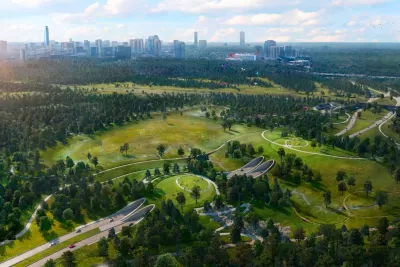
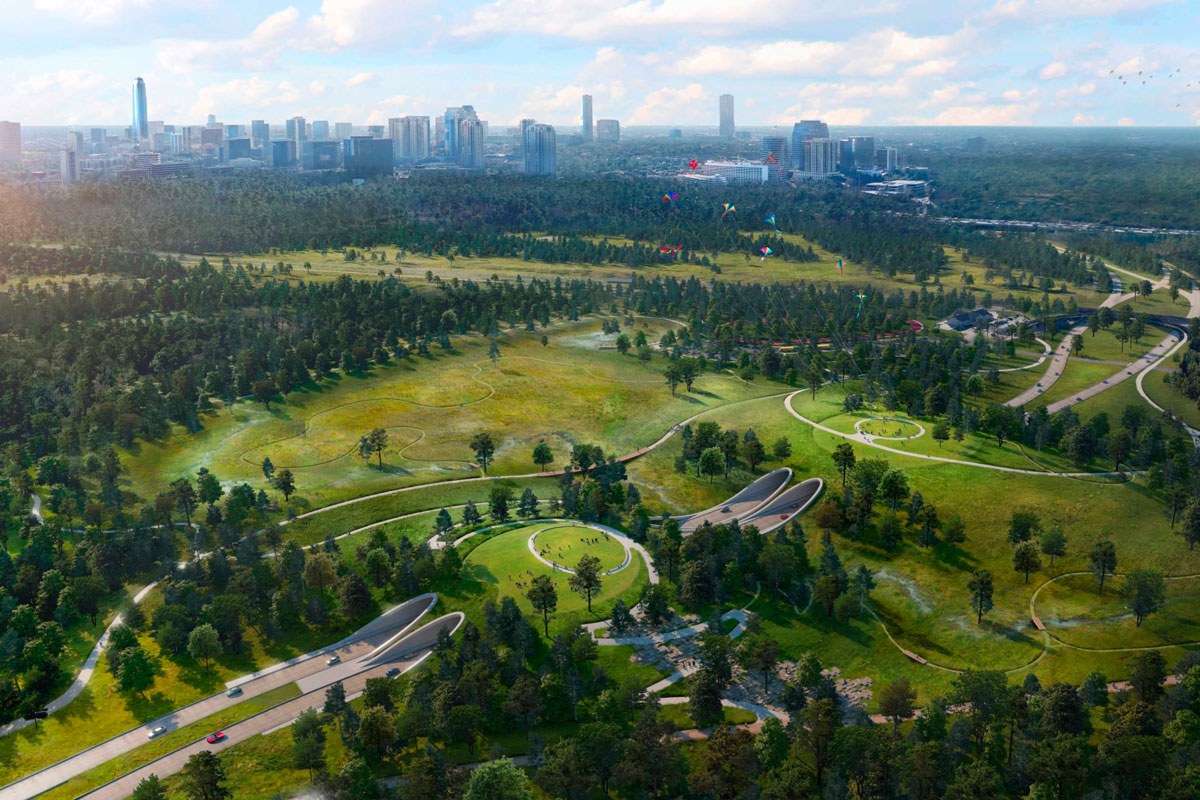
The Houston Chronicle editorial board writes in praise of the transformative Memorial Park redesign, led by landscape architect Thomas Woltz of Nelson Byrd Woltz.
The 2015 master plan for the park, whose location has been the site of a series of important historical events, is the result of years of work that culminated in the relocation of a roadway and the construction of a $70 million land bridge. The design pays homage to the history of Camp Logan, a former World War I training facility where Black soldiers were killed after marching against abuse, though the board notes that “we'd like to see more signage to mark the history, and educate curious visitors about it.”
The editorial acknowledges the project’s critics, such as Susan Chadwick, leader of a group called Save Buffalo Bayou, who says the plan was a “vanity project” that altered the environment too much. The board disagrees, writing that, although they took issue with tax increment reinvestment zones (TIRZs) as a source of funding, “the transformation of Memorial Park is a remarkable public good.”
The board doesn't ignore the park's position as an ostensibly natural space in the middle of a vast metropolis.
“Woltz's team attempted to frame as picturesque a view as possible, but standing atop the land bridge tomorrow's picnic goers will still sense that they are in the middle of infrastructure — that big parks in Houston are also about building parking lots, that highways are also about flood management, that flood management is about parks and housing.”
Despite its limitations, the editorial board sees the Memorial Park project as a model for the Texas Department of Transportation (TxDOT), which has not factored green space or parks into its budget for rebuilding Interstate 45. “The Memorial Park master plan started off with wildlife connectivity, human connectivity, improved the human experience and public access.” In the opinion of the board, other major infrastructure projects should take the same approach.
Read the full story: What Memorial Park can teach Texas' highway department (Editorial)

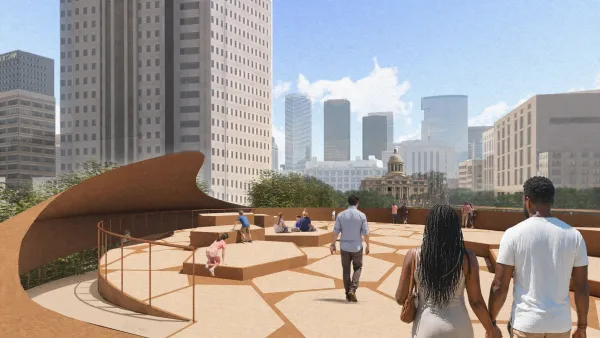
Multi-sensory Remembrance Park in Houston will honor Black history
The park is designed to highlight and memorialize the experience of enslaved Americans and the fight for freedom in Harris County.
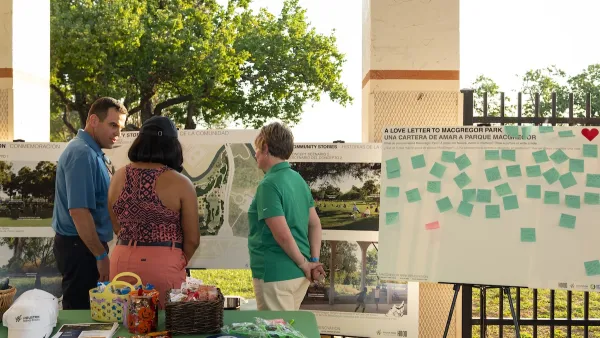
Public and Private Collaboration Advances Park Development in Houston
Houston may be known to some as a concrete jungle, but its greenspaces continue to expand thanks to combined support from the public, private, and philanthropic sectors.
Houston Awarded $18.5M for Trail Linking Uptown and Memorial Park
The grant will make the freeway-bounded park more accessible to pedestrians and cyclists.

Planetizen Federal Action Tracker
A weekly monitor of how Trump’s orders and actions are impacting planners and planning in America.

The state-sanctioned urbicide of Austin
People don’t kill cities. Freeways do.

Colorado’s Largest Data Center Could Rise Next to Homes — Without a Public Hearing
The proposed campus would consume 11 times the power of Denver International Airport; as it has across the country, opposition mounts.

Nation's most wind-powered state turns to coal as data centers increase energy demand
For the first time in decades, Iowa has increased its generation of coal power.

NYC cools commuters with city's first rain garden above a bus stop
New York City officials say the plants in the rain garden can absorb 16 gallons of rainwater during heavy storms.

Brightline West’s future may rely on $6 billion federal loan
The company has until Nov. 2 to make a $400 million equity investment into its proposed high-speed rail line.

FREE Course: Walkable City 1: Why Walkability?
After describing his path towards focusing on walkability as the essence of good planning, Jeff Speck marches through his five principal reasons for making more walkable places.
Reinventing Malls: Planning Alchemy—Turning Gray Fields Into Gold
The course focuses on the opportunities and imperatives that shape reinvention of mall sites.

Greater Baltimore Committee
Eagle County Government
Harvard University Graduate School of Design
The Architects Foundation
University of Cincinnati Online
The Pocatello Development Authority
The Urban Renewal Agency of the City of Pocatello
Journal of the American Planning Association