One writer argues that improving transit in major cities would boost local economies and prove that positive change is possible.


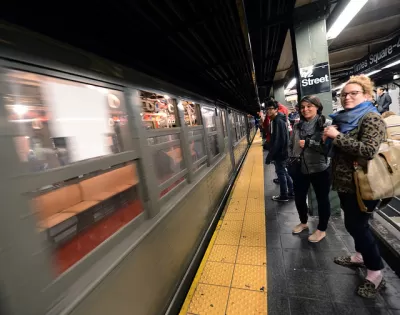
Writing in Governing, Aaron M. Renn lays out an argument for prioritizing public transit reform in big cities. “Not only is it a genuinely critical need, but it’s an area where tangible progress can be made and the public will see it right away,” Renn writes. In big cities such as New York, Chicago, and Boston—even in the age of remote work—transit “enables the dense, large-scale agglomeration of workers that gives central business districts the highest economic output in the country.”
“The problems are serious, but transit has a number of characteristics that make it a great place to focus governance energy on fixing.” First, Renn writes, it’s not reinventing the wheel: there are many global examples of functional, efficient public transit systems to draw lessons from. At the same time, “Most of the states where these systems are located have little if any anti-transit sentiment,” making transit reform a more easily achievable goal than other, more politicized issues.
For Renn, improving transit is about more than making transportation more effective for urban residents. Transit reform could help restore public faith in government and “create momentum” for solving much thornier challenges.
FULL STORY: Why We Can Fix Big-City Transit — and Why We Need To

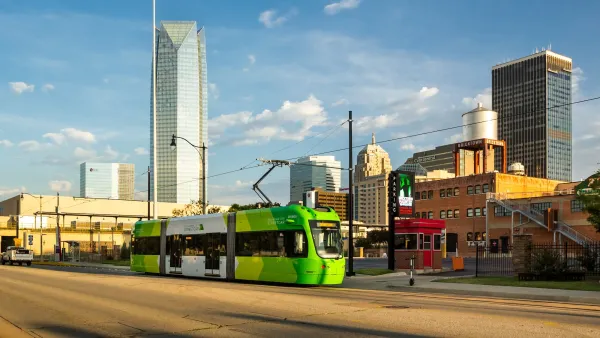
Oklahoma City bets on transit
The city's mayor is urging residents to support a new sales tax that would fund transit expansion in the growing city.
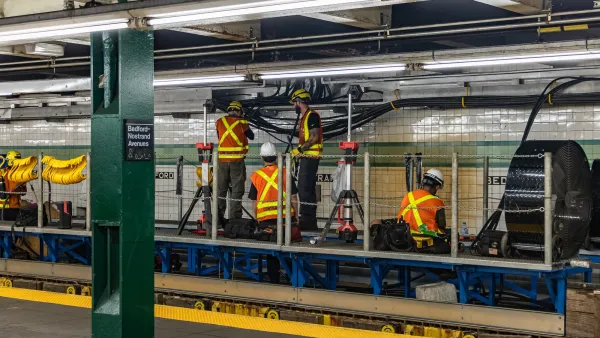
Report: BUILD Act would strip over $2B in transit projects from California and New York alone
The proposed federal transportation bill would eliminate billions in funding from the Federal Transit Administration, the Federal Railroad Administration and other federal agencies that fund transit and multimodal transportation programs.
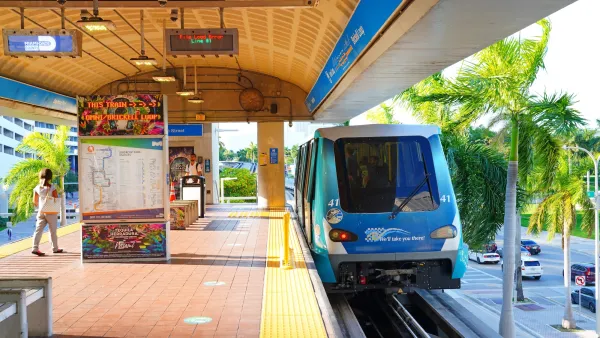
Miami-Dade budget proposes draining rail fund, bus service cuts
The county mayor says the diversion of rail funds is necessary to prevent deeper service cuts.

The state-sanctioned urbicide of Austin
People don’t kill cities. Freeways do.

US to reduce Colorado River water deliveries to Mexico
A new Colorado Treaty amendment reduces Mexico’s Colorado River water allocation by 250,000 acre feet.

New Jersey’s second-largest city bans standalone data centers
Jersey City will continue to allow co-location facilities, such as those meant for research institutions that store their own data.

Amtrak not solely to blame for New Jersey commuter rail's unreliability, report finds
A new study from the Garden State Initiative found that NJ Transit’s budget grew 20% across a 4 year period, but reliability declined significantly over the same period.

EPA erases limits on planet-warming pollution from power plants
Under Monday’s plan, power plants would still have some limits on how much mercury, arsenic and other contaminants they can emit.

Phoenix announces new on-demand transit service, more frequent RAPID buses
Both new services will launch in October, and are part of Phoenix's Project Effective Access Solutions for Easing Congestion.

FREE Course: Walkable City 1: Why Walkability?
After describing his path towards focusing on walkability as the essence of good planning, Jeff Speck marches through his five principal reasons for making more walkable places.
Reinventing Malls: Planning Alchemy—Turning Gray Fields Into Gold
The course focuses on the opportunities and imperatives that shape reinvention of mall sites.

Eagle County Government
Harvard University Graduate School of Design
Nashville Planning Department
The Architects Foundation
University of Cincinnati Online
The Pocatello Development Authority
The Urban Renewal Agency of the City of Pocatello
Journal of the American Planning Association