The Supreme Court limited the EPA's power to regulate greenhouse gas emissions from power plants. Some commentators believe that this decision will virtually eliminate EPA power—but the decision is too ambiguous to support such a clear conclusion.



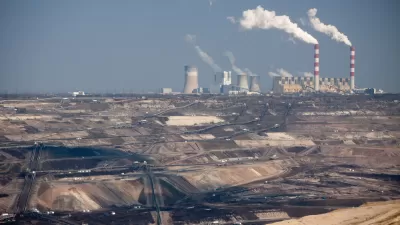
In the recent decision of West Virginia v. EPA, the Supreme Court rejected the Clean Power Plan (CPP), an Environmental Protection Agency rule designed to limit greenhouse gas emissions from power plants. Under the CPP, power plants would be required to use far less coal, and to use more natural gas, wind, and solar energy.
The Court did not claim that the Clean Air Act directly barred the EPA’s rule; instead, the Court applied the judge-made “major questions doctrine” (MQD) to invalidate the rule. Under the MQD (which the Court has occasionally applied in recent decades), where a federal agency’s regulation is sufficiently “extraordinary,” it is not enough for the agency to show that a law enacted by Congress might support the regulation. Instead, the agency must show “clear congressional authorization for the power it claims.” The basic logic behind the doctrine is that if a statute is ambiguous enough, Congress could not have possibly intended agencies to make really, really big decisions with huge economic consequences. To put it another way: for small decisions, courts will defer to an agency’s reading of an ambiguous statute. But for the biggest, most controversial decisions, courts might expect more specific instructions from Congress.
As a practical matter, this means that the CPP is dead, and that the EPA must use more modest rules in order to regulate greenhouse gases from power plants. Some pundits treated this ruling as the end of greenhouse gas regulation, or even as the end of federal administrative power. For example, an article in Slate describes the decision as “a major blow to democratic constitutionalism” and an op-ed in the Washington Post describes it as an “utterly catastrophic” ruling that “imperils the future of every human being on Earth” because it “puts a stranglehold on the Environmental Protection Agency’s ability to fight climate change.”
However, the Court’s ruling may be more limited than many commentators think. The majority opinion includes a litany of facts that supported its conclusion that the EPA rule was unusual. For example:
- The Court emphasized that the EPA was applying “an obscure, never-used section” of the Clean Air Act.
- Because the CPP suggested that power plants could meet its goal through cap-and-trade emissions trading, and Congress had rejected such schemes for greenhouse gases, the Court wrote that the rule “allowed it to adopt a regulatory program that Congress had conspicuously and repeatedly refused to enact itself.”
- The Court suggested that the EPA rule was unprecedented because rather than merely requiring more efficient coal use, the rule forced “a shift throughout the power grid from one type of energy source to another.”
In almost any conceivable future case, the Court could point to these facts to show that its recent decision is distinguishable. The Court criticized the EPA’s view that the Clean Air Act gives it almost unlimited discretion, but in applying the “major questions doctrine” in such a fact-specific manner, the Court gives itself enormous discretion to decide what questions are "major."
For lovers of clear, predictable legal rules, the Court’s decision is thus odious. But the good news for environmentalists is that because the Court’s ruling is so narrow and fact-bound, the Court (and lower courts) may find it easy to distinguish future EPA rules from the CPP. If so, the EPA might wind up having more flexibility than some pundits think.
One might argue that since the current Court is generally “conservative” (and thus hostile to environmental protection) the Court is unlikely to be so permissive.On the other hand, in recent decades, the Court has often been unwilling to clarify its vague rulings in environmental and land use law. For example, in the 2006 case of Rapanos v. United States, the Court addressed the question of when wetlands and nearby waters are “navigable waters” under the Clean Water Act. (If waters are “navigable,” individuals need a government permit to dump anything in the water). The Court voted, by a 5-4 margin, that the federal government’s interpretation of the term “navigable waters” was wrong. However, the majority was internally split. One justice (Kennedy) wrote that any waters with a “significant nexus” to a navigable waterway is navigable and thus can be regulated by the federal government. By contrast, Justice Scalia’s plurality opinion adopted a more restrictive rule.
One might think that since the Supreme Court ruling was so ambiguous and involved an issue that divides liberals from conservatives, an increasingly conservative Supreme Court would clarify the law by adopting one test or the other. But sixteen years have passed, and the Court has instead allowed the lower courts to continue fighting about the rule. As a result, some federal courts follow Justice Scalia while others follow Justice Kennedy. My lesson from this is that sometimes, the Supreme Court simply can’t be bothered to clarify the law.
Similarly, in 1978 the Court created a hideously vague balancing test to help courts decide whether a land use regulation is a taking: courts must weigh the economic harm to a landowner from regulation, whether the landowner's investment-backed expectations have been harmed, and the “character of the government action.” Over forty years have passed, and the Court still has not coherently explained what the last factor means.
What does all of this mean for the EPA and other federal agencies? First, the Supreme Court’s recent decision is so fact-intensive that agencies have no way of knowing when the Court will reject agency rules. Second, because the Court may not hear any similar cases for decades, the primary responsibility for enforcing the Court’s rules will be delegated to the lower courts, which are more ideologically diverse than the Supreme Court. As a result, it is not at all clear to what extent the Court’s decision will limit federal power.

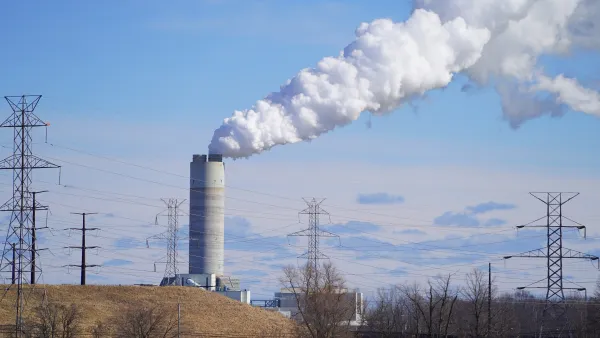
EPA erases limits on planet-warming pollution from power plants
Under Monday’s plan, power plants would still have some limits on how much mercury, arsenic and other contaminants they can emit.

94% of wetlands could lose federal protections under proposed EPA rule
The ruling would only allot federal protections to waterways that flow nearly everyday, which few wetlands do.
Trump's proposed budget slashes EPA funding by 52%
The budget also reduces funding for FEMA, climate resilience projects, and water infrastructure programs.

The state-sanctioned urbicide of Austin
People don’t kill cities. Freeways do.

US to reduce Colorado River water deliveries to Mexico
A new Colorado Treaty amendment reduces Mexico’s Colorado River water allocation by 250,000 acre feet.

New Jersey’s second-largest city bans standalone data centers
Jersey City will continue to allow co-location facilities, such as those meant for research institutions that store their own data.

Amtrak not solely to blame for New Jersey commuter rail's unreliability, report finds
A new study from the Garden State Initiative found that NJ Transit’s budget grew 20% across a 4 year period, but reliability declined significantly over the same period.

EPA erases limits on planet-warming pollution from power plants
Under Monday’s plan, power plants would still have some limits on how much mercury, arsenic and other contaminants they can emit.

Phoenix announces new on-demand transit service, more frequent RAPID buses
Both new services will launch in October, and are part of Phoenix's Project Effective Access Solutions for Easing Congestion.

FREE Course: Walkable City 1: Why Walkability?
After describing his path towards focusing on walkability as the essence of good planning, Jeff Speck marches through his five principal reasons for making more walkable places.
Reinventing Malls: Planning Alchemy—Turning Gray Fields Into Gold
The course focuses on the opportunities and imperatives that shape reinvention of mall sites.

Eagle County Government
Harvard University Graduate School of Design
Nashville Planning Department
The Architects Foundation
University of Cincinnati Online
The Pocatello Development Authority
The Urban Renewal Agency of the City of Pocatello
Journal of the American Planning Association

