The city aims to build 20,000 units of affordable housing by 2025, but as housing costs continue to increase, more Seattleites are being squeezed out of their homes.



Despite almost doubling the city’s spending on affordable housing in the last few years, Seattle still faces a housing shortage, writes Josh Cohen in Crosscut.
“In 2017, the Office of Housing awarded $93.4 million to affordable housing developers to build 944 units of new housing. In 2018, the number dipped to $75.19 million in awards, but that was enough for 1,197 units of affordable housing. Last year, the Office of Housing’s affordable housing investment grew to $153 million, enough to build or acquire 1,910 units (several affordable housing developers were able to buy existing market-rate apartment buildings during the pandemic and operate them as subsidized housing).”
However, Cohen points out, “Years of insufficient housing construction, combined with Seattle’s seemingly endless cost-of-living increases, mean those new apartments still won’t be enough to meet the needs of Seattleites being squeezed out of the city or pushed into homelessness.” With costs of everything from land to construction supplies rising, making building affordable housing even more complicated.
According to Seattle Office of Housing interim director Maiko Winkler-Chin, funding the amount of housing necessary will likely require renewing and increasing the Seattle Housing Levy, a $290 voter-approved property tax set to expire in 2023.
Read the full story: Seattle nearly doubled affordable housing funds. Is it enough?
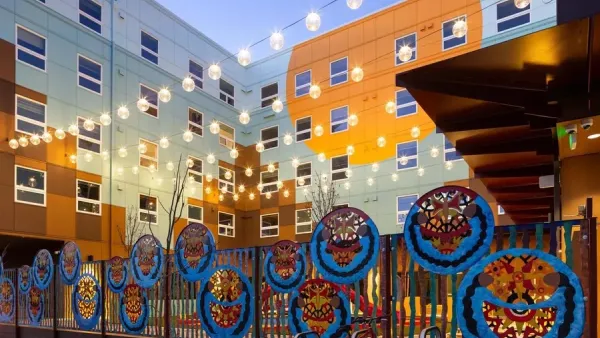
Seattle church complex includes 87 affordable homes
The Columbia City Church of Hope deeded part of its property to an affordable housing developer after limiting in-person congregation during the pandemic.
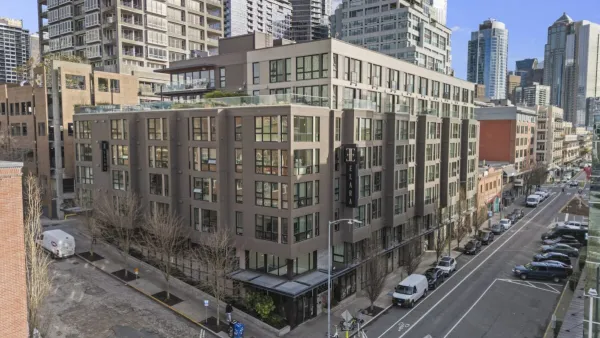
Seattle social housing agency can now issue bonds
The new Seattle Social Housing Developer funds affordable housing through a tax on the city's highest-paying companies.
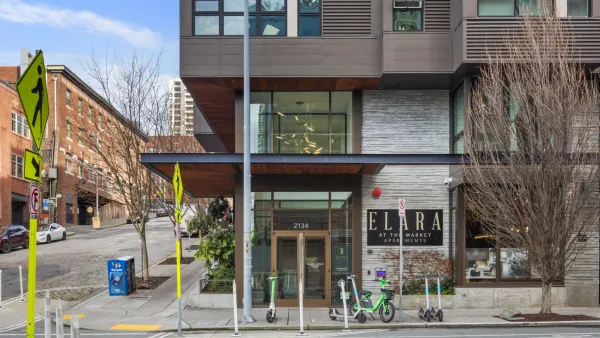
Seattle's first social housing building gets 10,000 resident applications
The Elara at the Market development includes 150 affordable housing units.

Planetizen Federal Action Tracker
A weekly monitor of how Trump’s orders and actions are impacting planners and planning in America.

California plans to bury El Niño’s downpour
If the state plays its cards right, it may be able to store a billion acre-feet of El Niño’s water in aquifers.

Desperate measures: Advocates weigh draining Lake Powell to fill Colorado River
Draining the reservoir could reduce evaporation losses by a couple hundred thousand acre-feet.

Mamdani’s pied-à-terre tax survives legal challenge
A panel of judges found that the plaintiffs failed to demonstrate injury as a result of New York City's implementation of the tax.

Eastern Nebraska is running out of electricity
Data centers and electrification are straining eastern Nebraska’s grid, throttling economic development.

Seattle passes record-breaking transit services expansion
Proposition 1 will double the city’s transit tax to add 95,000 more bus trips and preserve 180,000 bus trips annually.

FREE Course: Walkable City 1: Why Walkability?
After describing his path towards focusing on walkability as the essence of good planning, Jeff Speck marches through his five principal reasons for making more walkable places.
Reinventing Malls: Planning Alchemy—Turning Gray Fields Into Gold
The course focuses on the opportunities and imperatives that shape reinvention of mall sites.

City of Rosemead
Rutgers University, Edward J. Bloustein School of Planning and Public Policy
One Hundred Miles
University of Michigan School for Environment and Sustainability (SEAS)
Hunter College, City University of New York (CUNY)
The Architects Foundation
City of Cambridge
Montrose County
The Pocatello Development Authority