Two grant programs aimed at supporting highly efficient, affordable housing developments are yielding promising results.


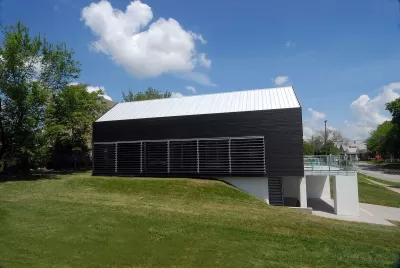
Two Massachusetts state programs are successfully incentivizing the production of highly efficient affordable housing using passive building. According to an article by Sarah Shemkus, "Early numbers indicate that this building approach costs, on average, less than 3% more than conventional construction and can slash energy use roughly in half."
The programs reward developers who engage in passive house building, defined in the article as "a performance standard that calls for a drastic reduction of energy consumption as compared to a similar, conventionally designed structure. Buildings that meet the standard have airtight envelopes, insulating windows, and continually insulated exterior walls."
Two grant programs launched in 2018 and 2019 by the Massachusetts Clean Energy Center and Mass Save, the organization that administers the utilities’ legally mandated energy efficiency programs have let developers experiment with passive building. "The Passive House Design Challenge awarded eight affordable housing developments $4,000 per unit — for a total of $1.73 million — for new construction built to the passive house standard." Mass Save provides grants for feasibility studies and pre-construction energy modeling. "These incentives have been vital in sparking the growth of high-performance multifamily building, said Dave Traggorth, principal at real estate advisory firm Traggorth Companies, which is currently developing two passive house projects with a total of 57 units."
More efficient design also means lower energy and maintenance costs down the line. "The affordable housing sector has taken a particular interest in passive house building. The increased attention to airflow and air quality, along with better temperature control, make these homes healthier places to live, an advantage for populations that generally face more medical issues (and costs)." Building energy-efficient affordable housing, with its long-term benefits, can benefit both residents and builders.
Read the full story: Incentives inform and inspire highly efficient affordable housing in Massachusetts

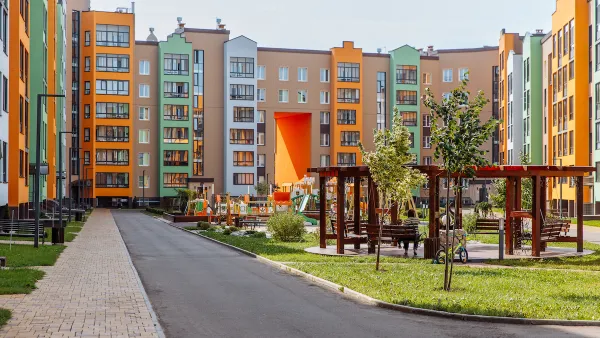
Ten Trends Shaping Affordable Housing
From Passive House design to a broader range of amenities, affordable housing developers are finding new ways to make housing more efficient, comfortable, and flexible for residents.
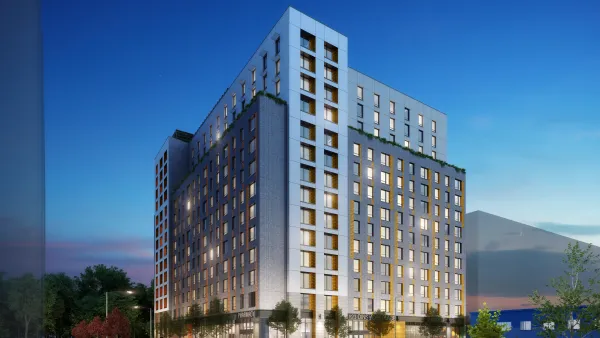
‘Passive House’ Development Brings 275 Affordable, Efficient Units to Brooklyn
A 14-story tower uses the ‘Passive House’ approach to drastically reduce energy use and improve quality of life for residents.
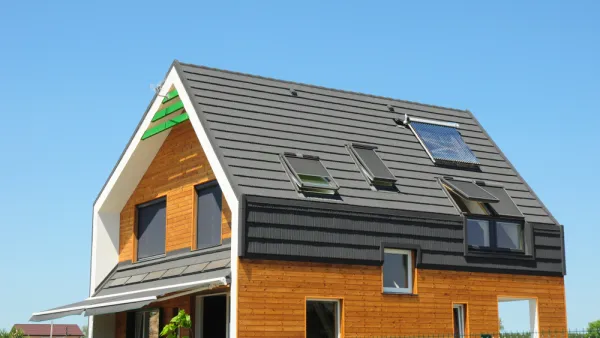
Sustainable and Affordable Housing Is No Longer a Pipe Dream
Fresh interest in green building among investors, new incentives, and stricter building codes are making it more possible to include green building practices in affordable housing production.

Planetizen Federal Action Tracker
A weekly monitor of how Trump’s orders and actions are impacting planners and planning in America.

California plans to bury El Niño’s downpour
If the state plays its cards right, it may be able to store a billion acre-feet of El Niño’s water in aquifers.

Desperate measures: Advocates weigh draining Lake Powell to fill Colorado River
Draining the reservoir could reduce evaporation losses by a couple hundred thousand acre-feet.

California city breaks ground on transit connector
The project includes three mobility hubs and a pedestrian bridge.

After public outcry, Massachusetts city releases housing development tracker
Cambridge’s tracker currently shows 250 housing projects in various stages of development.

40 years after approval, Chicago breaks ground on new park
The park honors Jean Baptiste Point du Sable, the city’s first permanent non-native settler.

FREE Course: Walkable City 1: Why Walkability?
After describing his path towards focusing on walkability as the essence of good planning, Jeff Speck marches through his five principal reasons for making more walkable places.
Reinventing Malls: Planning Alchemy—Turning Gray Fields Into Gold
The course focuses on the opportunities and imperatives that shape reinvention of mall sites.


City of Rosemead
Rutgers University, Edward J. Bloustein School of Planning and Public Policy
One Hundred Miles
Hunter College, City University of New York (CUNY)
The Architects Foundation
University of Cincinnati Online
City of Cambridge
Montrose County
The Pocatello Development Authority