Although the current housing crisis has been compared with the housing crash of the late 2000s, experts caution that affordability issues could plague the U.S. housing market for years to come.


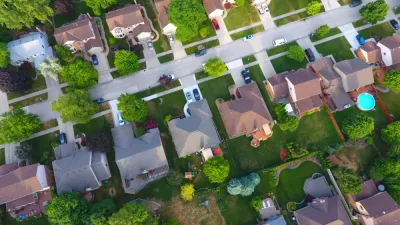
With median home prices up by 20 percent in the last year and rents rising across the country, some believe that something has to give, soon. But experts warn that the overheated housing market we're seeing now isn't just a bubble, reports Emily Badger. While rampant price growth similar to today's preceded the 2007 housing crash, at that time, the rise in costs was experienced by less than half of U.S. cities, compared to 80 percent today.
As Badger writes, "There’s probably no quick reprieve coming, no rollback in stratospheric home prices if you can just wait a little longer to jump in." It's "about the fundamentals," says Jenny Schuetz of Brookings: "not enough houses, and huge numbers of people wanting homes." For households on the verge of homeownership before the pandemic, the explosive rise in prices may have pushed them back by years.
As housing experts and advocates have repeatedly pointed out, the imbalance between supply and demand is worsening the housing crisis, but policymakers are not taking aggressive steps to correct the problem. And even if the migration caused by remote work evens out, other factors like institutional investors are likely here to stay. "Today, first-time home buyers in once-affordable markets have competition from all kinds of sources that didn’t exist a generation ago: from global capital, from all-cash 'iBuyers' that size up homes by algorithm, from institutional investors renting single-family homes, from smaller-scale investors running Airbnbs."
Ultimately, economists interviewed in the article express a pessimistic outlook, with most foreseeing that affordability will continue to be a major concern for American households for several years.
FULL STORY: Something Has to Give in the Housing Market. Or Does It?


A Paradigm Shift for Affordable Housing: Preserve What's Left
A Los Angeles affordable-housing developer says the industry needs to focus more on keeping existing housing affordable.
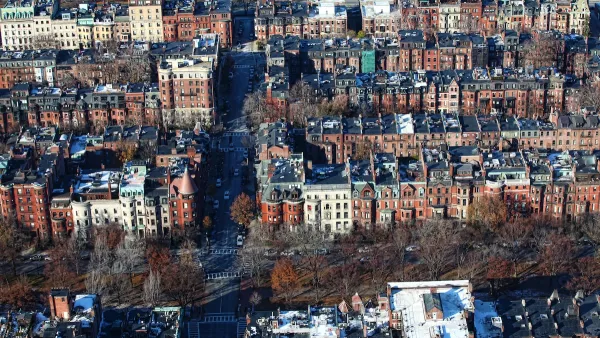
Boston Affordable Housing Program Meets 1,000-Unit Goal
The program offers zero-interest loans to developers that keep rental units affordable for at least 50 years.
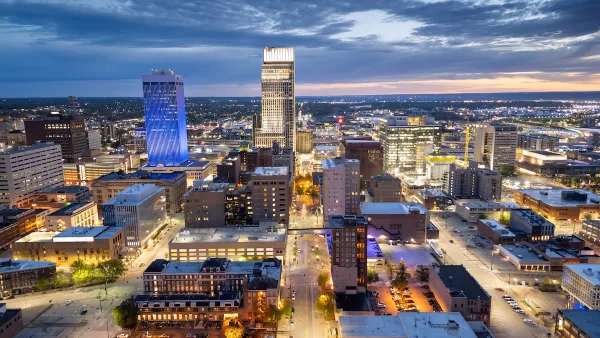
The Best and Worst Cities for Housing Affordability
The gap between market-rate and affordable rents is much wider in some U.S. cities than others.

Planetizen Federal Action Tracker
A weekly monitor of how Trump’s orders and actions are impacting planners and planning in America.

The state-sanctioned urbicide of Austin
People don’t kill cities. Freeways do.

US to reduce Colorado River water deliveries to Mexico
A new Colorado Treaty amendment reduces Mexico’s Colorado River water allocation by 250,000 acre feet.

Mamdani overhauls NYC's Vision Zero plan with 100 new policy goals
The overhaul aims to reduce traffic deaths and make streets safer for pedestrians, cyclists and drivers through lower speed limits, new safety infrastructure and more.

Amtrak not solely to blame for New Jersey commuter rail's unreliability, report finds
A new study from the Garden State Initiative found that NJ Transit’s budget grew 20% across a 4 year period, but reliability declined significantly over the same period.

EPA erases limits on planet-warming pollution from power plants
Under Monday’s plan, power plants would still have some limits on how much mercury, arsenic and other contaminants they can emit.

FREE Course: Walkable City 1: Why Walkability?
After describing his path towards focusing on walkability as the essence of good planning, Jeff Speck marches through his five principal reasons for making more walkable places.
Reinventing Malls: Planning Alchemy—Turning Gray Fields Into Gold
The course focuses on the opportunities and imperatives that shape reinvention of mall sites.

Eagle County Government
Harvard University Graduate School of Design
Nashville Planning Department
The Architects Foundation
University of Cincinnati Online
The Pocatello Development Authority
The Urban Renewal Agency of the City of Pocatello
Journal of the American Planning Association