On the heels of building its HQ2 facility in Arlington, Amazon continues to expand its hubs in cities spread out across the country.


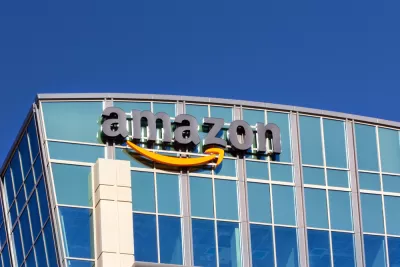
Amazon's growth continues unabated, reports John Cook, as the company plans for further expansion in Austin, Chicago, and Phoenix, in addition to adding a projected 25,000 workers at its Arlington, Virginia HQ2 hub.
It’s yet another signal that the cloud computing and online retailing giant plans to diversify the geographies where its technology workers and corporate staff do business, something that will take on more importance as directors at the company begin to individually decide remote work policies.
The company plans to add 2,000 jobs in Austin, 550 in Tempe, and 450 in Chicago as part of its decision to create 3,500 jobs in six cities. "Having geographic diversity will help Amazon recruit more broadly, and provide more flexibility for current workers who may find it more convenient to live in other parts of the country." While Amazon's biggest employment growth has been in its fulfillment centers, it also plans to spread out its corporate staff to more cities.
Amazon's rapid growth has drawn concern from community activists who warn that warehouse facilities, often located in low-income communities, contribute to poor air quality, increased traffic congestion, and other public health impacts. At the same time, Amazon has indicated a shift to owning rather than leasing land, which could have powerful implications for the industrial real estate market.
FULL STORY: Amazon continues amazing growth spurt, expands presence at Austin, Chicago and Phoenix tech hubs

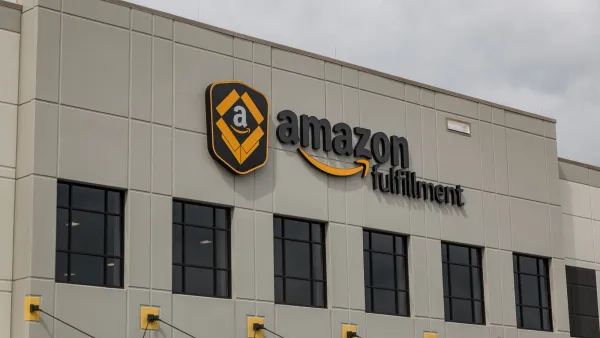
Warehouse Sprawl Prompts Calls for Regional Planning
As e-commerce giants like Amazon build more and more facilities, advocates say a regional approach is needed to prevent sprawl and look beyond local benefits.
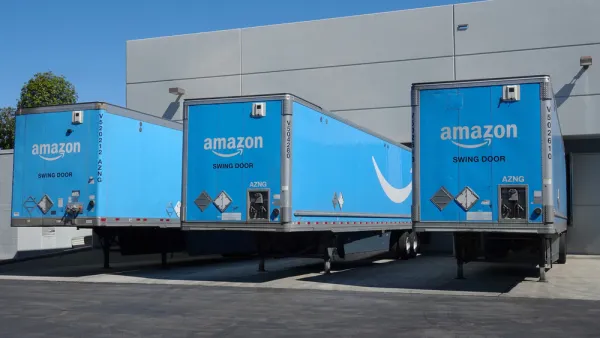
Key Warehouse Centers Challenge Distribution Center Expansion
Communities near major e-commerce distribution centers are increasingly resisting new construction, citing air pollution and other public health impacts.
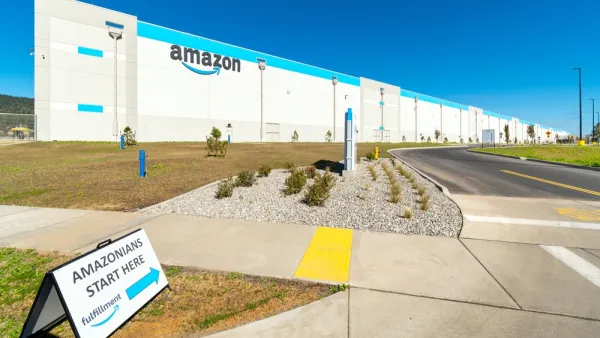
Amazon Plans for More Massive Warehouses
The company is building its biggest-ever distribution centers in New York, Colorado, and California.

The state-sanctioned urbicide of Austin
People don’t kill cities. Freeways do.

US to reduce Colorado River water deliveries to Mexico
A new Colorado Treaty amendment reduces Mexico’s Colorado River water allocation by 250,000 acre feet.

New Jersey’s second-largest city bans standalone data centers
Jersey City will continue to allow co-location facilities, such as those meant for research institutions that store their own data.

Amtrak not solely to blame for New Jersey commuter rail's unreliability, report finds
A new study from the Garden State Initiative found that NJ Transit’s budget grew 20% across a 4 year period, but reliability declined significantly over the same period.

EPA erases limits on planet-warming pollution from power plants
Under Monday’s plan, power plants would still have some limits on how much mercury, arsenic and other contaminants they can emit.

Phoenix announces new on-demand transit service, more frequent RAPID buses
Both new services will launch in October, and are part of Phoenix's Project Effective Access Solutions for Easing Congestion.

FREE Course: Walkable City 1: Why Walkability?
After describing his path towards focusing on walkability as the essence of good planning, Jeff Speck marches through his five principal reasons for making more walkable places.
Reinventing Malls: Planning Alchemy—Turning Gray Fields Into Gold
The course focuses on the opportunities and imperatives that shape reinvention of mall sites.

Eagle County Government
Harvard University Graduate School of Design
Nashville Planning Department
The Architects Foundation
University of Cincinnati Online
The Pocatello Development Authority
The Urban Renewal Agency of the City of Pocatello
Journal of the American Planning Association