It is undeniable that some houses are being bought up by big corporations—but the negative results of such "financialization" actually prove that the law of supply and demand still applies to housing.



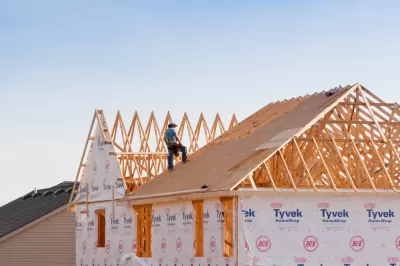
A recent Washington Post article proclaimed that Wall Street investors are buying up subdivisions, turning houses into rental properties, and treating tenants unethically. On one of my listservs, NIMBYs and PHIMBYs* are using this reality as evidence that market-rate housing can never bring down rents because of this "financialization" of real estate. (Although different people use the term "financialization" to mean different things, my sense is that in the context of land use policy, the most common usage of the term is that "rich people are buying up real estate and that's bad.")
But if you read the story more carefully, it seems perfectly consistent with the key belief of the pro-housing YIMBY movement: that the law of supply and demand does in fact apply to real estate. The Washington Post article complains that out-of-town investors are "outbidding middle-class homeowners." In other words, demand for housing has increased (because corporations decided to buy houses), thus prices are going up. And if demand affects prices, it logically follows that supply affects houses as well.
Having said that, rapid changes in housing costs do suggest that it is sometimes difficult for supply to shift along with demand. Why? Because demand may change far more rapidly than supply. For example, in Midtown Manhattan where I live, median asking rents for two-bedroom apartments increased from $3950 to $4300 between December 2018 and December 2019, then plunged to $3400 in January 2021, then increased to $4700 in October 2021.
Unfortunately, in the United States supply rarely increases so rapidly. Even where building a house complies with existing zoning, construction of just one house takes months. And government regulation may add months or even years to this process: often, a builder must get a rezoning and/or subdivision approval, and then spend years going through public hearings, buying off potential opponents with concessions, and even going to court to fight off those opponents.** As a result, a demand shock will not immediately be met by increased supply. This reality may explain why, even in markets far more permissive than New York, prices rise with demand. For example, in Austin (one of the nation's fastest growing cities), prices have increased by 25 percent over the past year.
It seems to me that the relationship between demand and supply is a bit like the relationship between coronavirus and countermeasures such as vaccines: just as the virus mutates more rapidly than scientists can create appropriate vaccines, demand changes more rapidly than developers can create housing to meet the demand.
What can we do about this? Americans have three options. We can set the rules of the political game so that supply can rise as rapidly as possible to meet demand, which at least mitigates the supply/demand gap. Or we can raise taxes to build so much public housing that supply will always exceed demand. Or we can just continue to live with the "virus" of rising rents and housing costs—a result that is quite convenient for people who already own condos and houses, but of course is less convenient for those of us who are too poor or too mobile to do so.
*If you don't want to read the links, the meaning of the acronyms above is as follows: NIMBY= Not In My Back Yard (that is, "don't build housing anywhere near me, whether it is private or public"), PHIMBY= Public Housing In My Back Yard (that is, "government-subsidized housing is good but market-rate housing is not so good"), and YIMBY= Yes In My Back Yard (that is, "housing is good").
**This is one reason why the common NIMBY argument that "my city always approves rezonings" is misleading. Even if a city approves 100 percent of upzoning requests, the delay caused by the rezoning process may ensure that it takes a long time for housing to get built, which means that supply may increase at a glacial pace.


Planetizen Federal Action Tracker
A weekly monitor of how Trump’s orders and actions are impacting planners and planning in America.

Northwest rail fans eager for Sept. 30 debut of Amtrak’s Airo fleet
Get ready for that new train smell and more seats. But they won’t go faster or run more frequently on the Cascades route in Washington and Oregon.
Alabama scores up to $2.5 billion federal loan for largest infrastructure project in state’s history
The Mobile River Bridge and Bayway Project aims to ease congestion at Alabama’s worst bottleneck.

Novel study finds extreme state-by-state disparity in housing construction timelines
The first comprehensive working paper on U.S. construction timelines also found that the permitting process for multi-family projects has slowed nationwide.

California may destroy its beaches trying to save homes from El Niño
Boulders and seawalls can protect homes from waves, but ultimately destroy sandy beaches.

California high-speed rail accomplishes only one legislative goal in 2026
The majority of the agency's failed pitches were never developed into written proposals.

FREE Course: Walkable City 1: Why Walkability?
After describing his path towards focusing on walkability as the essence of good planning, Jeff Speck marches through his five principal reasons for making more walkable places.
Reinventing Malls: Planning Alchemy—Turning Gray Fields Into Gold
The course focuses on the opportunities and imperatives that shape reinvention of mall sites.

City of Thousand Oaks
City of Wisconsin Rapids
Harvard University Graduate School of Design
The Architects Foundation
University of Cincinnati Online
Northern Illinois Transit Authority (NITA)
The Pocatello Development Authority
The Urban Renewal Agency of the City of Pocatello

