The coastal resiliency and biodiversity project is taking shape in Raritan Bay, an area devastated by Hurricane Sandy in 2012.


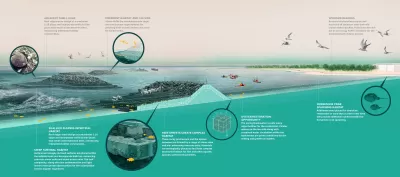
New York State has broken ground on a $107 million coastal resiliency project called Living Breakwaters, reports Matt Hickman. "Alongside swaths of Lower Manhattan and low-lying waterfront communities in Brooklyn and Queens such as Red Hook, the Rockaways, and Howard Beach, Staten Island’s Tottenville neighborhood on the far southern end of the borough suffered some of the most significant damage within New York City during [Hurricane Sandy]."
Designed by landscape architecture and urban design studio SCAPE, Living Breakwaters "will take the form of a series of near-shore breakwaters built from stone and “ecologically enhanced concrete units” that will break waves and reduce beach erosion while also providing a new habitat for oysters and other marine life."
The project was selected as the winner of "the U.S. Department of Housing and Urban Development (HUD)’s post-Sandy Rebuild by Design competition," which sought to find innovative ways to reduce flood risk and conserve the shoreline. "As detailed in a press release, in addition to providing Tottenville with an additional layer of robust protection against climate change-exacerbated storms, Living Breakwaters, a major work of natural infrastructure informed by “hydrodynamic modeling, iterative testing, environmental review, and extensive public engagement,” will feature “reef ridges” and “reef streets” meant to foster marine biodiversity."
The project is scheduled for completion in 2024.
FULL STORY: SCAPE’s Living Breakwaters project begins in-water construction off of Staten Island

Visionary Concepts Make "Rebuild by Design" Shortlist
10 bold ideas for building the New York area's resiliency have been selected to move to the final round of a design competition run by HUD. The best designs could tap into billions of dollars in Hurricane Sandy relief funds.
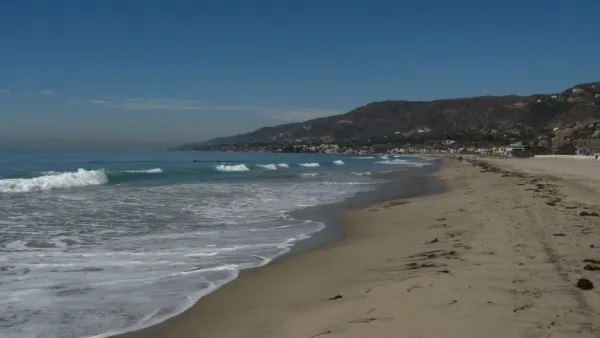
LA’s ‘Living Shorelines’ Get $5.1M Boost
L.A. County is investing in dune restoration and nature-based shoreline projects at Zuma, Redondo, and Dockweiler beaches to protect the coast and keep beaches accessible for communities.
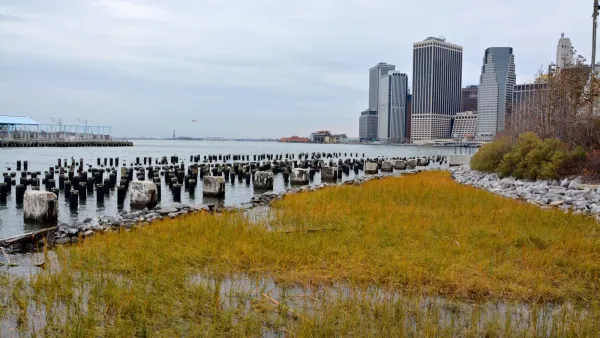
Shift in Direction of New York Resiliency Project Raises Questions
After delays and a groundbreaking that still has not happened, proposed changes to New York’s big resiliency project have not been well received.

The state-sanctioned urbicide of Austin
People don’t kill cities. Freeways do.

US to reduce Colorado River water deliveries to Mexico
A new Colorado Treaty amendment reduces Mexico’s Colorado River water allocation by 250,000 acre feet.

New Jersey’s second-largest city bans standalone data centers
Jersey City will continue to allow co-location facilities, such as those meant for research institutions that store their own data.

Amtrak not solely to blame for New Jersey commuter rail's unreliability, report finds
A new study from the Garden State Initiative found that NJ Transit’s budget grew 20% across a 4 year period, but reliability declined significantly over the same period.

EPA erases limits on planet-warming pollution from power plants
Under Monday’s plan, power plants would still have some limits on how much mercury, arsenic and other contaminants they can emit.

Phoenix announces new on-demand transit service, more frequent RAPID buses
Both new services will launch in October, and are part of Phoenix's Project Effective Access Solutions for Easing Congestion.

FREE Course: Walkable City 1: Why Walkability?
After describing his path towards focusing on walkability as the essence of good planning, Jeff Speck marches through his five principal reasons for making more walkable places.
Reinventing Malls: Planning Alchemy—Turning Gray Fields Into Gold
The course focuses on the opportunities and imperatives that shape reinvention of mall sites.

Eagle County Government
Harvard University Graduate School of Design
Nashville Planning Department
The Architects Foundation
University of Cincinnati Online
The Pocatello Development Authority
The Urban Renewal Agency of the City of Pocatello
Journal of the American Planning Association