Longtime residents of mobile home parks are seeing their land rents go up as corporate investors seek to increase profits, aided in part by federally-backed loans.


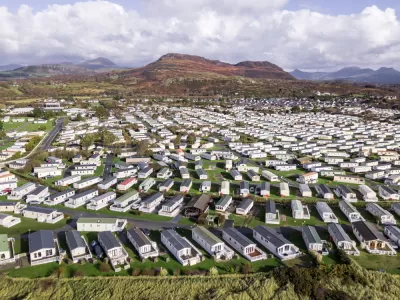
Mobile home parks have long served as an affordable option for homeownership for many Americans, with 3 million households residing in manufactured home communities around the country. But more recently, big investors are buying up these parks and raising the land rent, leading to eviction fears for many low-income residents who own their home, but not the land it sits on. Sylvie Douglis reports on the changes affecting residents as ownership of mobile home parks shifts from mom-and-pop operations to real estate investors looking to increase profits with higher rents and new utility fees.
Known widely as "mobile" homes, manufactured homes, in fact, rarely move. The cost to relocate a mobile home runs from $5,000 to $10,000, a price point unaffordable to most owners. "In the past few years, hundreds of parks have been bought up by big corporations" looking to make bigger profits. As rents go up, the park's value rises, and "the investor then refinances the mobile home park and takes out a big loan" at a low interest rate–largely thanks to federally backed Fannie Mae and Freddie Mac loans. Despite their stated goal of helping more people afford homes, these agencies provided over $5 billion in government-backed loans to big mobile home park investors last year alone.
Meanwhile, residents who want to buy their own land struggle to get federal assistance. Although some states have a "right of first refusal" that gives residents the right to buy a mobile home park when it goes up for sale, "when the residents of a mobile home park want to buy their own park, they almost never get a super cheap loan backed by Fannie and Freddie, generally because the co-ops don't have the cash for a big enough down payment." Changing this, says Andy Danforth, "would change the game. Residents could get easier access to loans at much lower interest rates, so they'd be more able to afford to buy up their own parks. A lot more parks could turn into co-ops."
FULL STORY: Mobile Home Parked

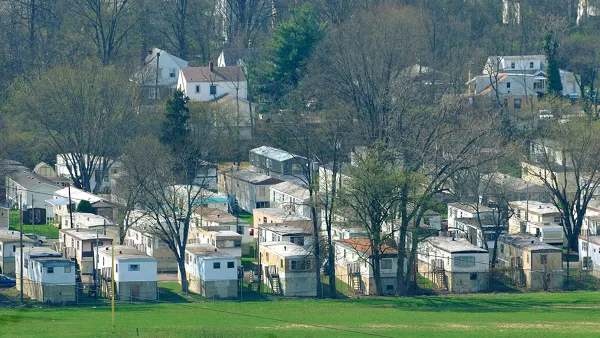
Mobile Home Residents Face Rising Displacement Threat
As investors continue to eye mobile home parks as a profitable opportunity, current residents, many elderly and low-income, face steep rent hikes and possible eviction.
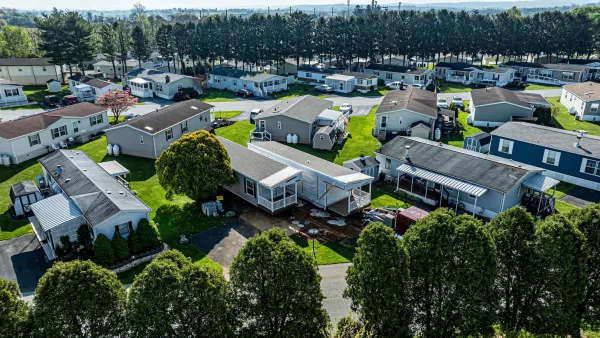
Should the public sector buy mobile home parks?
One writer argues that the crisis facing the nation's mobile home owners warrants public intervention.

States Move to Protect Mobile Home Park Residents
Making it easier for mobile home park residents to collectively purchase the land they live on can protect their housing affordability for the long term.

Planetizen Federal Action Tracker
A weekly monitor of how Trump’s orders and actions are impacting planners and planning in America.

The state-sanctioned urbicide of Austin
People don’t kill cities. Freeways do.

US to reduce Colorado River water deliveries to Mexico
A new Colorado Treaty amendment reduces Mexico’s Colorado River water allocation by 250,000 acre feet.

Mamdani overhauls NYC's Vision Zero plan with 100 new policy goals
The overhaul aims to reduce traffic deaths and make streets safer for pedestrians, cyclists and drivers through lower speed limits, new safety infrastructure and more.

Amtrak not solely to blame for New Jersey commuter rail's unreliability, report finds
A new study from the Garden State Initiative found that NJ Transit’s budget grew 20% across a 4 year period, but reliability declined significantly over the same period.

EPA erases limits on planet-warming pollution from power plants
Under Monday’s plan, power plants would still have some limits on how much mercury, arsenic and other contaminants they can emit.

FREE Course: Walkable City 1: Why Walkability?
After describing his path towards focusing on walkability as the essence of good planning, Jeff Speck marches through his five principal reasons for making more walkable places.
Reinventing Malls: Planning Alchemy—Turning Gray Fields Into Gold
The course focuses on the opportunities and imperatives that shape reinvention of mall sites.

Eagle County Government
Harvard University Graduate School of Design
Nashville Planning Department
The Architects Foundation
University of Cincinnati Online
The Pocatello Development Authority
The Urban Renewal Agency of the City of Pocatello
Journal of the American Planning Association