What happens if the federal rental assistance money available to renters doesn’t make it to them before the moratorium expires? And how did the 2020 eviction predictions pan out?


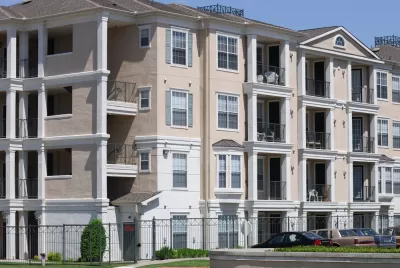
After a monthslong game of “kick the ban,” the eviction moratorium issued last September by the Centers for Disease Control and Prevention (CDC) is set to expire July 31 after two extensions (one in March and another last-minute, last-time stopgap reprieve at the end of June). CDC Director Dr. Rochelle Walensky said this will be the “final extension of the moratorium,” which, when it ends, will leave millions of renters at risk of losing their homes and millions in federal rental assistance money undelivered.
About 15 percent of renters in the U.S. owe back rent. On average, they owe about $3,400, according to the National Equity Atlas, though many owe tens of thousands. Those renters represent more than 11 million adults who will be left vulnerable to eviction once the eviction ban lifts Aug. 1. Of those households facing an eviction threat, the most at-risk are headed by Black and Brown people, and single moms. For instance, workforce participation among women plummeted by 57 percent during the pandemic, and 80 percent of the 1.1 million Americans who left the workforce in September 2020—when schools started back up while the pandemic raged—were women. Both demographics are evicted at a disproportionately high rate: Black adults make up just 21 percent of America’s renters, but are listed as defendants in 35 percent of all eviction filings, and studies have shown that the probability of a household with children receiving an eviction notice is “significantly higher” than those without.
How 2020 Predictions Panned Out
While 11 million is a big number, it sounds like far fewer than the 30 million to 40 million individuals estimated to be at risk of eviction in an August 2020 report published by the National Low Income Housing Council and the Aspen Institute, and coauthored by Emily Benfer, a Wake Forest University law professor who chairs the American Bar Association’s COVID-19 Task force Committee on Eviction, and is co-creator of The Eviction Lab COVID-19 Housing Policy Scorecard.
The 30 million to 40 million estimate included both adults and children, Benfer says, and the questions asked in the original survey have evolved to better address current known and unknown factors. One in five households with children is behind on rent, according to the Center for Budget and Policy Priorities, so the total number of people at risk could still approach the levels predicted late last summer.
In addition to the millions of families facing displacement now, thousands were kicked out of their homes as the pandemic raged, despite the moratorium. According to Eviction Lab data, in the six states and 31 cities being tracked, landlords filed more than 444,000 evictions during the pandemic. In Phoenix, Arizona, landlords filed nearly 30,000 evictions during the pandemic. And courts across the country continued evicting tenants in defiance of the moratorium.
Read the full story: Millions of Tenants at Risk of Eviction, Billions in Rental Assistance Undelivered

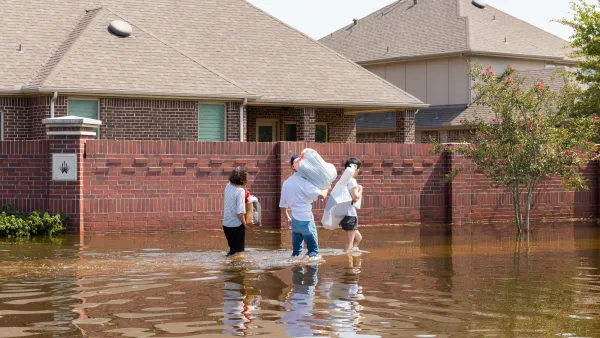
Study: 'Sudden shocks' are driving up homelessness rates
Evictions and climate disasters are leading causes of sharp spikes in unhoused populations.

California's Extended Tenant Protections a Mixed Bag
While state lawmakers rush to pass extended eviction protection for struggling Californians, tenant advocates say the new law could nullify local rent relief initiatives and exclude tenants who miss the application deadline.
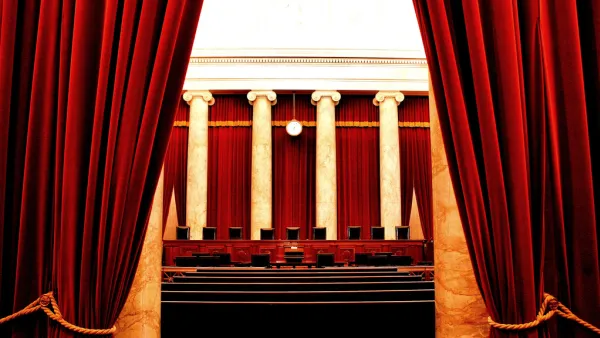
Supreme Court Strikes Down Federal Eviction Moratorium
The majority opinion claims the CDC overstepped its authority and calls for congressional approval of any further eviction moratoriums.

Planetizen Federal Action Tracker
A weekly monitor of how Trump’s orders and actions are impacting planners and planning in America.

The state-sanctioned urbicide of Austin
People don’t kill cities. Freeways do.

US to reduce Colorado River water deliveries to Mexico
A new Colorado Treaty amendment reduces Mexico’s Colorado River water allocation by 250,000 acre feet.

Nation's most wind-powered state turns to coal as data centers increase energy demand
For the first time in decades, Iowa has increased its generation of coal power.

NYC cools commuters with city's first rain garden above a bus stop
New York City officials say the plants in the rain garden can absorb 16 gallons of rainwater during heavy storms.

Brightline West’s future may rely on $6 billion federal loan
The company has until Nov. 2 to make a $400 million equity investment into its proposed high-speed rail line.

FREE Course: Walkable City 1: Why Walkability?
After describing his path towards focusing on walkability as the essence of good planning, Jeff Speck marches through his five principal reasons for making more walkable places.
Reinventing Malls: Planning Alchemy—Turning Gray Fields Into Gold
The course focuses on the opportunities and imperatives that shape reinvention of mall sites.

Greater Baltimore Committee
Eagle County Government
Harvard University Graduate School of Design
The Architects Foundation
University of Cincinnati Online
The Pocatello Development Authority
The Urban Renewal Agency of the City of Pocatello
Journal of the American Planning Association