Take a virtual tour of the new public spaces proposed in the Providence Unified Vision Plan.


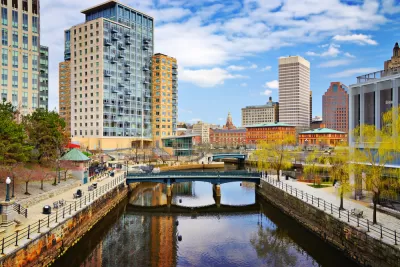
The city of Providence recently released new design images as part of its Providence Unified Vision Plan, an ambitious effort to rethink public space in the city by focusing on Kennedy Plaza and surrounding area as well as the Woonasquatucket River waterfront, according to an article by Matthew Marani.
The plan would "transform the [Kennedy Plaza] site into a functioning public square with substantial green landscaping, shade structures, expansion of pedestrianized areas, and amenities such as bathrooms, a cafe, a new performance stage, and a seasonal ice skating rink."
Along the Woonasquatucket River, the plan proposes improved access, a new resilient Riverwalk, a renovated performance area and an experiential mist ring installation suspended over the river.
According to Marani, the Vision Plan has been championed by Mayor Jorge Elorza. Arup worked with the city to complete the plan, creating a virtual tour of the proposed design.
Read the full story: Providence, Rhode Island, and Arup reveal final design for Unified Vision public space project
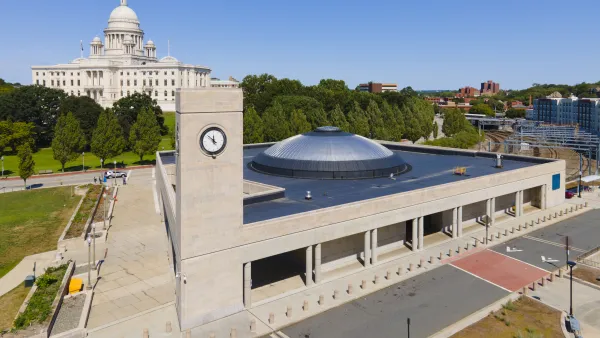
Providence train station to gain new bus hub
The new hub will replace the one currently located at Kennedy Plaza.
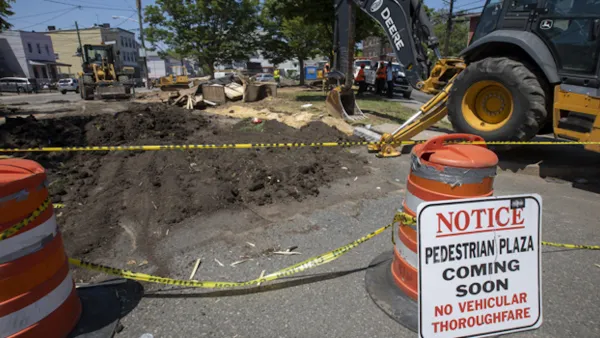
How Jersey City Dramatically Improved Its Public Realm
The city’s new Department of Infrastructure consolidates the management of public amenities and has guided the creation of new bike lanes, pedestrian plazas, and parks.

Placemaking: Building on the ‘Soul’ of a Place
Placemaking is often mistaken for a form of manufacturing. Every place already has a story to tell—placemaking just brings that story forward.

Planetizen Federal Action Tracker
A weekly monitor of how Trump’s orders and actions are impacting planners and planning in America.

Eastern Nebraska is running out of electricity
Data centers and electrification are straining eastern Nebraska’s grid, throttling economic development.

Study reveals best places in the U.S. for cycling, walking
New research from Streetlight Data examines bicycle and pedestrian miles per capita in the 100 largest U.S. cities by population.

Illinois considers spending $1 billion in taxpayer money on data center
A quantum computing campus and data center are currently under construction in Chicago.

As development costs rise, Boston moves to lessen affordable housing requirements
The Boston Zoning Commission and the City Council still need to approve Boston Mayor Michelle Wu’s proposed changes

Washington state charge fee to drivers with fuel-efficient cars
Revenue from the fee will go towards supporting the state’s highways.

FREE Course: Walkable City 1: Why Walkability?
After describing his path towards focusing on walkability as the essence of good planning, Jeff Speck marches through his five principal reasons for making more walkable places.
Reinventing Malls: Planning Alchemy—Turning Gray Fields Into Gold
The course focuses on the opportunities and imperatives that shape reinvention of mall sites.

City of Charlotte
City of Rosemead
Rutgers University, Edward J. Bloustein School of Planning and Public Policy
University of Michigan School for Environment and Sustainability (SEAS)
Hunter College, City University of New York (CUNY)
The Architects Foundation
City of Cambridge
The Pocatello Development Authority
The Urban Renewal Agency of the City of Pocatello