The differences between the haves and the have-nots, already apparent in the U.S. housing market before the pandemic, is more apparent than ever after more than a year of economic and demographic upheaval.


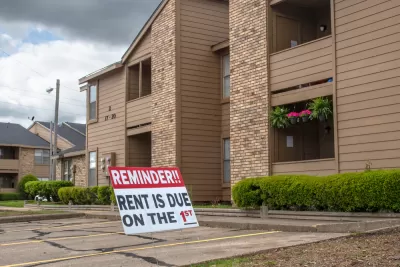
The Harvard Joint Center for Housing Studies (JCHS) released its "The State of the Nation's Housing 2021" report on Wednesday—the latest version of the closely watched and frequently cited annual report that identifies major themes and trends in the U.S. housing market.
This year's report tells a story of a nation split by the consequences of the COVID-19 pandemic—a year after stay-at-home orders shut down massive sections of the country's economy, leaving many renters and homeowners without the income to pay their bills.
Here's how a JCHS press release [pdf] summarizes the findings of the report:
As the US economy continues to recover from the effects of the pandemic, households that weathered the crisis without financial distress are snapping up the limited supply of homes for sale, pushing up prices and further excluding less affluent buyers from homeownership. At the same time, millions who lost income are behind on housing payments and on the brink of eviction or foreclosure.
Moreover, according to the press release, "a disproportionately large share of at-risk households are those with low incomes and people of color."
As for the risks facing renters who have fallen behind on rent, the report increases the most recent estimates of the Census Bureau by increasing the number of renters behind on payments from 7 million to 14 million. "As a result of widespread income losses during the pandemic, 14 percent of all renter households were behind on their housing payments in early 2021, and in ten states, more than one-fifth of renters were in arrears," according to the press release.

"Racial disparities are evident here as well, with 29 percent of Black, 21 percent of Hispanic, and 18 percent of Asian renters in arrears, compared with just 11 percent of white renters."

Articles sharing the news of the "State of the Nation's Housing 2021" report includes a post by Enterprise Community Partners, which summarizes the findings of the report as follows:
The report makes particular note of the divergent trends among for-sale versus for-rent markets, with the former experiencing soaring prices amid historic supply shortages, while the latter grapples with billions in back rent owed and the growing risk of an eviction crisis among renters who lost income during the pandemic.
Two additional articles, by the Associated Press and Bloomberg CityLab, package the JCHS report with similarly sobering data released recently by the National Association of Home Builders (NAHB). In the article for Bloomberg CityLab, Patrick Sisson describes the current state of the housing market in the United States as doubling down on the same trends that created the housing affordability crisis that pre-dated the pandemic, and has only worsened since then.
FULL STORY: The State of the Nation’s Housing 2021

Tight For-Sale Market Leads to Record Price Spikes in the Rental Market
A supply-demand imbalance in the for-sale housing market will eventually spill into the rental market.

Housing Prices Rising Faster Than Any Point Since 2005
New home price data from CoreLogic puts numbers to the torrid 2021 housing market in the United States.
State of the Nation's Housing: Housing Production, Supply Still Coming Up Short
The Joint Center for Housing Studies of Harvard University released its annual "The State of the Nation's Housing" report this morning. There are some signs of post-recession normalcy in the housing market for high-income earners.

The state-sanctioned urbicide of Austin
People don’t kill cities. Freeways do.

US to reduce Colorado River water deliveries to Mexico
A new Colorado Treaty amendment reduces Mexico’s Colorado River water allocation by 250,000 acre feet.

New Jersey’s second-largest city bans standalone data centers
Jersey City will continue to allow co-location facilities, such as those meant for research institutions that store their own data.

Amtrak not solely to blame for New Jersey commuter rail's unreliability, report finds
A new study from the Garden State Initiative found that NJ Transit’s budget grew 20% across a 4 year period, but reliability declined significantly over the same period.

EPA erases limits on planet-warming pollution from power plants
Under Monday’s plan, power plants would still have some limits on how much mercury, arsenic and other contaminants they can emit.

Phoenix announces new on-demand transit service, more frequent RAPID buses
Both new services will launch in October, and are part of Phoenix's Project Effective Access Solutions for Easing Congestion.

FREE Course: Walkable City 1: Why Walkability?
After describing his path towards focusing on walkability as the essence of good planning, Jeff Speck marches through his five principal reasons for making more walkable places.
Reinventing Malls: Planning Alchemy—Turning Gray Fields Into Gold
The course focuses on the opportunities and imperatives that shape reinvention of mall sites.

Eagle County Government
Harvard University Graduate School of Design
Nashville Planning Department
The Architects Foundation
University of Cincinnati Online
The Pocatello Development Authority
The Urban Renewal Agency of the City of Pocatello
Journal of the American Planning Association