Advocates point to a bevy of successes in slowing the spread of the virus, but authorities struggle with cost burden.


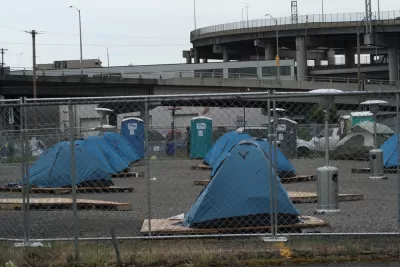
When COVID-19 swept across the United States last spring, it prompted a bevy of emergency public health responses, including the leasing of hotel and motel rooms to safely house vulnerable homeless people. Though far from perfect, the projects got thousands of people into non-congregate shelter and helped prevent further COVID outbreaks. As the pandemic drags on, state and city officials are looking to expand or revive those leasing efforts, or outright buy hotels as a permanent housing solution. What is driving the expansion, and why do some communities still avoid the hotel housing model?
Hotel rooms had been used to house people on the verge of homelessness for years before COVID-19, but the risk posed by the pandemic spurred local governments to lease these rooms at a larger scale. In some cases, local governments that once housed a few hundred people now house thousands, and they’re doing it with greater urgency than ever before.
Advocates of expanding the use of hotel rooms for this purpose point to the struggles facing the hospitality industry. Occupancy is down as both leisure and business travel have collapsed while large gatherings go virtual and people forgo unnecessary trips. A Jan. 21 report by the American Hotel & Lodging Association (AHLA) indicates that business is not expected to return to pre-COVID-19 levels for at least three years, and that half of all hotel rooms in the U.S. will remain empty until then.
The hotel housing programs may continue to expand due to a promise of more federal reimbursement. In the past year, many programs, such as ones in California and Vermont, were aided or enabled by a FEMA policy that reimbursed 75 percent of the leasing costs. On Jan. 21, the new Biden administration ordered FEMA to reimburse local governments at 100 percent of the cost through Sept. 30.
That decision is a game changer, says ...
Read the full story: As the Pandemic Continues, Officials Look to Long-Term Housing Options with Hotels


A Year-Long Investigation On Permanent Supportive Housing
The New York Times reveals what’s working and what’s not in the cornerstone of Housing First.

Permanent Supportive Housing Providers Face Steep Insurance Hikes
High insurance costs are calling some organizations’ future into question as supportive housing providers struggle to meet their expenses.

FEMA Offers Full Reimbursement for Pandemic Shelter Costs—But Cities Are Still Jittery
Cities and counties have been slow to take advantage of the promise of full and retroactive FEMA reimbursement to expand emergency housing programs, frustrating housing advocates. What’s getting in the way?

Planetizen Federal Action Tracker
A weekly monitor of how Trump’s orders and actions are impacting planners and planning in America.

The state-sanctioned urbicide of Austin
People don’t kill cities. Freeways do.

US to reduce Colorado River water deliveries to Mexico
A new Colorado Treaty amendment reduces Mexico’s Colorado River water allocation by 250,000 acre feet.

Nation's most wind-powered state turns to coal as data centers increase energy demand
For the first time in decades, Iowa has increased its generation of coal power.

NYC cools commuters with city's first rain garden above a bus stop
New York City officials say the plants in the rain garden can absorb 16 gallons of rainwater during heavy storms.

Brightline West’s future may rely on $6 billion federal loan
The company has until Nov. 2 to make a $400 million equity investment into its proposed high-speed rail line.

FREE Course: Walkable City 1: Why Walkability?
After describing his path towards focusing on walkability as the essence of good planning, Jeff Speck marches through his five principal reasons for making more walkable places.
Reinventing Malls: Planning Alchemy—Turning Gray Fields Into Gold
The course focuses on the opportunities and imperatives that shape reinvention of mall sites.

Eagle County Government
Harvard University Graduate School of Design
Nashville Planning Department
The Architects Foundation
University of Cincinnati Online
The Pocatello Development Authority
The Urban Renewal Agency of the City of Pocatello
Journal of the American Planning Association