New data reveals how far the U.S. housing market has stayed from anything resembling normal.


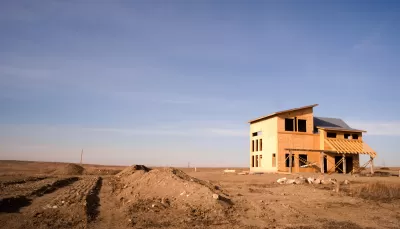
"Much of the housing market has gone missing."
That's the provocative lede of a story by Emily Badger and Quoctrung Bui that quantifies the state of the national for-sale housing market. Homes that usually would have been up for sale are staying off the market—about half as many homes are available for sale right now as last winter, according to the article.
The story is the same in markets historically defined by much different dynamics—so inventory is down in Atlanta, Austin, Chicago, and Cleveland, for example. The decline in inventory is "record shattering," according to the article, and it follows years of erosion in the national housing inventory. "This picture is a product of the pandemic, but also of the years leading up to it," according to Badger and Bui.
Analysis cited in the article chalk up the unprecedented status of the market to the tricky dynamics on the supply side during the pandemic. "Who wants to sell a house in the middle of a pandemic?" says Benjamin Keys, an economist at the Wharton Business School at the University of Pennsylvania. According to Ralph McLaughlin, the chief economist at Haus, a housing finance start-up, who is also quoted int eh article, every market that's withheld from the market creates an incentive for others not to sell their homes.
Then there's the economic woes, which is contributing to an inability of many homeowners to make their mortgage payments.
"At the peak, more than four million homeowners with government-backed loans were in mortgage forbearance during the pandemic (about 2.6 million still are). While that government policy, recently extended through June, has been a lifeline for many families who’ve lost income, it has also meant that some homes that most likely would have come on the market over the past year, either through foreclosure or a forced sale, did not."
The article is built on data from Altos Research, a real-estate market tracking firm, and includes infographics and a lot more historical and economic context for the current state of the housing market.
Read the full story: Where Have All the Houses Gone?


The Extreme Measures of the Pandemic 'Housing Boom'
It's hard to describe the current trends in the housing market as a "boom," though homebuying costs are surely rising.
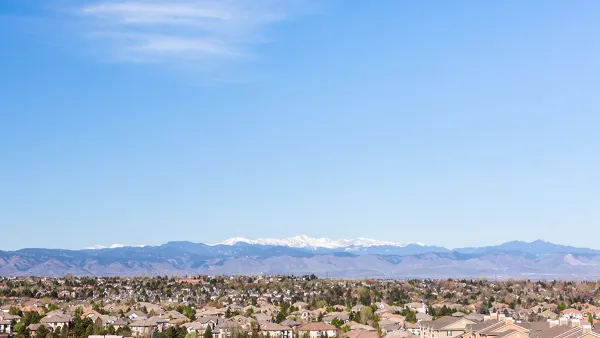
Double-Digit Housing Price Increases Tied to Supply Imbalance in Denver
Expensive homes dominated the metro Denver real estate market in 2020.
How 2020 Changed the Rental Market
A new report by RentCafé reveals the extent of the pandemic's influence on the rental market—so far.

Planetizen Federal Action Tracker
A weekly monitor of how Trump’s orders and actions are impacting planners and planning in America.

Amtrak, CN end decades-long dispute with eight-year agreement
The new operating agreement establishes an updated framework for the companies to work together, including processes to resolve disputes.

Judges permit Denver to divert 77,000 acre feet from the Colorado River for reservoir expansion
Overuse and climate change have caused the Colorado River’s water levels to plummet.

Alabama scores up to $2.5 billion federal loan for largest infrastructure project in state’s history
The Mobile River Bridge and Bayway Project aims to ease congestion at Alabama’s worst bottleneck.

Trump is considering data centers on 6 states' public land — some state officials say they had no idea
If the administration approves the proposed projects, data center and data center-related developments will cover 17,600 acres of public land.

Despite court ruling, Trump is keeping nearly all wind projects in the US on hold
At least 110 wind energy projects have not heard from the government since a federal judge ruled that the Trump administration's freeze on wind turbine clearances was likely illegal.

FREE Course: Walkable City 1: Why Walkability?
After describing his path towards focusing on walkability as the essence of good planning, Jeff Speck marches through his five principal reasons for making more walkable places.
Reinventing Malls: Planning Alchemy—Turning Gray Fields Into Gold
The course focuses on the opportunities and imperatives that shape reinvention of mall sites.

KFH Group Inc.
Greater Baltimore Committee
Eagle County Government
The Architects Foundation
University of Cincinnati Online
The Pocatello Development Authority
The Urban Renewal Agency of the City of Pocatello