An intimate look at what it’s like fighting for meaningful state-level rent relief when the powers that be don’t believe everyone is worth saving.


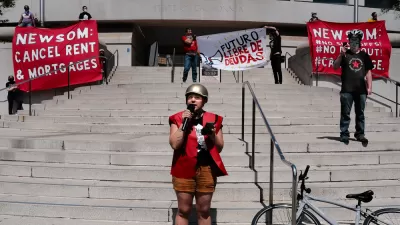
Journal entry—Dec. 9, 2020
I am yelling on a Zoom call again, this one a virtual meeting of policymakers, community leaders, and technocrats talking about Oregon state policy. As a faculty member at Portland State University, I am often invited to lend expertise to discussions about housing and urban policy, especially racial equity, which usually means sharing research and data. In the ninth month of combination pandemic–economic crisis–racial justice uprising advisory committees, my vocal pitch has become unpleasantly sharp. Today there is a protracted argument among Oregon state leaders about whether to return the legislature for emergency lawmaking before the January session. The Oregon eviction moratorium expires in 22 days; for obvious reasons, it’s not wise to count on an extension to the CDC’s nationwide eviction moratorium, which is also less protective than the local policies.
It has become clear that this lack of urgency is due to the legislature’s housing committee having totally failed to grasp the scale of the problem. The committee considering tenant protections and rent relief is estimating that 20,000 Oregon households need assistance. That figure underestimated the households at risk of eviction by a factor of eight. I’ve pulled up the Census Pulse website so I can cite it: the number of Oregon renter households who are behind in rent and/or can’t pay January’s rent is more like 150,000 to 175,000. Half of these households are BIPOC (Black, Indigenous, People of Color) in a state that is 85 percent white; some 40 percent of them have kids in the home.
We leave the meeting with no assurance that the legislature will return to address the crisis. At this point, eviction filings will start on Jan. 4, 2021. After the meeting I start my text/email/phone operation, connecting with advocates and organizers to try to figure out what we might expect to happen. How many eviction hearings can be held in a day? Are courts reopening for in-person sessions? We know from looking at states where protections have already expired that tenants are being whipped through to judgment in minutes—when you just can’t pay, that’s it. Next question: How many physical evictions can the sheriff’s office get through in a day?
It looks like folks will be relying on pure luck—hoping that they are far enough down the list that they might remain housed a little longer based on the capacity of the system to chew and spit. I tag in my colleague Marisa Zapata, who runs Portland State University’s Homelessness Research & Action Collaborative, who is similarly making calls and calculations about the shelter system. She talks about how there is absolutely no capacity anywhere in Oregon; What would the houseless-serving organizations do if even 100 families were to show up with their belongings in trash bags? Are there parking lots for folks living in cars? No one has a good answer.
Dec. 17, 2020
The night of the first Oregon Legislative hearing on the eviction moratorium extension continues the pattern of trauma for people in need. Whether applying for assistance programs or providing testimony, they are again and again asked to prove they’re in crisis and that they’re worth saving. Community Alliance of Tenants staff and tenant leaders have worked hard to prepare for the experience. During a conference call for testimony prep, one renter shared her advice that everyone needed to care for their emotional health during the hearing: “Begging is exhausting. It erodes our dignity. We have to repeat the story of our lowest moments, to many people, many times, repeating again and again these momentary circumstances until they become our identity. Who we are, our strength, becomes invisibilized, as we are reduced to this one moment of pain and fear.”
Legislative hearing testimony is called, alternating pro and con viewpoints, so every tenant’s story about their crisis is met by a landlord angry about their partial loss of income. We talk about how to tune out personalized attacks on renters and taking breaks.
Those in need are asked to explain their circumstances; landlords face little to no scrutiny of their arguments that they would be harmed by accepting less than full arrears repayment, by allowing payment plans, by additional eviction protections.
I want to know if owners got mortgage forbearance—nearly half of units were eligible under the CARES Act—or have no mortgage, what do they actually need in order to be financially whole? We never learn.
Unlike the at-risk tenants on the call, I have the technology and stable internet connection for the remote session. I am dialed into MS Teams on my laptop; I also have a tablet and phone ready, with multiple text threads open for alerts—there is no publicized wait list, and we have to be ready as soon as our names are called. It’s clear right away that too many people signed up for the Thursday night hearing, and there will be a second hearing session on Saturday. I’m pretty sure my name will be recognized by the Speaker for prioritization in the evening testimony list—another privilege.
Dec. 21, 2020
Just 10 days before the moratorium expires, Oregon’s legislature ...
Read the full story: In Unprecedented Times, Nothing Less Than Universal Rent Relief Will Do


Federal Rent Relief Is a Public Health Imperative
To ensure families stay in their homes and stay safe during the COVID-19 pandemic, the federal government should extend the CDC's eviction moratorium and other rent relief measures through the new year.
CDC's Eviction Moratorium Extended
The CDC's eviction moratorium will stay in place until at least June 30, 2021.
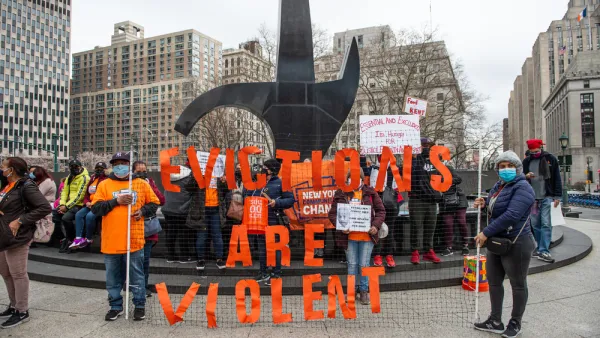
Emergency Rental Relief Gaining Momentum in Some States
Rental assistance spending in June surpassed the entire year's total so far, but there's still a long way to go.

Planetizen Federal Action Tracker
A weekly monitor of how Trump’s orders and actions are impacting planners and planning in America.

California plans to bury El Niño’s downpour
If the state plays its cards right, it may be able to store a billion acre-feet of El Niño’s water in aquifers.

Chicago breaks ground on $3 billion megadevelopment
The new neighborhood, titled Foundry Park, will one day host 3,700 residences.

Satanic Place Names
From streams and lakes to valleys and canyons, I mapped more than 1,000 places named after the Devil.

California High-Speed Rail Authority CEO resigns after $600,000 scandal
Under Ian Choudri, the authority used taxpayer dollars to fund first class flights and trips to nightclubs.

Want to study the Missouri River? Soon, you may need unanimous approval from 10 states
Legislation would require 10 governors’ permission to study or build projects moving water outside the basin.

FREE Course: Walkable City 1: Why Walkability?
After describing his path towards focusing on walkability as the essence of good planning, Jeff Speck marches through his five principal reasons for making more walkable places.
Reinventing Malls: Planning Alchemy—Turning Gray Fields Into Gold
The course focuses on the opportunities and imperatives that shape reinvention of mall sites.

City of Rosemead
Rutgers University, Edward J. Bloustein School of Planning and Public Policy
One Hundred Miles
Hunter College, City University of New York (CUNY)
The Architects Foundation
University of Cincinnati Online
City of Cambridge
Montrose County
The Pocatello Development Authority